RSS

Category Archives: Uncategorized

Front yard farmers in 28801

I’ve learned about gardening over the years from my dad, gardening books, and the internet.  I’ve also gotten lots of ideas by checking out other peoples’ gardens and small farms.  Right here in my own zip code there are some great gardens going on in front yards.  I love to see what other gardeners are doing.

It seems that most folks who keep their gardens in their front yards do so because their back yards are either too shady or there’s not enough space.  We moved our garden to the front yard because of the two giant spruce trees that line the southern side of our backyard, plus our front yard is flatter.

My college friend Jane emailed me last week to tell me she and her husband are moving their raised bed garden to their front yard too to take advantage of a sunnier situation (they live in Ohio and they’re ready for lots of warm sun after this past winter!)

Moving the garden to the front yard has made gardening a much more social experience for me. Neighbors tend to stop regularly on walks to check out what’s growing.  I can also find people to give vegetables to when everything seems to start coming in at the same time in late summer.

Just a few blocks from our house there’s a great garden that I pass on the way to preschool.

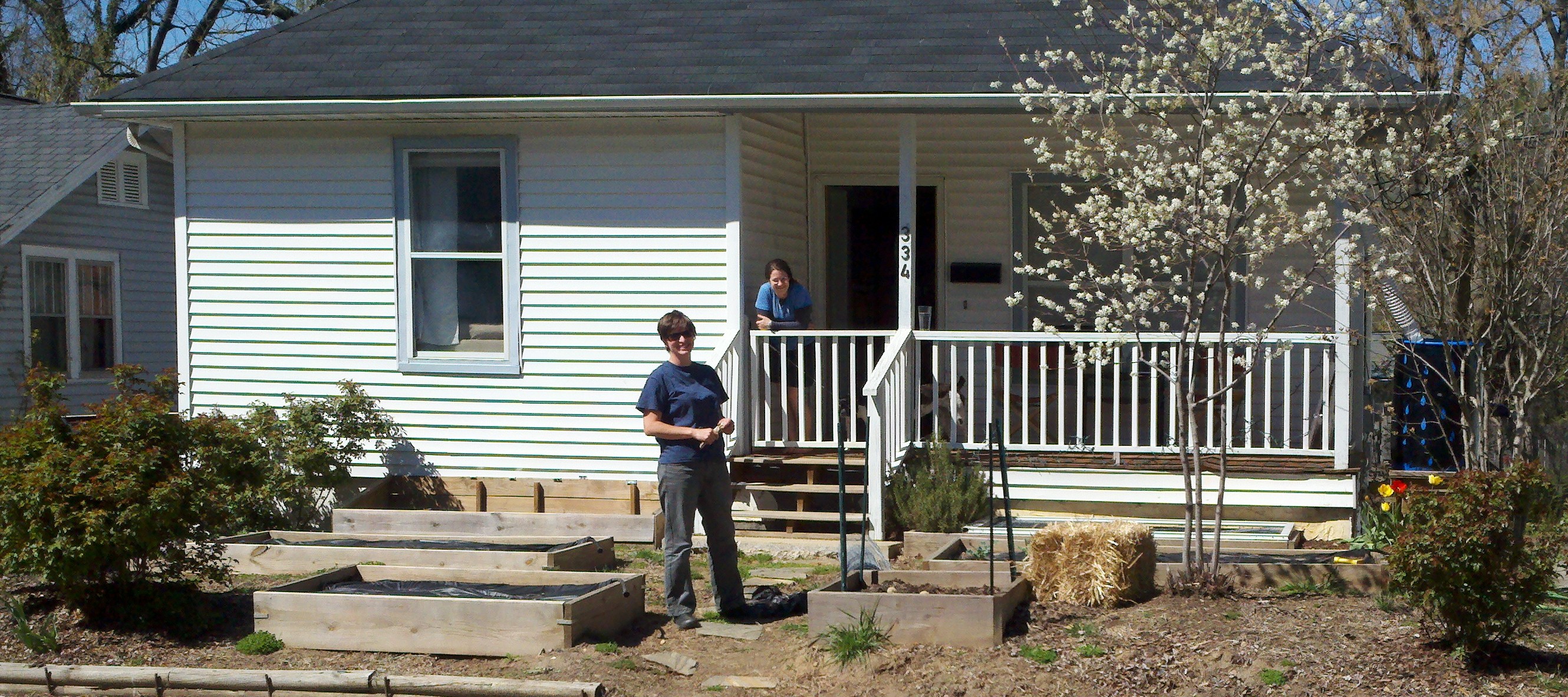
The entire front yard has been turned into a neat system of raised beds.  When I was on a run last week I noticed the owners were home and in their garden so I got a chance to meet them.  Candice was kind enough to let me interrupt her potato planting and tell me about what she and Alsace are growing in their front yard this year.

The bed to Candice’s right is the beginning of her potato bed.  She explained to me that she’ll keep adding boards and soil vertically as the potato plants grow.  We talked about the challenge of getting water to the lower layers as more soil gets layered on.  I told her about something I’d seen on the internet about putting a soaker hose near the bottom layer to keep the plants from getting too dry.

On the far right of the picture is their rain barrel that a friend made for them.  Up close to the house but a little hard to see is a cold frame that Candice made.

I asked them if it was OK if I follow their garden’s progress through the season on my blog and we got a chuckle out of the idea that they’ll have pressure to keep the garden going strong.  It’s the same kind of “pressure” I felt when James and I first started gardening in the front yard — I felt like we’d better keep the weeds out and everything looking good, while I hadn’t been so concerned about those things when the garden was behind the house.

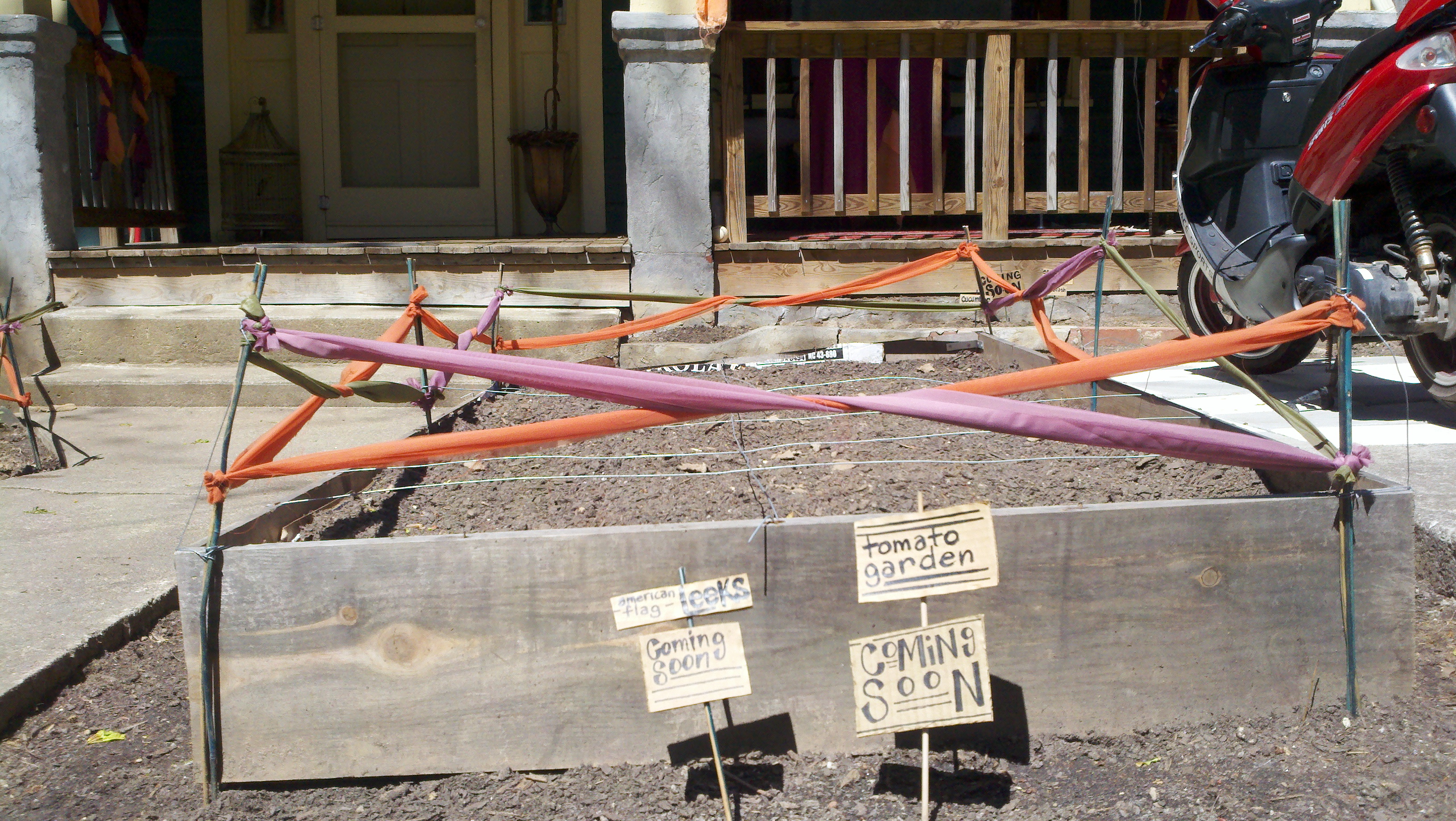
Here’s another front yard system over in Montford (not far from our house):


These gardeners have managed to turn almost every square inch of dirt in their front yard into growing space, complete with cool signage letting everybody know what to expect to be coming up later in the season.


Another benefit of front yard gardening:  less grass to mow.  Or in the case of the two gardens above, no grass to mow!


A good spinach dip recipe and a great book

Yesterday afternoon I needed a quick and easy recipe for an appetizer to take to my book club. With it being a rainy March afternoon, I really didn’t want to load up the boys and head to the store so I made do with what I had….loads of spinach from the garden. And we always have a random assortment of cheeses, so I googled “fresh spinach and cheese dip” and found quite a few, but one sounded particularly good:

This hot spinach dip recipe. It’s from an Australian website so everything is in metric weights, so I kinda guessed at the amounts. (I recently read somewhere that the US, Myanmar and Liberia are the only 3 countries in the world that don’t officially use the metric system. Great.  Along with most Americans, I’m metric illiterate.)

Instead of shallots, I used the same amount of chopped chives, another overwintered herb that is growing profusely right now in the garden. And I didn’t have enough mayonnaise — hard to believe in my house that I didn’t have a stashed jar of it somewhere as I love it — so I just upped the cream cheese a little.

While spinach and artichoke dip is one of my favorite appetizers, this one wins in the looks department because it uses fresh instead of frozen spinach.  It’s bright green instead of that green/brown and pale yellow color that most hot spinach dips have (although that has never deterred me from gorging on it every time it’s in my presence).

I’d have taken a photo of it but I was running late, then there was not much left after book club.  What remained after I got home, my husband finished off.

Oh, and the book we read this month was dogs, by Abigail DeWitt.  We were so fortunate to have the author come meet with us (she lives near Burnsville, about an hour from here).  It was a really good read, and being able to discuss it in person with the author was an added treat.  Thanks Abigail!


Vermiculture, wormery (box of worms in the basement)

Worm farmers, please take no offense as I’m a total newbie when it comes to raising worms —  I’m still laughing about finding the word “wormery” while googling for ideas about building a worm compost bin.   Nursery, brewery, apiary, pharmacy — but wormery?

Well, reading more into it, it’s quite an interesting concept, so I’m laughing less and getting more intrigued by these lowly worms (Lowly Worm, by the way, was my favorite Richard Scarry character as a child; now my boys love it when he turns up in stories too.  Such a friendly fella).

I’ve been wondering how to expedite the composting process of kitchen waste. Magic answer:  worms (according to my recent googling).  They can do alot of composting in not too much time.  There’s even commercial vermiculture/composting to handle restaurant food waste.

Now from what I’ve learned, you can’t just dig up regular ol’ earthworms out of the backyard and put them to work as composting worms. Sounds to me like earthworms are kind of wild, solitary creatures who like to do their own thing in the open dirt.

Red wigglers, however, have more colonial tendencies and can turn most vegetable and fruit scraps (and coffee grounds among other non-edibles) into some of the best dirt on earth:  worm castings.  They don’t seem to mind being boxed in as long as the conditions are right and the food is good.

I had a feeling this would be an easy project to get my kids involved in as they are absolutely obsessed with worm-hunting in our yard.  When they found out we were making a “worm house,” I had their undivided attention (there’s not much of it to be divided anyway, but they were quite curious about the process).

I followed these directions on how to construct a worm bin.  Yesterday I went to a hunting and fishing store in West Asheville with my 4-year old and bought out their last 4 containers of red wigglers.   Then I got 3 ten-gallon plastic storage tubs to stack one on top of the other.  We drilled holes in them according to the directions.  This lets the worms have some air, and also lets the castings fall down into middle bin for easier collection.

So it’s three bins stacked one on top of the other.  The top one is where the worms live and work on breaking down the food waste, the middle one collects the worm castings that fall through the holes, then the bottom one collects any excess moisture, AKA “worm tea”, which is another very nutrient-rich compost to put on the garden.

Soon after the drilling, our friends came over to play and help out with the wormery construction.  The next step was to tear up newspapers into strips and get it wet to make an environment for our worms. (Soggy newspaper doesn’t sound like it would be exactly the ideal home, but I’m trusting the websites I’ve read, and going against my instinct to house them in dirt.)

Well, we did get to put a least a little dirt in there, as the worms need some grist to help them digest their food (no teeth):  


Then the kids turned the worms out into their new home:


And then we stacked the bins together, put a piece of wet cardboard over the top (apparently worms love to eat cardboard too, but I also think this is to maintain an ideal moisture level in the bin):

Now we have to wait a couple of days to let them acclimate to their new place, then we can start adding small amounts of kitchen scraps and let them go to work.


Spring planting in Asheville, and another greens recipe

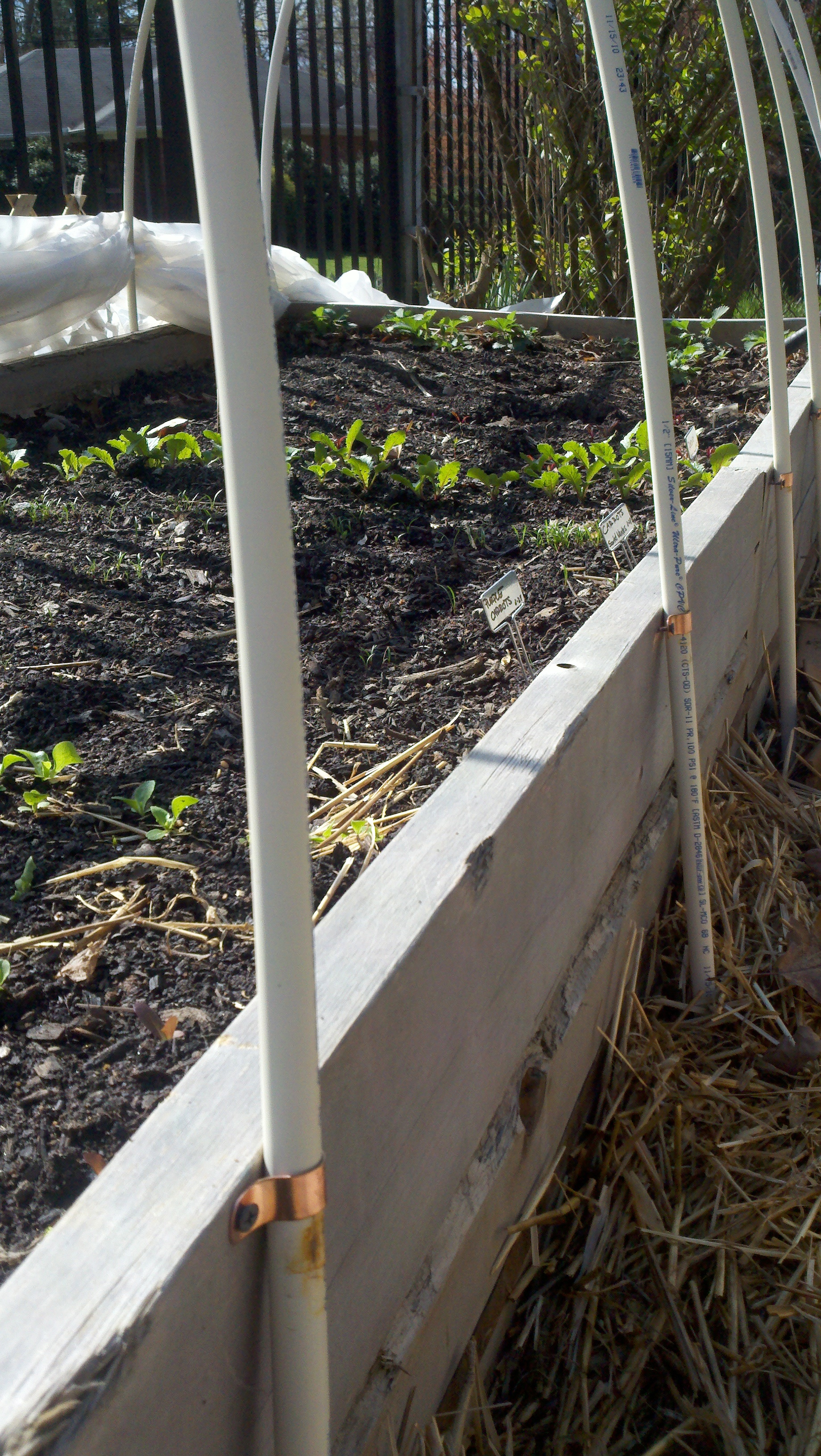
I’ve got the following growing outside in one of the raised beds.  On February 24th I planted the following cool-weather seeds from Sow True Seed:  Asian greens, buttercrunch lettuce, a lettuce mix, purple carrots, scarlet Nantes carrots, watermelon radish, and bulls’ blood beets.

Here’s what they looked like this morning:

A couple of friends have asked me what else is safe to plant from seed outside right now.   The Farmers’ Almanac has planting dates for Asheville listed in chart form. You can also check out the 2011 Planting Guide from Sow True Seed.

Note white PVC pipe. I spent an hour this morning painting it green to match the hoops over the other beds. Gardening vanity.

Another option is to buy cool-weather starts from a nursery center.  You can find all kinds of things right now, like lettuce, broccoli, spinach, cabbage, cauliflower….if you’d rather not wait for the seeds.  My husband bought some red onion sets, lettuce and broccoli starts at a garden center a few weeks ago so we’ve got those going in another one of the raised beds too.

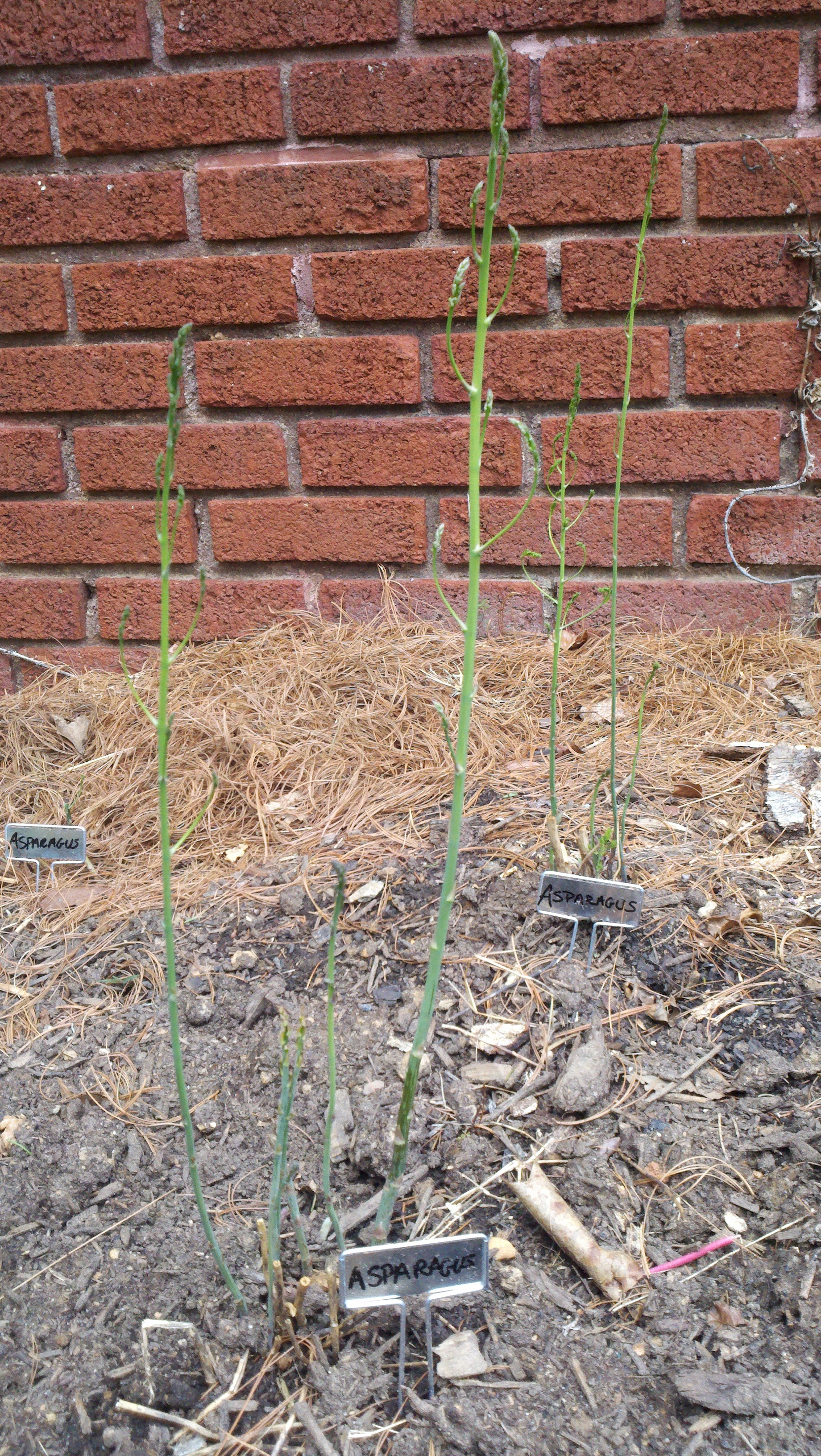
Last year about this time I planted 8 Mary Washington asparagus crowns that are coming up now (although I won’t harvest any till next year….I was so tempted to harvest some of the early shoots, but Dad said it would weaken the plant).  I also planted seed potatoes last March in the beds, and also in some giant pots (that’s on my to-do list for this weekend).

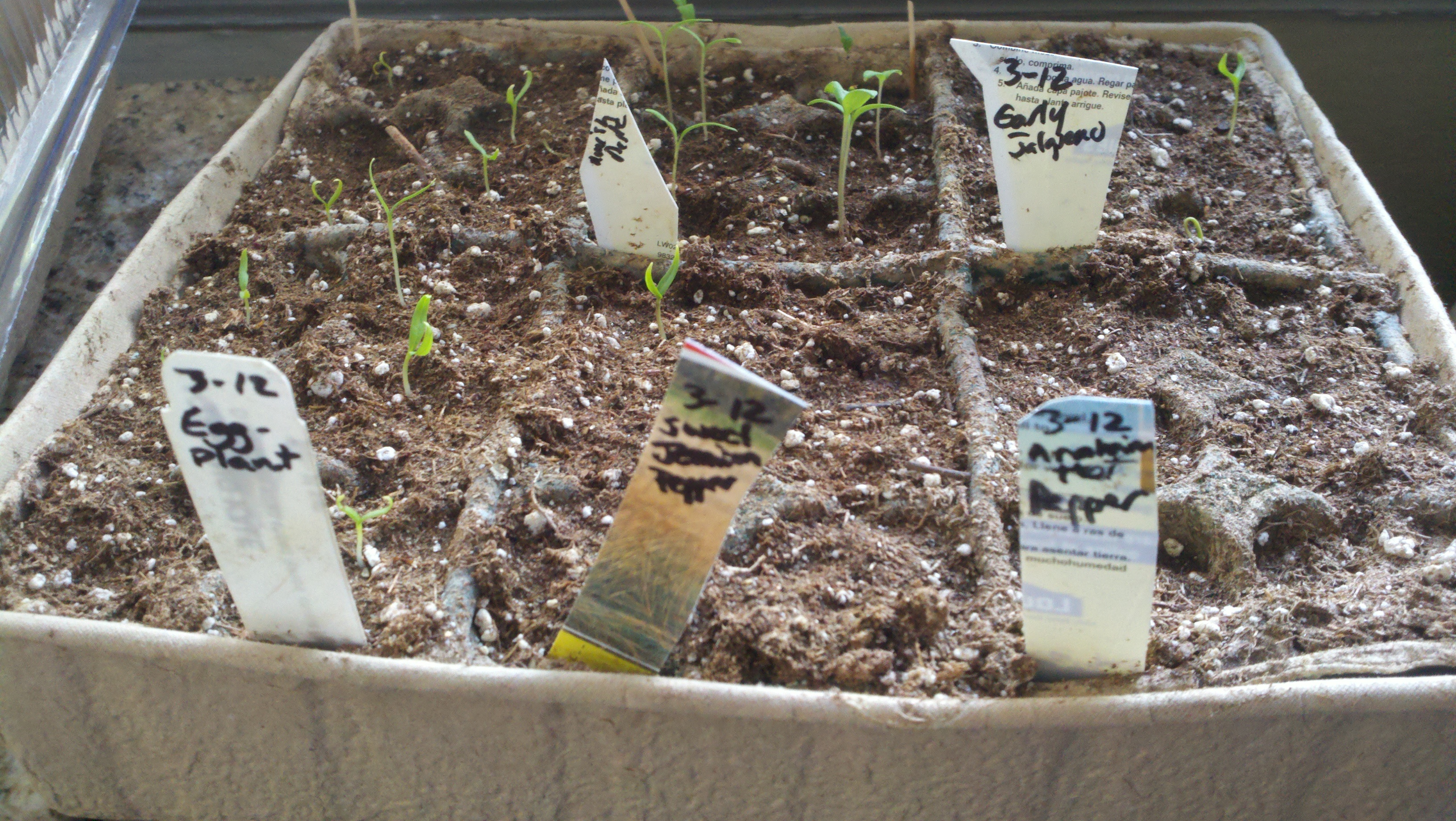
My tomato, pepper, eggplant, tomatillo and epazote seeds are coming along well inside.  I’ve been transporting them outside on warmer days when the March winds aren’t wild like today.

The seedlings are resting happily on top of the radiator in the southern-facing window in my dining room.  I’ve got the trays sitting on top of old cookie sheets.

It’s cold enough today that the radiators have turned on a few times, warming up the potting soil — I hope it encourages some of the peppers to emerge, as I’ve yet to see any Pasillo, Marconi, or Pobanos coming up.

The pepper seedlings are reminding me of my pepper plants every year — they are always the last plants to produce in the garden.  It has to get really hot for a couple weeks for them to start getting peppers on their branches.


There’s still a fair amount of greens out in the beds, so I tried another recipe from the Natural Health Magazine article my neighbor gave me.  This one was “Warm Mustard Greens Salad”.  I used both the red mustard green leaves (really spicy) and the regular ol’ green ones.  


The dressing was lemon juice, honey, olive oil, salt & pepper, and water.  I used some of the honey I’d harvested recently.  So yum.  The other ingredients were:  fresh ginger, red onion, garbanzo beans, cumin, chili powder, shredded carrot and feta cheese.

What a great salad — it was like eating wasabi in leaf form, with the bite and spice tempered by the garbanzos, carrots and feta.  Some of the heat came from the chili powder (it was just a half teaspoon but it had chipotle peppers in it too), but it was mainly from the mustard greens themselves.

Growing up in the South, my only experience with mustard greens was cooked (and cooked and cooked) along with some kind of fatback.  I love most other greens cooked, especially collards, but I never learned to love cooked mustard greens.  I think it was a combo of a texture issue (soggy) and bitter taste.

After finding this recipe, I’ve made peace with mustards.  Now, if you’re not into spicy, be warned that this salad indeed has a kick, but it sure is good (or as my Mississippi-raised grandmother would have said, “Shuh ’nuff”, although I’m sure she would’ve thought raw mustard greens blasphemous).


A couple of recipes for all these greens

A few days ago, my neighbor shared some recipes with me from Natural Health magazine.  I love it when someone gives me actual pages torn from a magazine, or snail-mails me a photocopied article from a newspaper.  I think it’s a dying art as emails with links to websites are so easy and quick.  (A couple of weeks ago, my neighbor’s mom handed me a photocopied article on compost teas as we were passing by each other in our cars a few blocks from here — must run in their family!)

I’d posted recently that my dinosaur kale was nearly done….there were still four more plants left in the raised beds.  Fortunately, the article that my neighbor gave me included a recipe for kale chips.

The recipe itself was fairly easy: put kale leaves in single layer on cookie sheet, spray with canola oil, sprinkle with salt and garlic powder, bake at 350 for 15 minutes, turning once.

The prep was fairly labor-intensive:  washing all the leaves, removing the leaves off the main stem, then tearing the thicker stems off.  Since the plants were about to bolt, the leaves were smaller than usual, so there were alot to tear off, and I also had to do alot of flipping mid-bake, I did about 8 batches  (2 cookie sheets at a time).

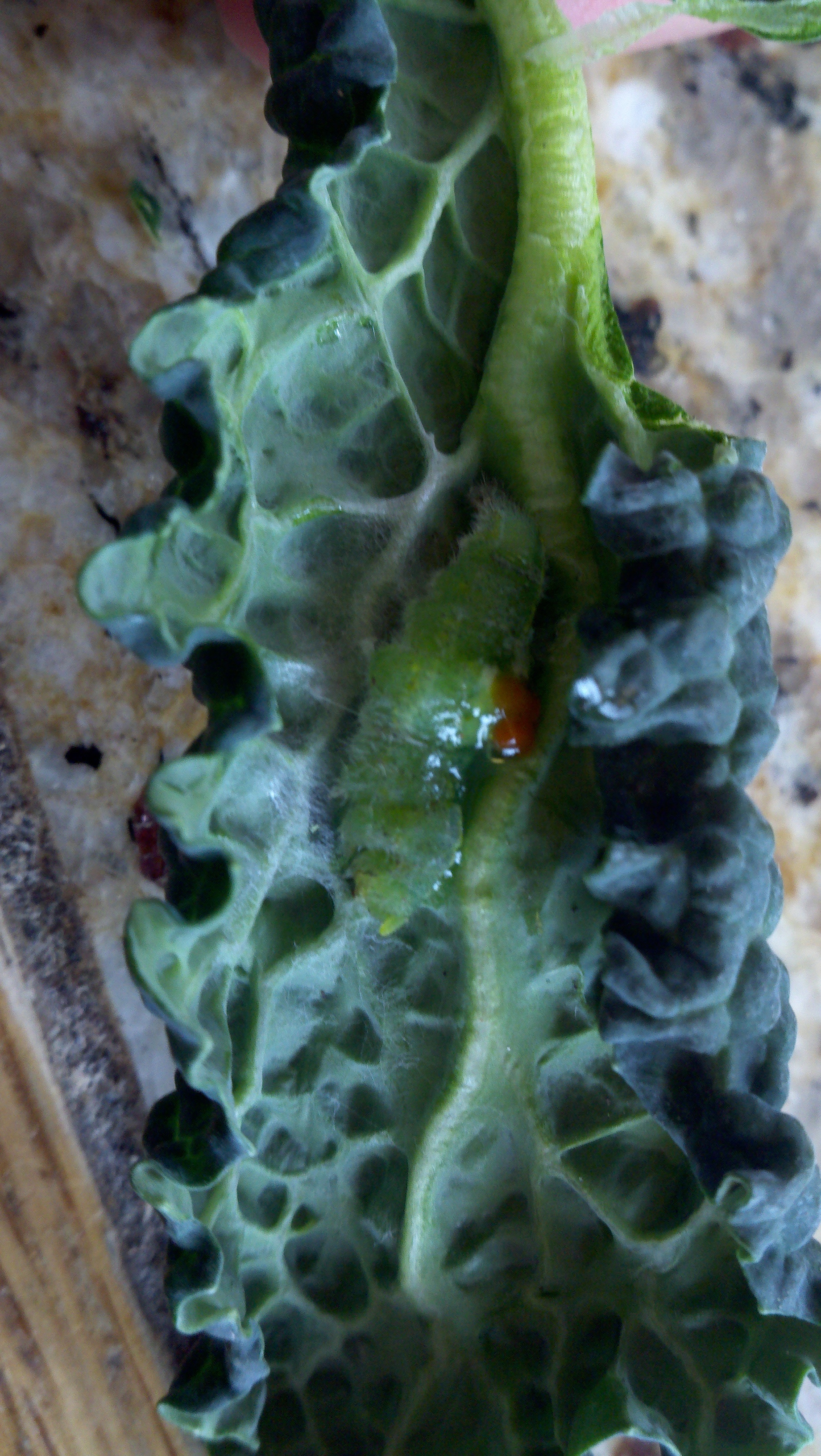
I had tried to enlist my older boy to help me rip the leaves from the stems, but he was more interested in playing with the cabbage worm we found.  I saw some of the adult white moths flitting around the garden last week and figured they were laying eggs somewhere.  They work fast — it hasn’t been warm that long!


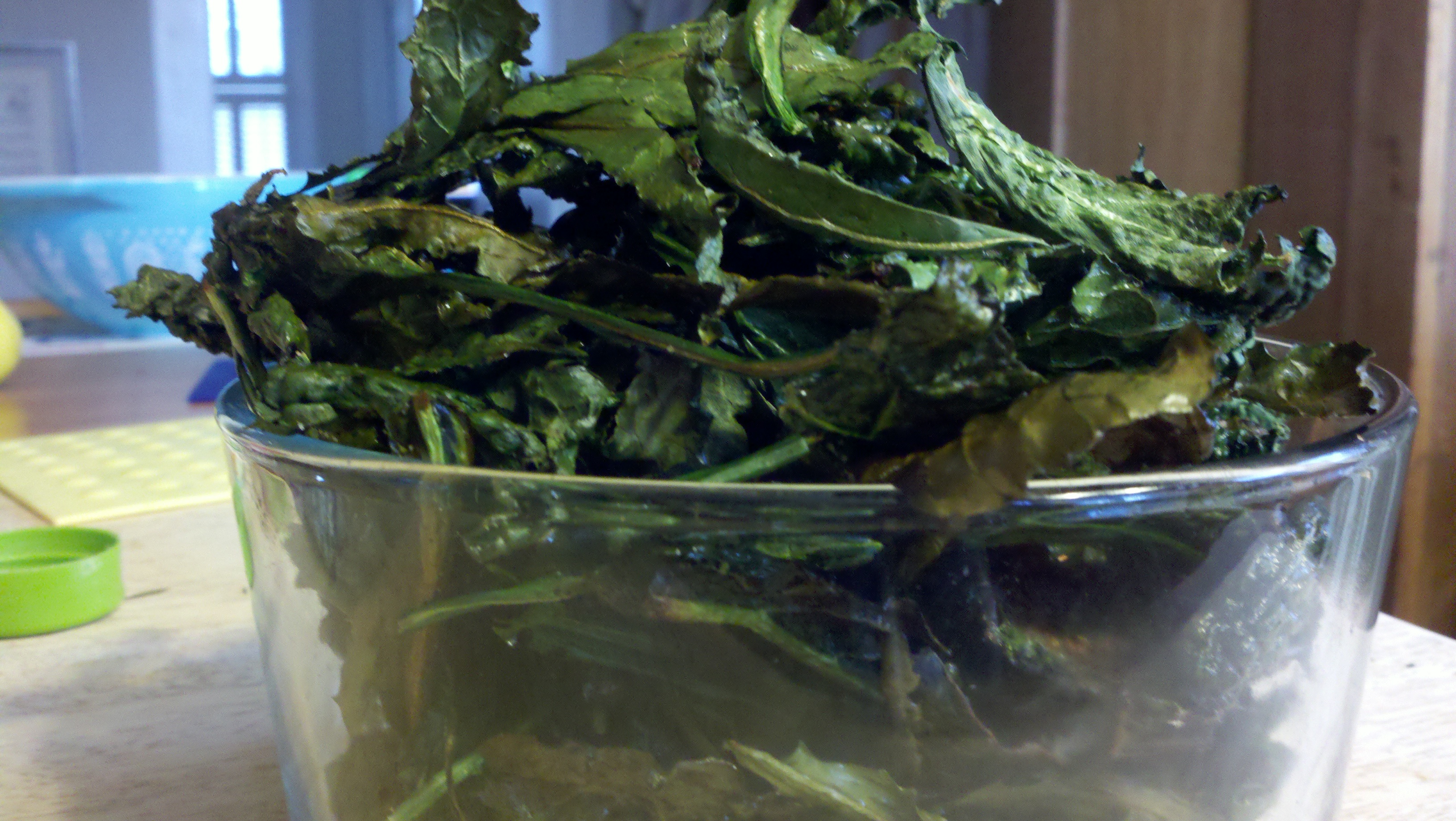
The first batch was way overdone, tasted kind of like what I’d imagine the brown fallen oak leaves mid-November might taste like.  Yeck.  So I cut the cook time back to 4 minutes or so each side, and ended up with:

Salty, garlicky, thin, crunchy and good!  By coincidence, I saw a woman picking up a package of them on the chips aisle today at Greenlife….it looked like those weren’t made from dinosaur kale but a curly kale variety….I still have one curly kale plant left, may try to make chips from that one next.

One of the other recipes was for a watercress and barley salad.  I still have a ton of watercress, so I was glad to see a recipe that called for 3 cups of watercress.  The other ingredients were:  cooked barley, celery, red bell pepper, and pear;  the dressing was fresh OJ, olive oil and apple cider vinegar; on top, pecans and blue cheese crumbles.

I figured since I have so much watercress, why not double the recipe?

I think I made enough to feed 20 people.  (My husband has dubbed this my “portion control problem” — I’m notorious for doubling and tripling recipes, thinking that the original recipes can’t possibly be enough food).

Despite the mountainous proportions, it is delicious — fresh and light, plus the article sings the praises of all the health benefits of eating watercress.  We will be very healthy as we have enough to last all week (and share with our neighbors too).  The cress is sturdy enough that it didn’t get soggy like most lettuce does once it’s been mixed in a salad and tossed with dressing.

Oh, and a sidenote:  I’m beginning to understand why “Food Stylist” is a profession.  I swear these dishes look much better in person (and taste really good too)!  (I just read on a culinary school website that food stylists can make $400-$800 a day — whew!)


3 Comments

Posted by on March 21, 2011 in Uncategorized


Breath of Spring

“…The yellow birds sing when they see it bloom

For they know that spring

Is coming soon”

Gillian Welch, Acony Bell

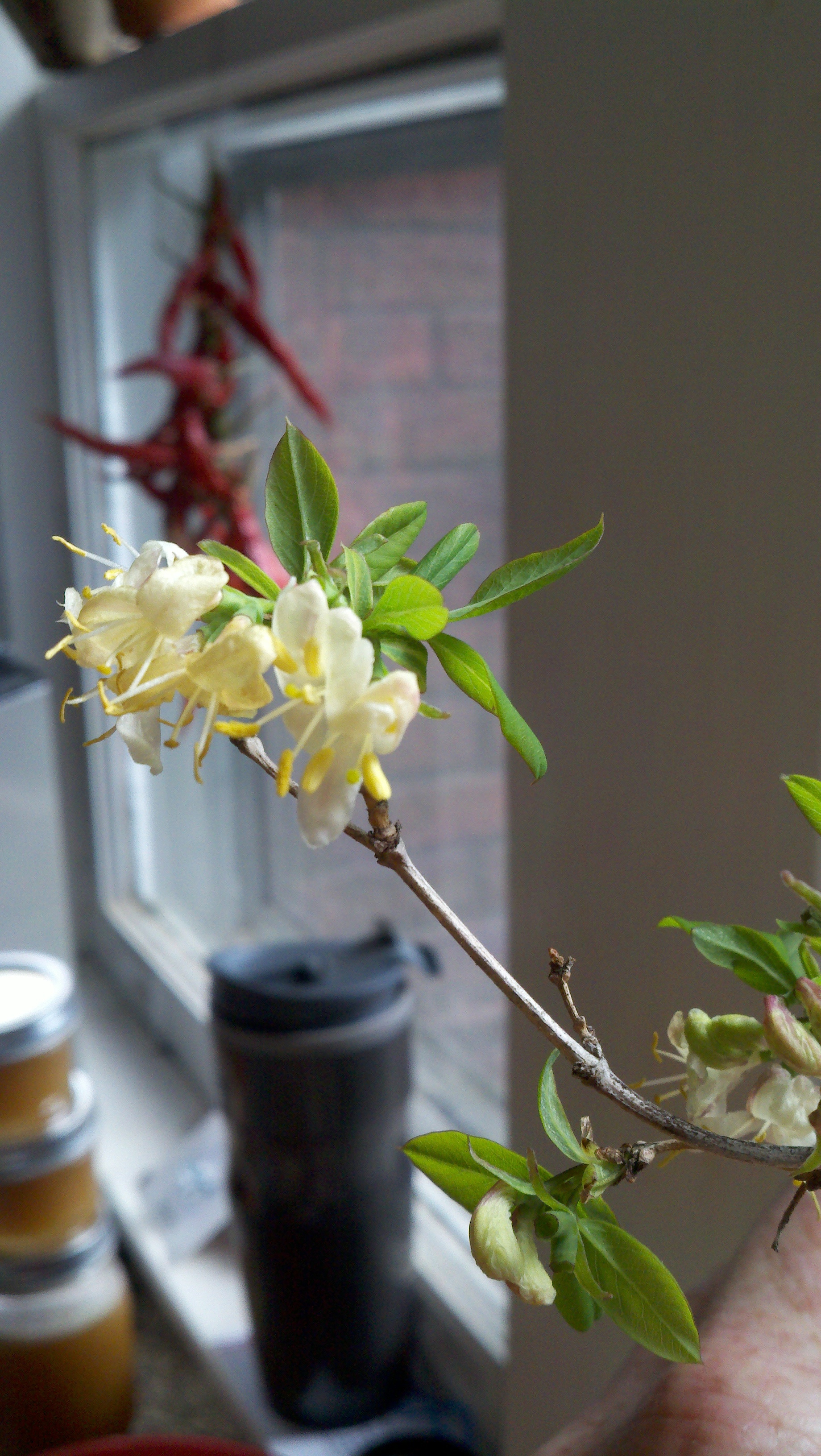
Well, this isn’t a shortia bloom, which G. Welch sings about, but instead the bloom of a honeysuckle bush, also called Sweet Breath of Spring.

There’s a place on my running route up on Sunset Mountain where there’s a patch of them. The shrubs themselves are nondescript, but the fragrance is distinct, strong and surreal when I’m out running in the cold and everything is dreary gray.

They bloom before everything else, and I’ve even seen them blooming in late January if the weather is mild (not this year, though!)

The first time I noticed the smell, I thought I was having an olfactory flashback to 1978 — I swore I was smelling Froot Loops while I was running on Sunset.  (Ah, sweet forbidden Froot Loops — I only got to eat them at friends’ houses, we only got Cheerios, bleh).

This time every year, I interrupt my runs to stop and smell them (and occasionally I’ll break off the end of a stem and take it back to the house with me to enjoy the fragrance inside).

They definitely mean the end of winter for me — finally!!

 
Leave a comment

Posted by on March 17, 2011 in Uncategorized


Toddler gardeners

I’ve found a redeeming quality to the repulsive-looking, destructive garden pests that live in the soil of my raised beds.  Instead of seeing them as existing only to destroy my plants, I now realize that they can hold the attention of even the most distractible toddler.  Even my younger boy has fantastic bug-hunting skills that can be put to use in our garden.

We found dozens of these while digging in the beds, preparing to plant seeds last week:

I think they are some kind of beetle larvae, and I’ve been told they eat the roots of plants, so I don’t feel too badly that I let my boys make a corral for them and play with them till they expired in the sunlight (these grubs don’t last too long above ground).  I saw a mockingbird having an absolute feast on them later after we’d gone back inside.

My older boy had taken great delight in helping me pick them out of the newly-turned soil, and it definitely made it less of a chore for me as we were working together.

These grubs – and most other garden pests – don’t bother me as badly as slugs, maybe because I’ve never seen them destroy a bunch of seedlings the way a couple of slugs can in one spring night.  My boys love to slug hunt….we also hunt by turning over rocks and asking “Any buggy home?”

They love it — we find slugs, roly-polys, crickets, ants and the occasional big hairy spider.  (One afternoon last month, they were supremely entertained when I went to pick up a cricket for them, but instead, when I opened up my hand for them to see, there was a large spider. I screamed and tossed it somewhere, then started thrashing about thinking I’d flung it up in my hair — ewww, shiver — I’m glad at least they thought it was funny).

I do feel kind of badly about squishing the slugs in front of the boys, and they’re not quite old enough to understand WHY exactly they’re bad for the garden, so usually I toss the slugs out in the road while the guys aren’t looking and let the heat of the asphalt and/or passing cars do the job for me.

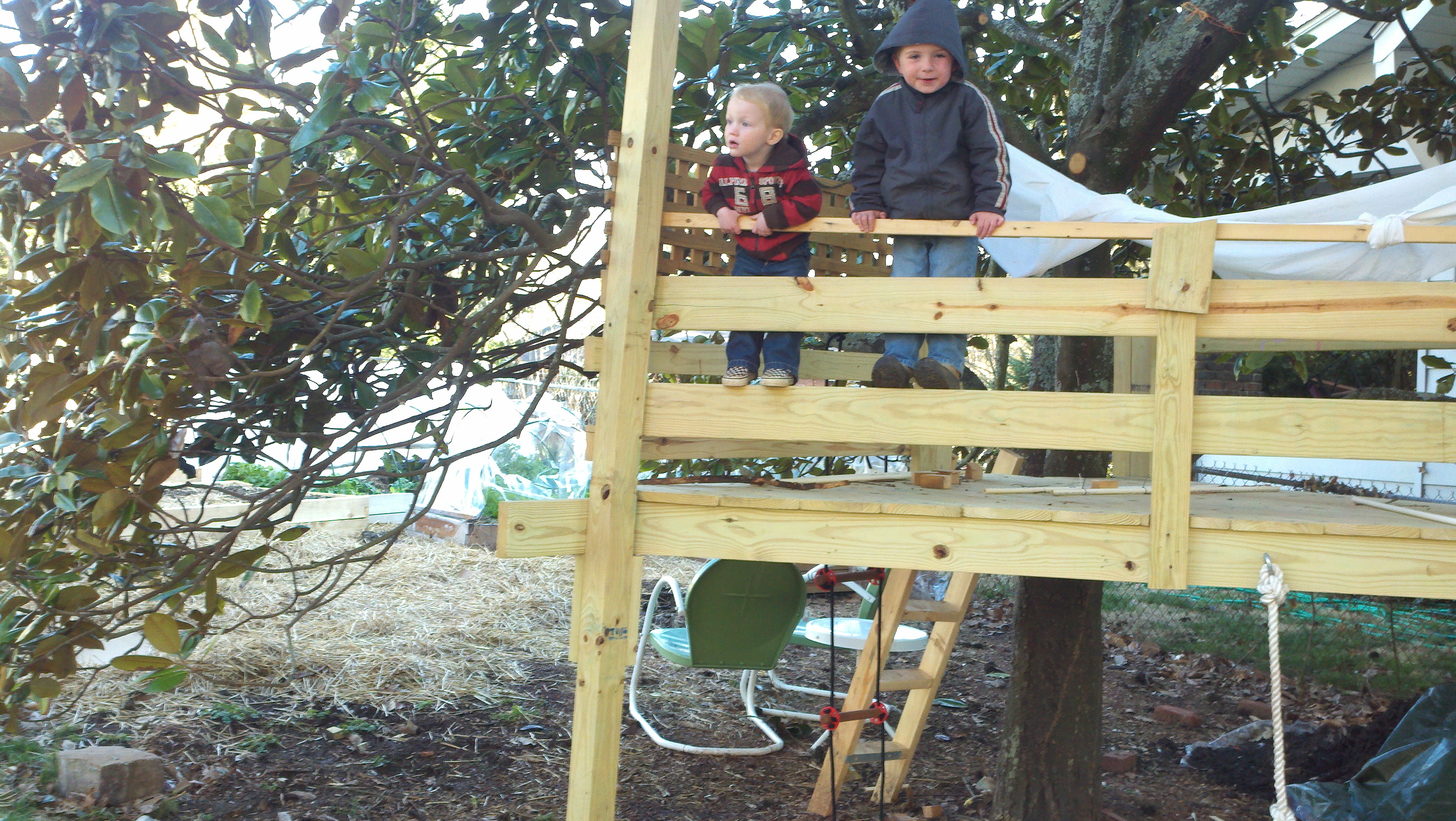
Another great addition to our garden this spring is the low treehouse my husband and brother built right next to the raised beds.  It’s in an old magnolia tree, and it’s not too high up, so they can get up and down fairly easily without us worrying about them tumbling out.

I also enlisted my older boy in planting some seeds indoors with me this afternoon.  I tried using the little peat pellets, as they looked like something inviting for a 4-year old.  Add water and watch them grow instantly!

Watering peat pellets

How perfect….sure enough, he loved watering them and watching me plant seeds (the tomato, pepper, and especially the epazote seeds were too small for his fingers to handle — the beet and radish seeds are more his size, and later in the season he’ll be able to plant bigger seeds like squash, beans, and sunflowers).

Tiny epazote seeds


One of these things is not like the others

It’s good I’m not a commercial grower.   While my vegetables always taste great, they sometimes lack in the looks department. A child of the 70s, I couldn’t keep this out of my head when I compared one of my sweet potatoes to some I bought at the store:

I baked all 4 together at 425 for about an hour.  I had to take a cleaver to mine before baking because it was so much thicker in the middle and would have cooked way slower than the others.

I did a taste-test and really couldn’t tell a difference, except that mine was a smidge less sweet.  I wonder if that’s because I’d harvested mine last September and the sugars had broken down while it was stored in the basement over the winter?

It also passed toddler taste-test too.  My older boy said “this rocks!”  Well, he says that for just about anything that has melted butter on it, so maybe that’s not a totally objective critique….but hey, he ate a vegetable! (We’re going through a phase right now….)

Here’s Mr. Hooper and a funkier version of the tune:


1 Comment

Posted by on March 11, 2011 in Uncategorized


Honey harvest

One thing about taking pictures for my blog is that my camera phone gets a little dirty.  I’m writing about gardening and composting, so when I take photos to put in a post, my hands have usually been in the dirt or I’ve been wrangling a muddy toddler.

Yesterday I took my first venture into the world of beekeeping: I harvested 10 racks of honey from my brother’s hive in his yard. Now that was a challenge — trying to take pictures while working with honey. Not to mention that was my first time doing this, and by myself too. My 4 year old was keenly interested, but mainly in eating the honey. (Fortunately for my beginner-beekeeping self, there were no live bees involved — it was just a box of racks full of honey.)

Consequently, my phone got pretty sticky as I was trying to capture some images of the whole process. And the honey can be found in various places in our house, from the front porch to my 4 year old’s forehead.

My brother showed me the basics of how to get the honey from the rack, then left me to figure it out by myself.   So, from here on, remember that I’m no expert, and that there might have been easier (and more correct) ways to do what I did:

First, I used an electric hot knife to remove (“de-cap”) the wax covering the honeycomb cells:

The left side of the rack shows the cells that still have the wax caps.  The right side is where I just made a swath through with the hot knife and honey is exposed.  (You can also see where the honey kind of “cooked” on the blade and turned brown.   I don’t know if it was supposed to do this, like maybe I should have been wiping the honey from the blade while working —  it didn’t affect the outcome but it will be a pain to clean I’m sure.)

**Note — the above tool is a hot. knife.  My thumb will attest to that.  A burn/cut combo. Ow.  It was a scary enough tool that even my boys wouldn’t get near it, and they’re usually attracted to anything electric, sharp, and/or poisonous.

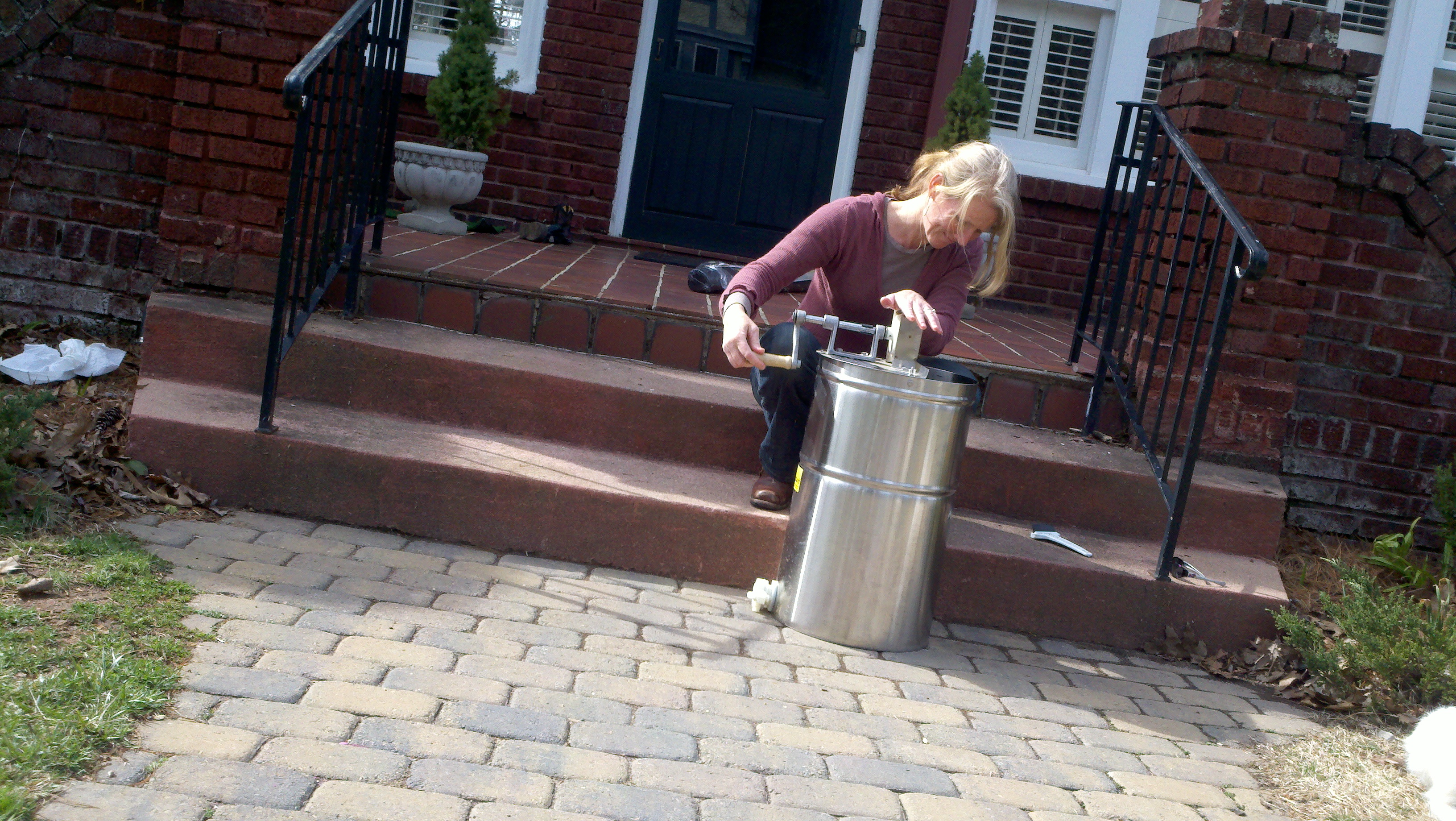
Spinning honey on front porch

Two uncapped racks went into the extractor at a time.  I turned the handle and it spun the racks (they were in a cage-like contraption inside).  It took about 10-15 minutes of spinning per set to get the honey out.

Something I’ve learned about gardening in the front yard is that it’s much more social than back-yard gardening:

When I had the extractor on the front porch, my neighbor’s landscaper, Shylock, came over to check it out. Shylock is from Zimbabwe, and he told me how he and his brothers get honey from hives in the woods there.  Getting honey from a wild hive is a whole ‘nother ball of wax (couldn’t resist)….I like the idea of bee boxes and protective bee suits myself, but it was truly fascinating to hear him tell about it.

When they were all done, I brought the extractor inside to sit on the radiator.  The warmth of the radiator made the honey less viscous so it flowed better when it was time to strain it.

It also made our house smell deliciously of honey.


Our resident Pooh bear was right by my side once the honey started flowing:  He eats a peanut butter and honey sandwich *every* day for lunch.  He’d love to be able to live on honey alone.

After all the honey went through the strainer and into the 5-gallon bucket, then it was time to put it into jars.


Yummm

My brother’s amazing sense of timing brought him back to the house right when I was starting this part — or as he described it, “the fun part”.  Knowing that I have a touch of adult ADD and am a little klutzy (both amplified when toddlers are around) he kindly reminded me that it was *really* important to keep an eye on the honey filling the jar — not fun when it overflows.

I am proud to say that I had no spills — amazing for me!  Here’s the beginnings of what we got: 

Its flavor is just perfect…it is flowery and light.  I have been eating straight spoonfuls of it and can’t stop.

I used random left-over jars so there were 3 different sizes, but we ended up with 10 pints, 3 half-pints, and 4 4-oz. jars.  If my math is correct that’s over a gallon of honey….

And one very happy resident Pooh bear.


Compost Farm

I posted about Sow True Seed a couple weeks ago to show where I got seeds.  This post is about where I got awesome soil this year — from some great folks too!

One of the best things I did to increase my food growing potential was fill my raised beds with good soil. Last March, I had a truckload of a compost mix delivered from a local mulch yard.  I needed more to fill the two new raised beds my brother and I built last week.

A few weeks ago I found out that my friend Maggie and her husband Jeff were just starting a compost company.  (She’s also the mom of my older boy’s good buddy, and she’s also one of their preschool teachers).  They already own and operate a landscaping company, and have been wanting to add a composting business to what they’ve got going on.

Through mutual friends, they met Andrew Huske, who’d started his own “compost production and waste stream diversion” company, Waste Stream Innovations, in Mills River (about 20 minutes south of Asheville), and Maggie and Jeff have partnered with him.  Andrew is on the production end, and Maggie and Jeff are now doing the “packaging” and marketing of the final product — a fine compost blend, perfect for gardening.  Maggie and Jeff’s part of the operation is French Broad Organics Recycling.

I wanted to check out what they were up to, and Maggie said to come on out to the farm with the boys (she told me there were tractors and giant dirt piles there — what a perfect field trip for two little fellas — plus, her boy was there so that was sure to make it a good time!)

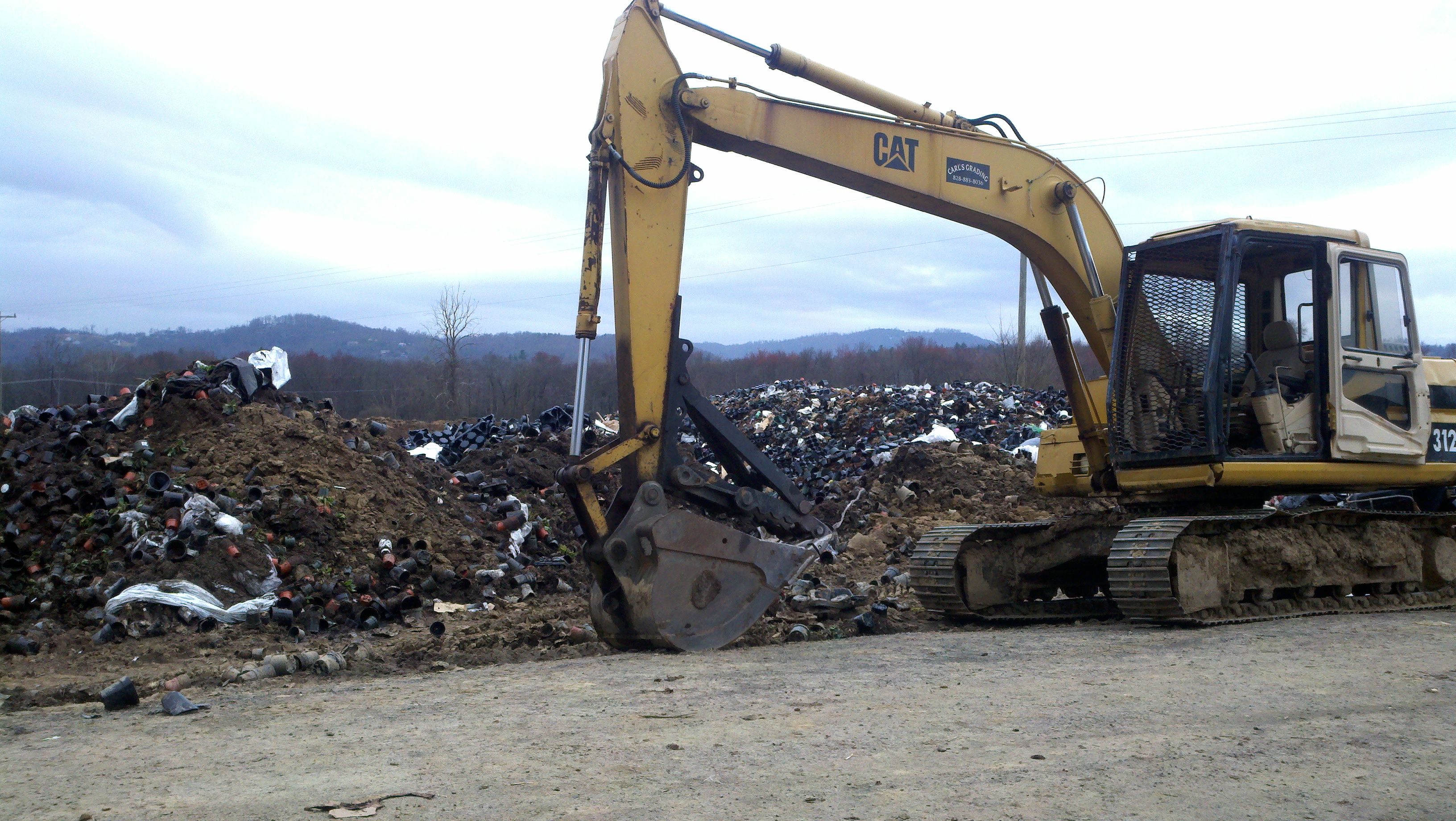
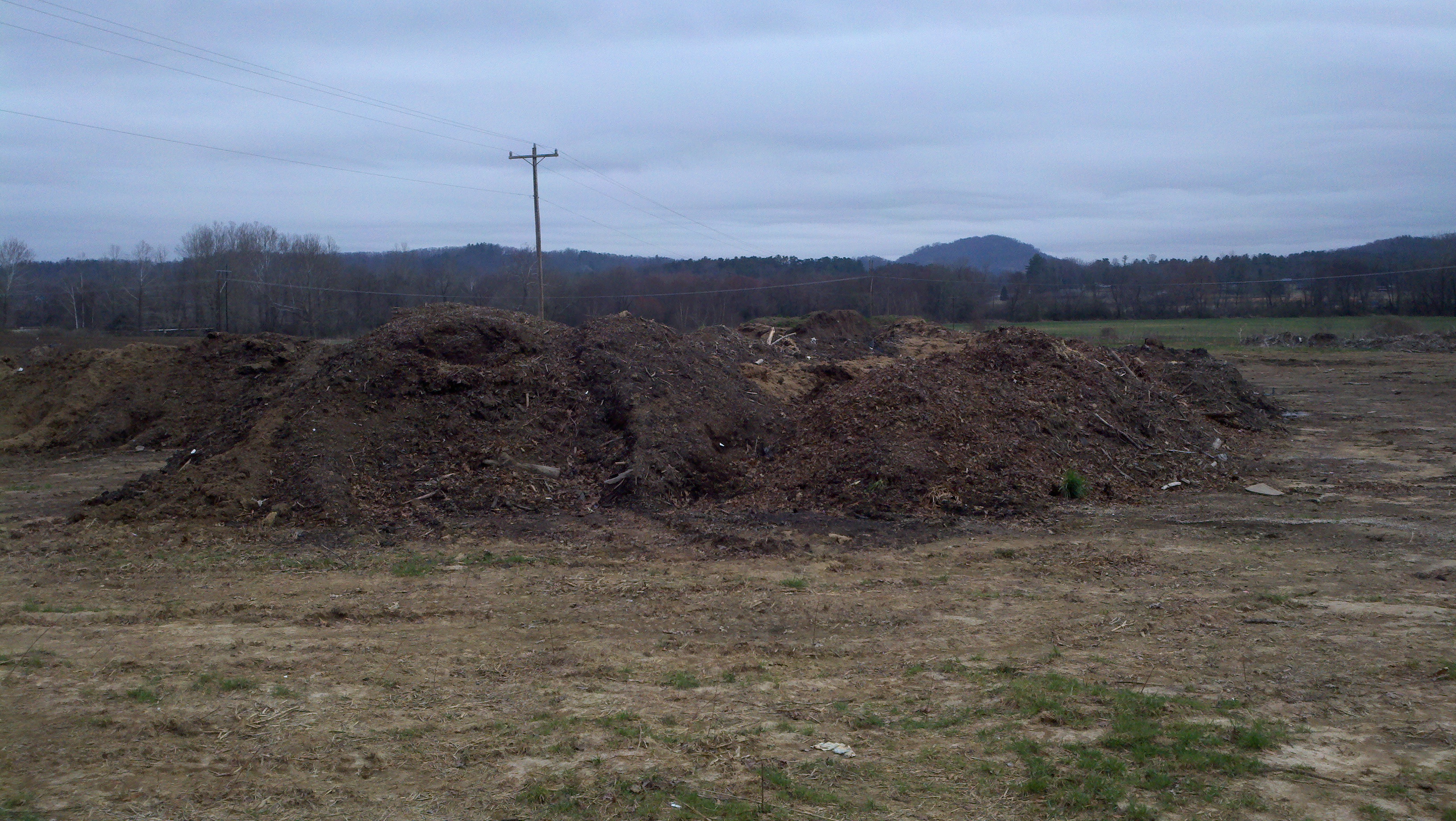
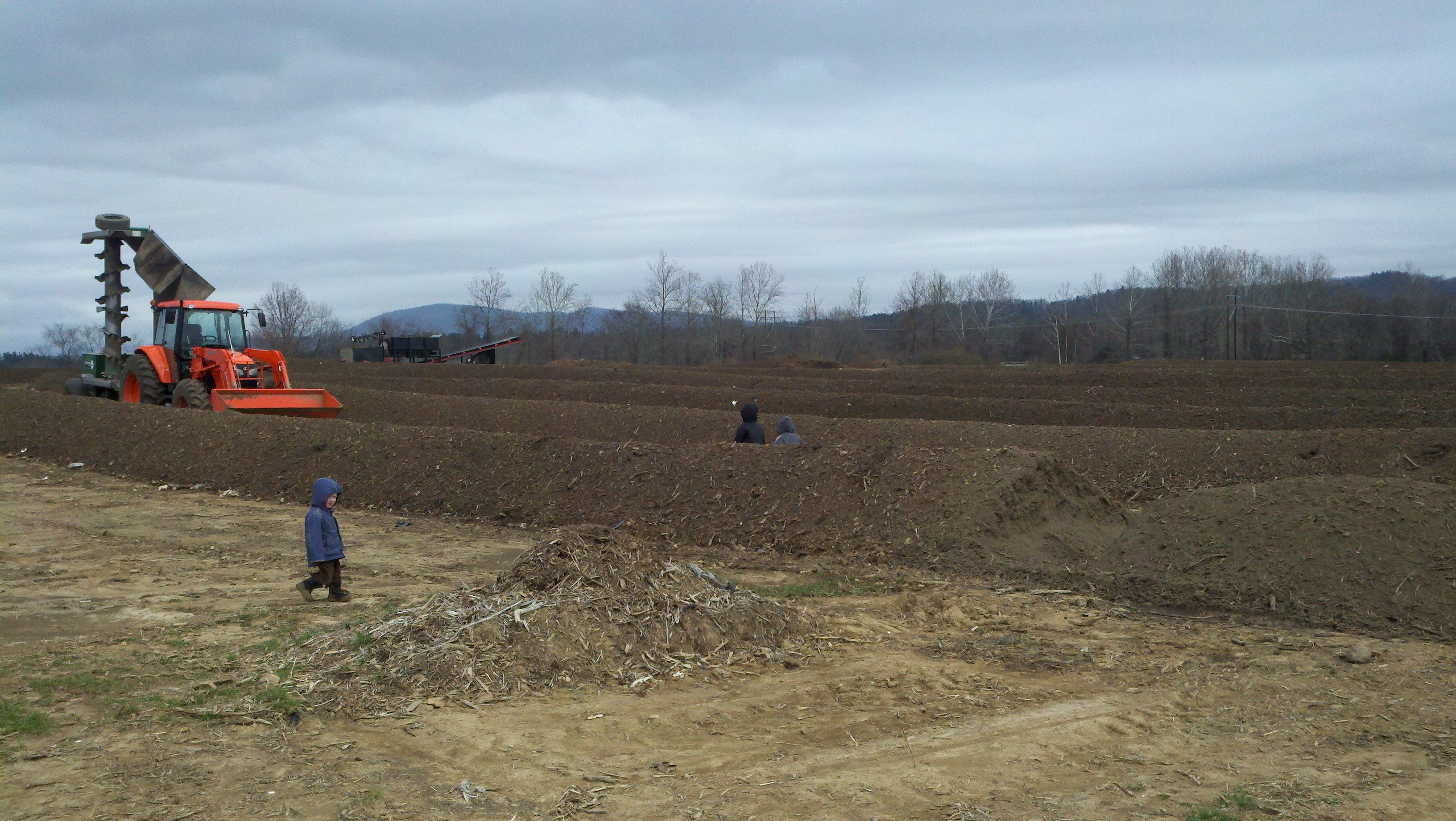
When we first drove up, this is what we saw, and my boys immediately forgot about using “inside voices” while I was driving — they were whoopin’ and hollerin’ seeing the piles and tractors:

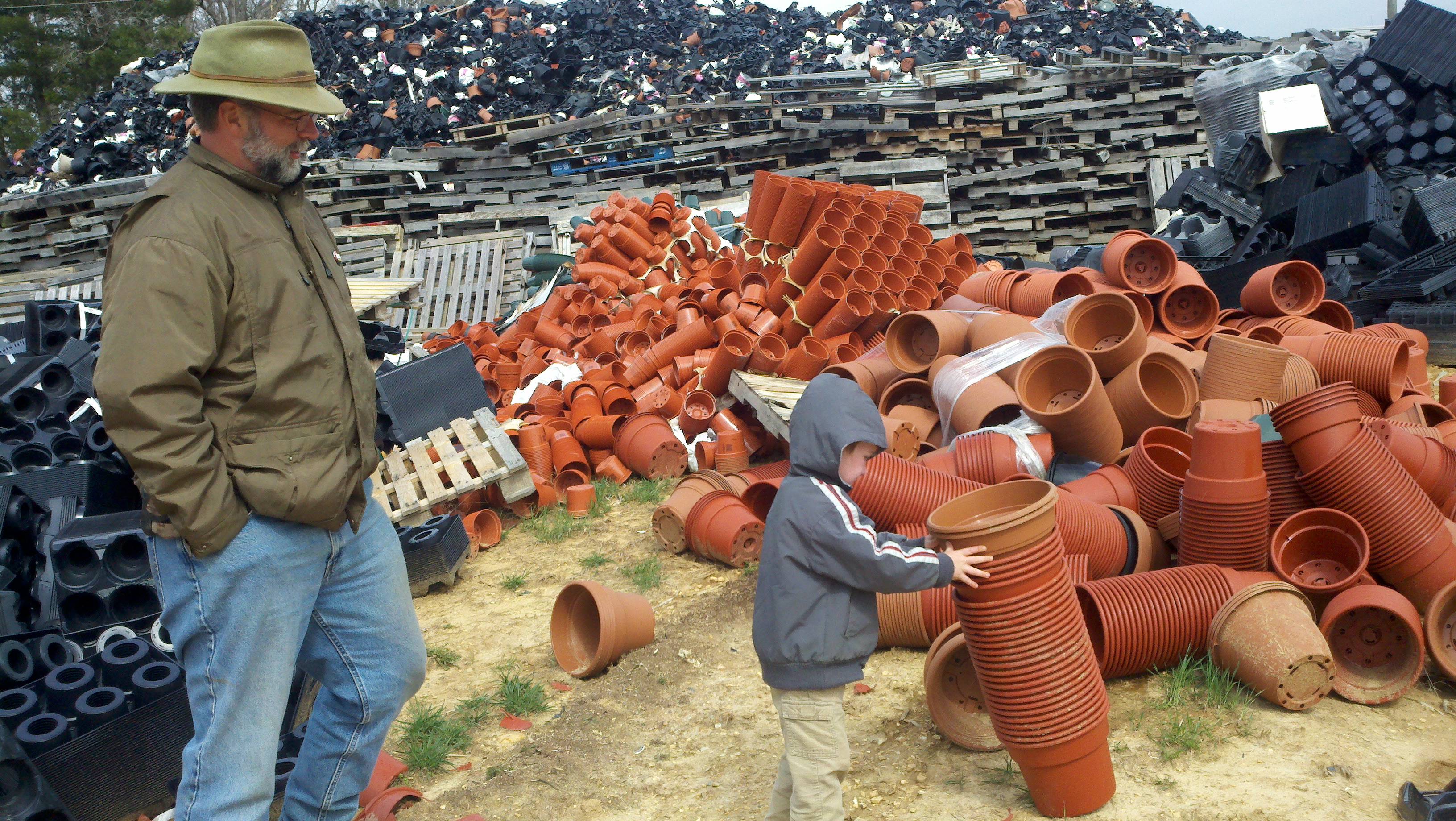
Maggie introduced me to Andrew, and they started me on a tour while Andrew explained to me how he got all this started.  A few years ago while he was working as a building contractor, he was at the county landfill dumping some construction materials when he noticed a truck from a large greenhouse company dumping their discards from their growing operations.

The load included plastic pots for plants and also a huge amount of potting medium for growing.  At the time, Andrew thought that there must be some way to re-use that material, especially since the company it was coming from was huge (Van Wingerden Greenhouses — one of the top greenhouse growers in the country) and that there was probably lots more where that came from headed to the landfill.
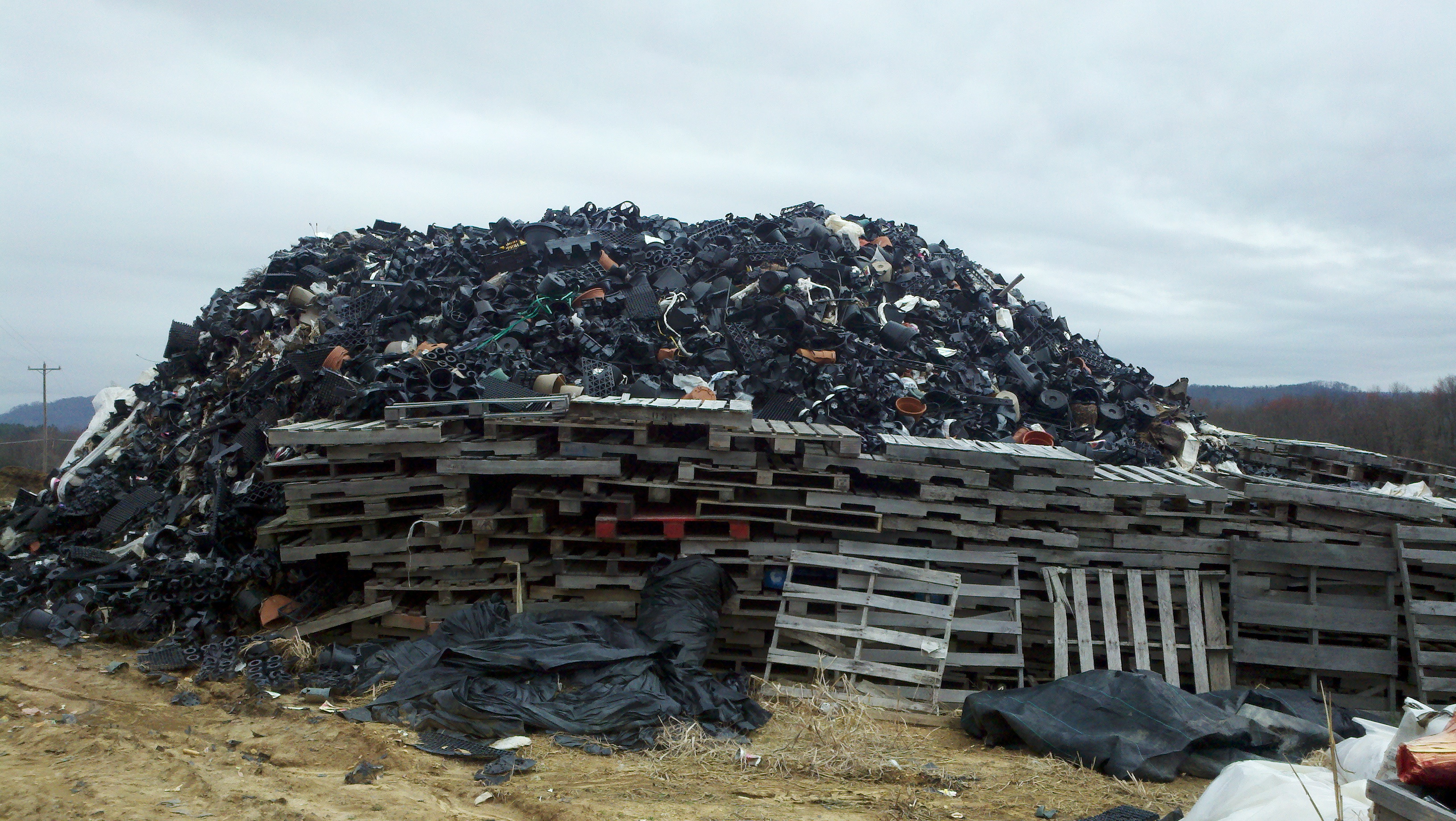
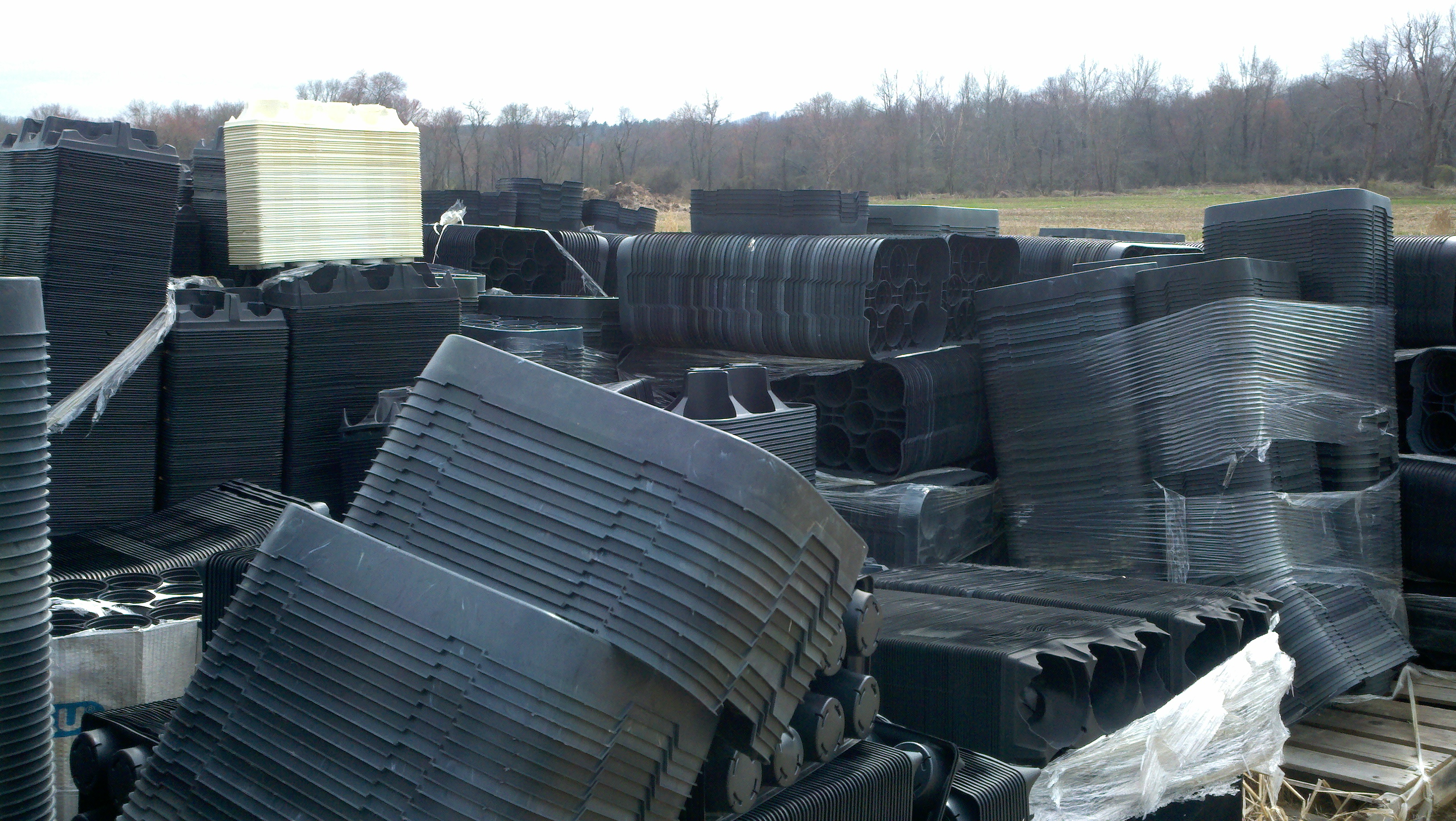
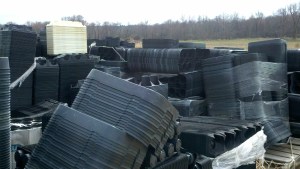
Plastic pot pile, saved from the landfill, ready for recycling

Well, when the economic climate turned sour for building contractors — a year or so after Andrew was at the landfill — his mental wheels started turning.  Soon he was in contact with Van Wingerden telling them about an idea he had to divert their waste from the landfill.  This would help them, as he estimates they were having to pay landfill fees for around 1200 tons of greenhouse “waste” annually.  It would help him, as he needed work as building contracts were drying up.  Van Wingerden thought it was a great idea, so Waste Stream Innovations got started.

Please excuse my lack of technical knowledge here, but I’ll try my best:   Andrew explained to me that they put the pots/potting medium mixture in a “tumbler” machine that separates the plastic from the dirt. The plastic goes into a pile as seen above, and that gets recycled (one of its reincarnations is plastic pallets).  There are several different kinds of plastics he’s getting from Van Wingerden  (and different ways they get recycled, and that’s about as far as I can explain) —  but basically, they’re getting recycled and staying out of the landfill.
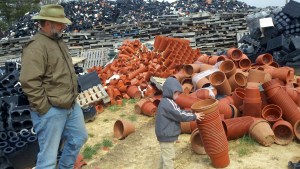
Andrew showing us around -- nothing to break here!
Getting ready to be mixed and put in wind rows

But….away from plastic and on to making compost.  After the potting mix is separated out, it gets mixed in with cow manure, mulch and leaves.  The mulch and leaves come from a few local tree companies who are happy to have a place to discard their brush from jobs.

They also come from the Henderson County brush/leaf collection.  There is also a huge mountain of wooden pallets from several different manufacturing companies that get ground down to add to the mulch mixture.

The “recipe” is”  2 parts growing mix (from Van Wingerden), 1 part cow manure, 1 part mulch and 1 part leaves.  (They’re testing composting the food leftovers from a couple local restaurants —  which I think is a great idea as I can only imagine how much food goes into landfills…they’re working on it and it may soon become a bigger part of their mix.)
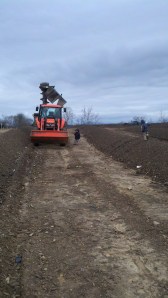

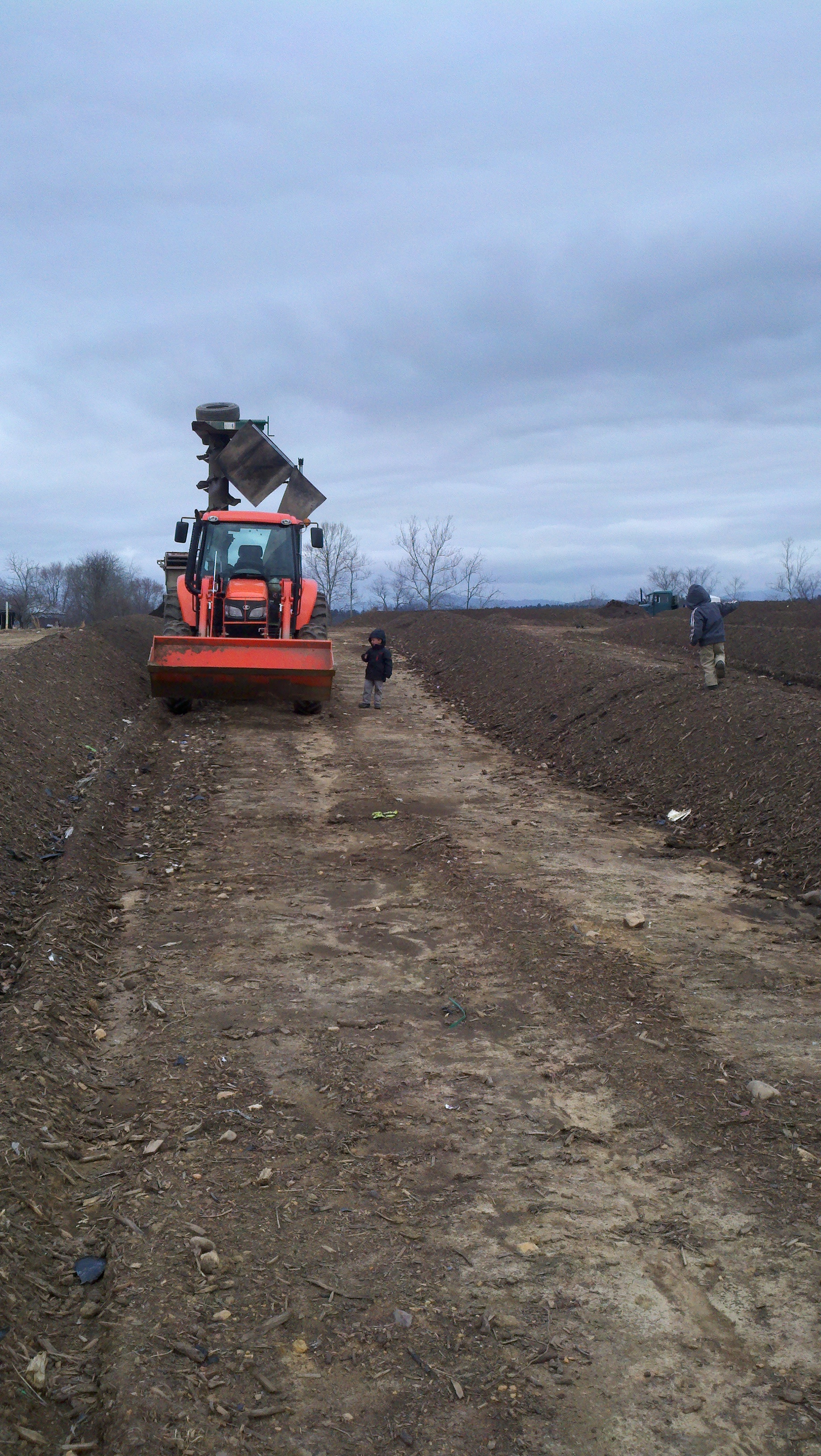
Now, up to this point on the tour, the boys were having a good time checking everything out.  Then we got to the wind rows, where the compost sits and decomposes and becomes that dark rich soil.

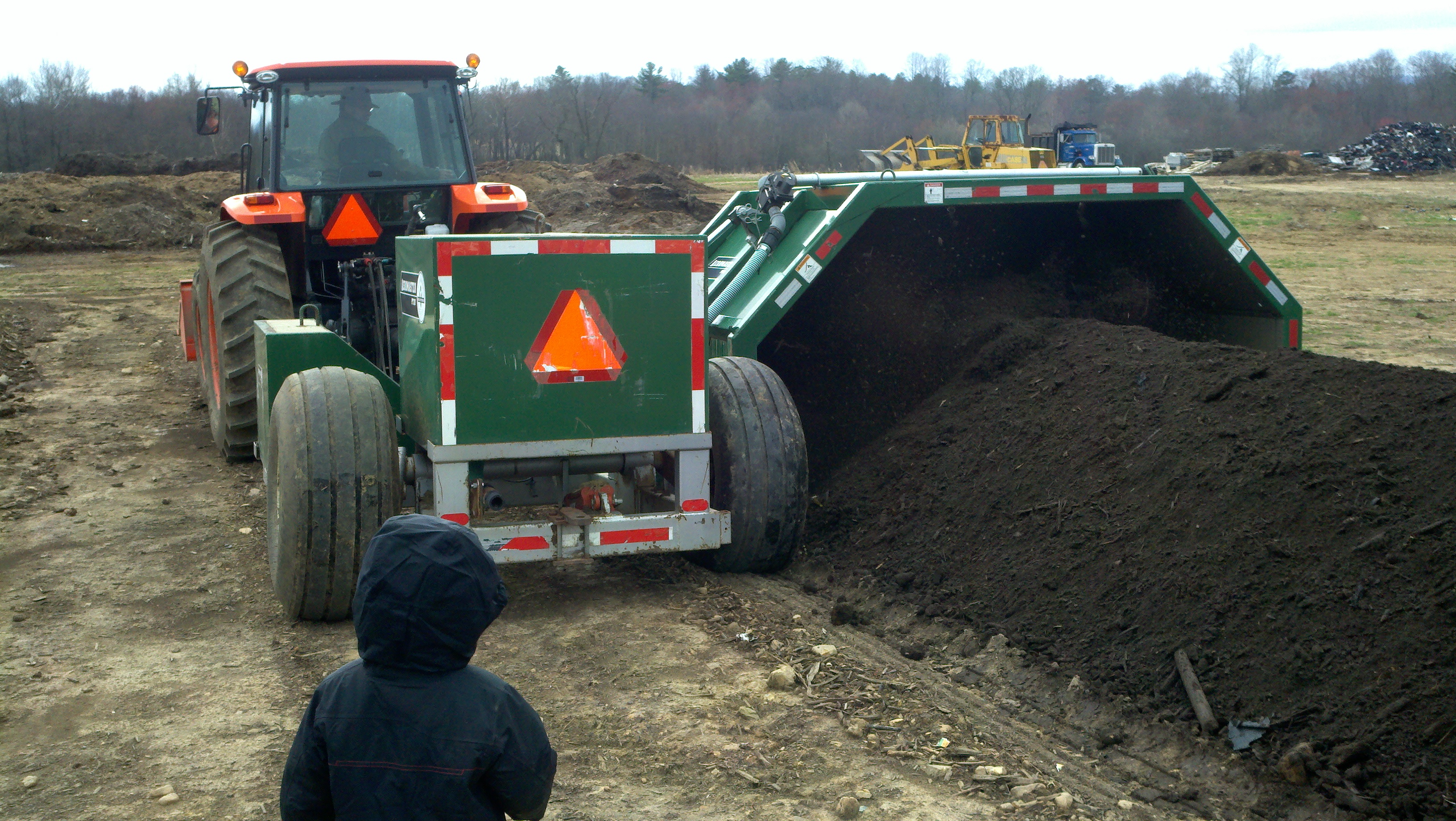
There’s another tractor here with an attachment specifically for turning the rows. Not only did the boys get to get up in the cab, but Andrew got it started and ran it down one row to show us how it worked.  These guys loved it!

Turning the compost in wind rows

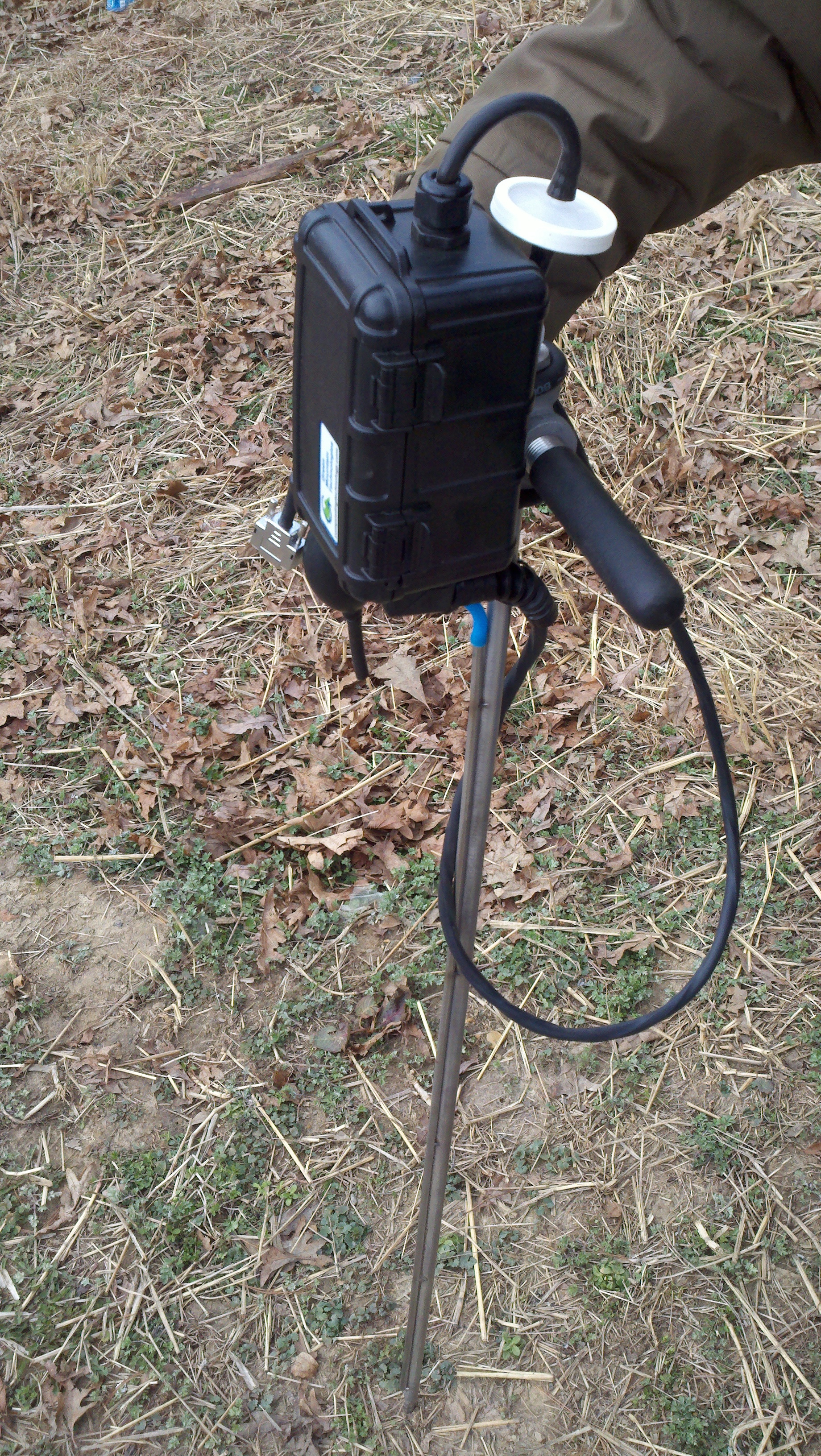
There are regulations set by the state as to how long the mixture has to “cook”, and what temperatures it must reach in order to be ready for sale.  Andrew gave me an example:  wind rows have to be turned 5 times in 15 days and have to get above 131 degrees.  Once it’s fully “cooked” and then cooled down, the compost is ready to go.
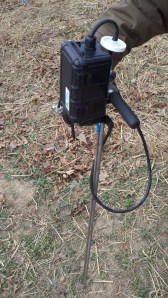
Compost thermometer
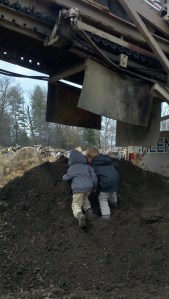
 

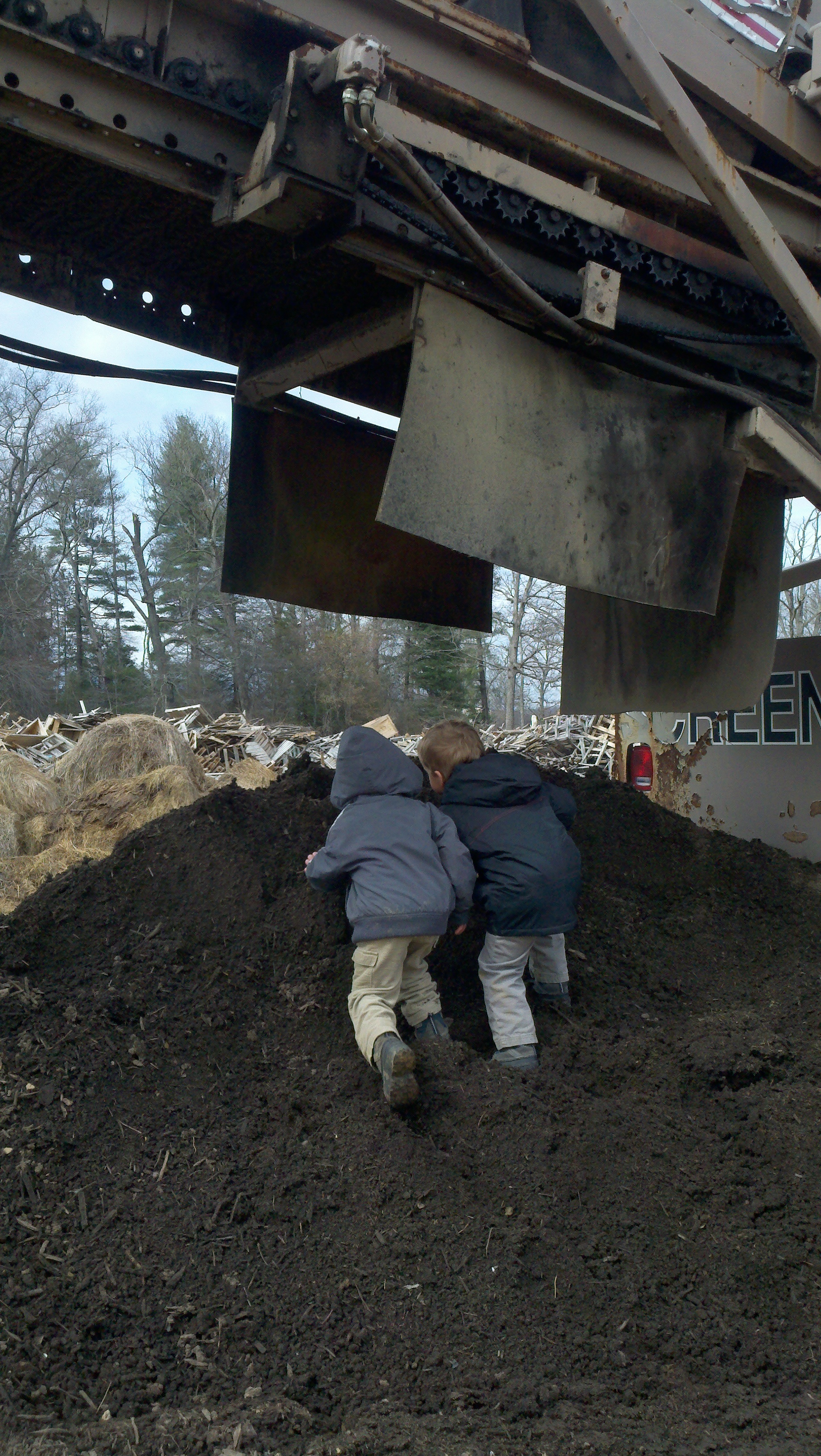
When the compost is ready, a big loader scoops it into the screener that separates out the big pieces that haven’t fully broken down (they get put back into the mix).  Now that was a fun pile to jump on/in:

After being screened, the compost is ready for delivery.


French Broad Organics Recycling (Maggie and Jeff) are now delivering it in bulk, or people can go to the farm and get it in their own trucks.  They’ve also sold some in 5-gallon buckets to local garden centers (Thyme in the Garden, Reems Creek Nursery,  Candler Feed & Seed).

Maggie told me their biggest customer is a vermiculture operation in Travelers Rest, SC.  I just checked out their website, so cool: Appalachian Organics.


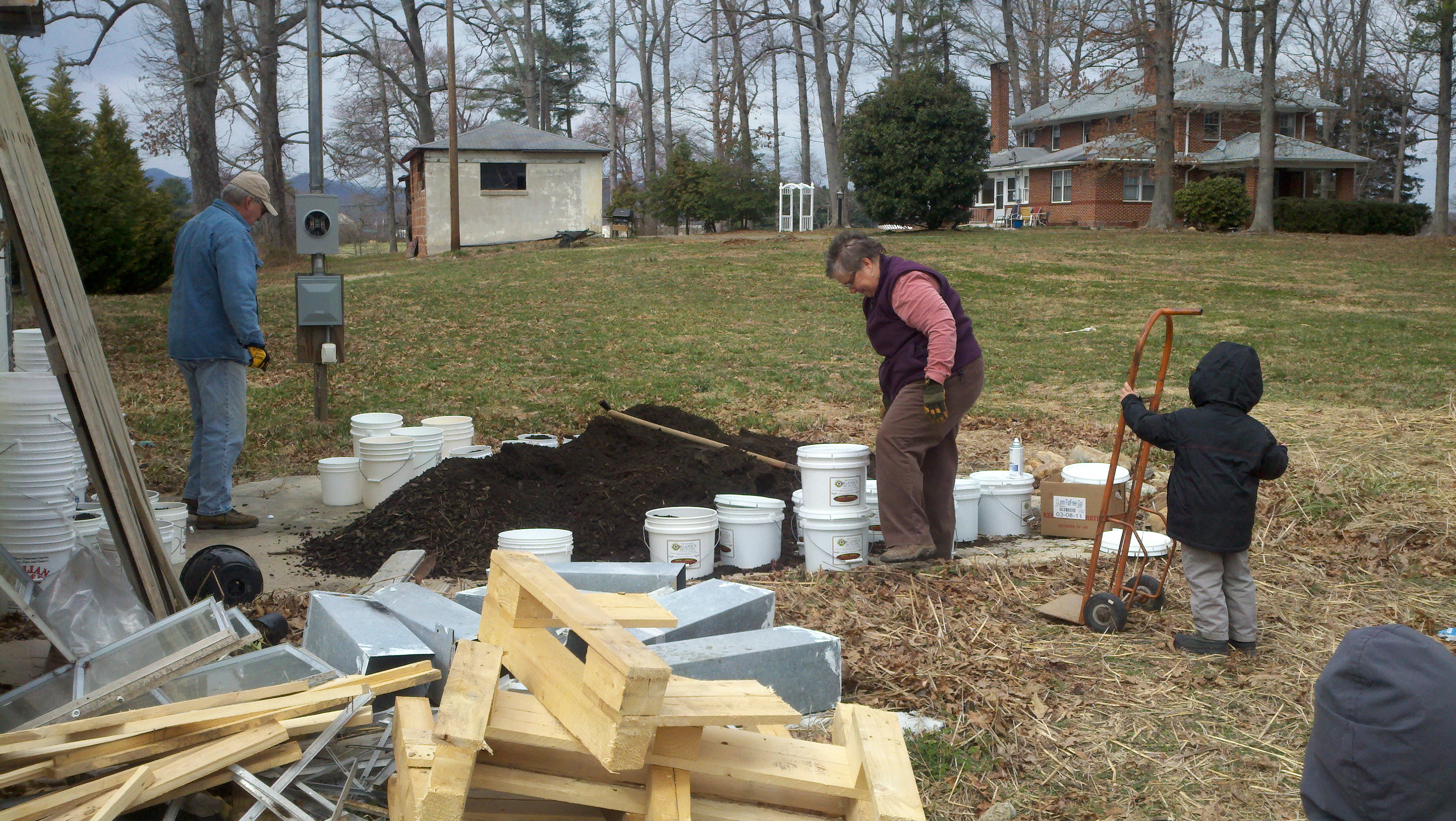
Here’s Maggie’s mom and dad helping load buckets to get ready for the Organic Growers School:


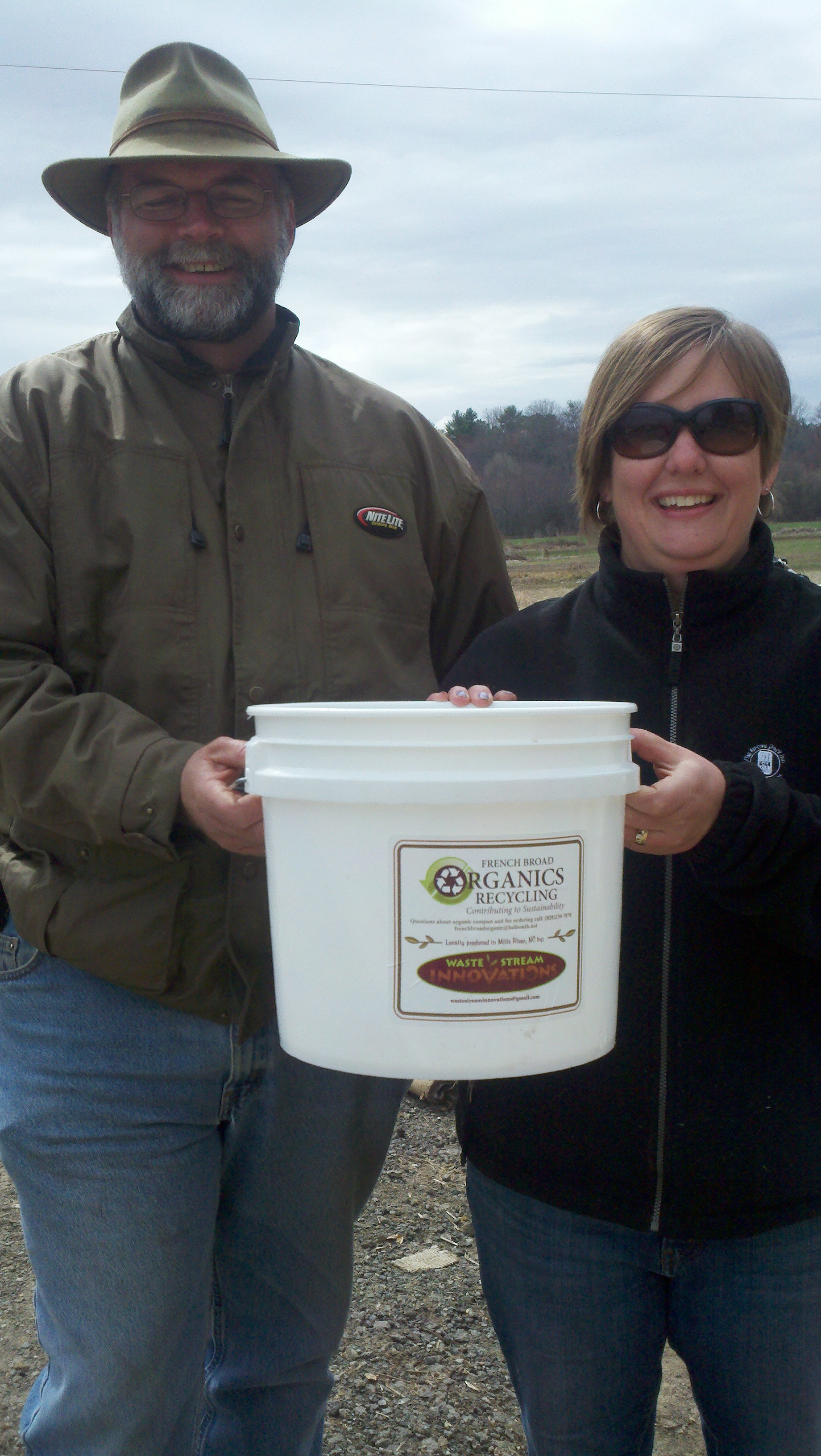
Here’s Maggie and Andrew:
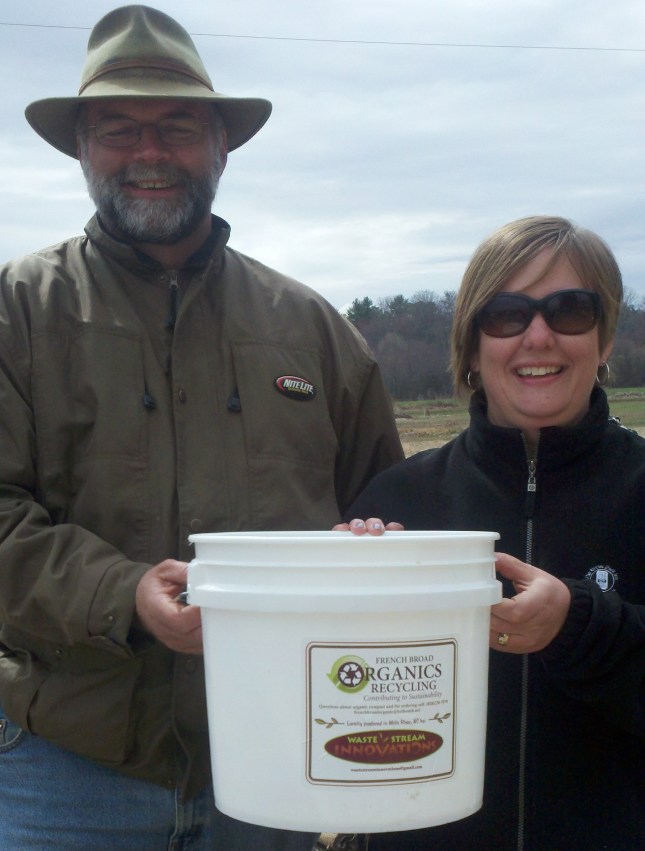


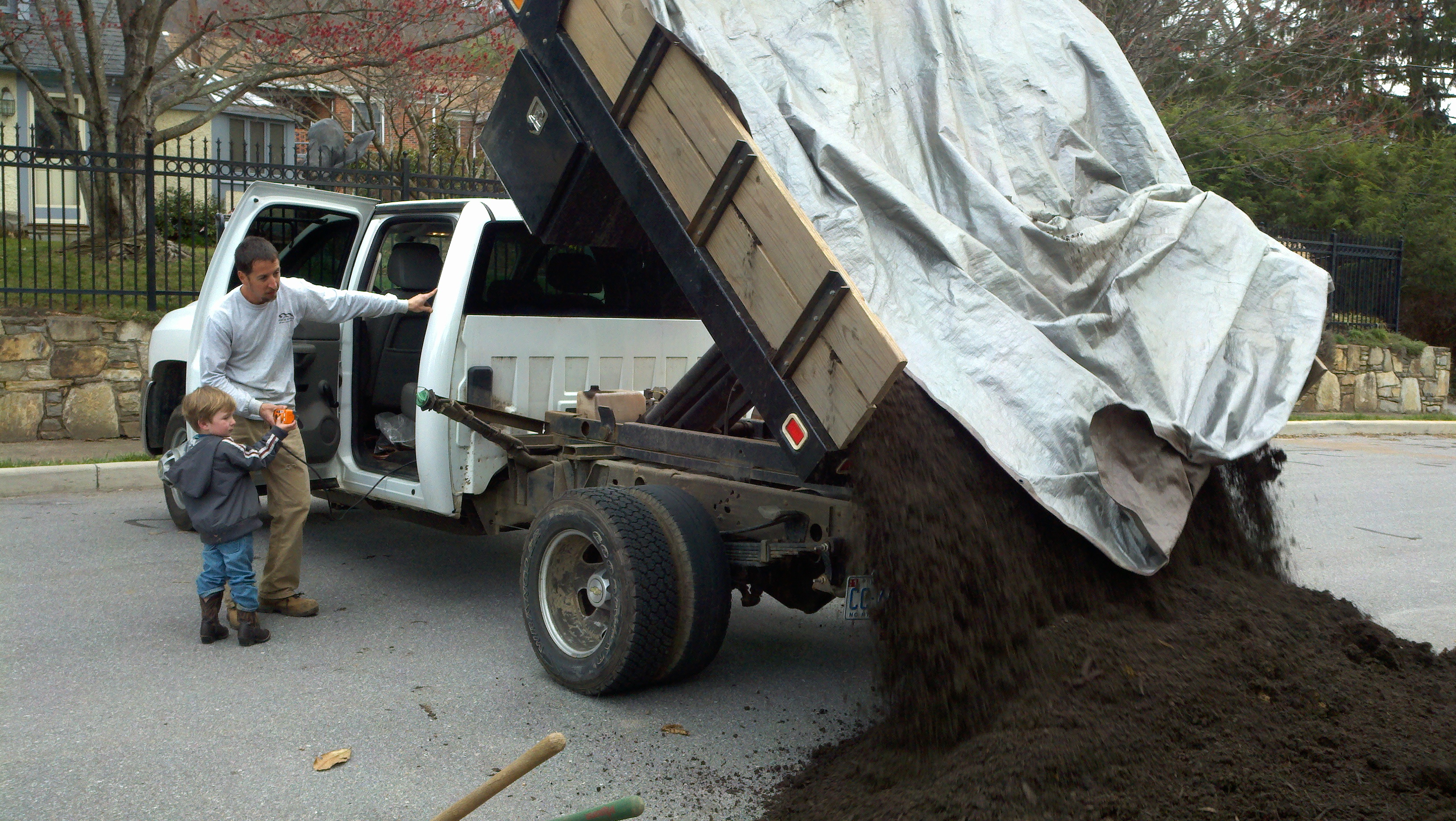
I bought 5.25 cubic yards of their compost, and Maggie’s husband Jeff delivered it to our house after we got home.   Jeff, a dad to 2 boys too, knows they love to do stuff like this:


Operating the dump truck

As soon as this rain/snow clears (oh, March), I’ll be out starting to get this into the new raised beds.

Thanks for a great visit y’all!!


2 Comments

Posted by on March 6, 2011 in Uncategorized