RSS

Author Archives: ashevilleyardfarmer

Trading greens for gold

……*black* gold, that is.  Our compost piles have needed manure.  My dad still marvels at the heat produced by the compost pile in our backyard when I was a child. He says it’s the horse manure he used to mix in there.

He’d put a couple cardboard boxes in the back of mom’s station wagon, drive to the horse stables near our house, and shovel them full of horse poop.  I only went with him once because I saw a girl there from my school riding her gorgeous Arabian around the ring;  I was riding along in the 1978 Chrysler station wagon picking up horse manure.

I can do stuff like that now with my boys because they’re toddlers and their parental embarrassment gene hasn’t switched on yet.

I felt like I was repeating family history today.  Toddlers in tow,  I drove to my friend Anne’s house a few blocks away in our Honda Odyssey (can’t bring myself to say “van”) and picked up a couple big bags of chicken manure:

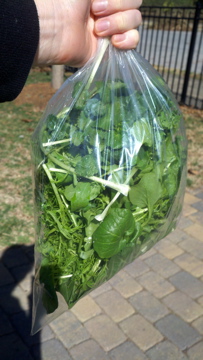
As thanks,  I gave her a bag of greens and spinach I’d picked this morning.


Anne has four Rhode Island Reds in her Asheville yard, a block or so from the university.  The hens have a cool pyramid-shaped coop built by her son-in-law (who also happens to be my MyGyver-esque, engineer next-door neighbor.)


Coop

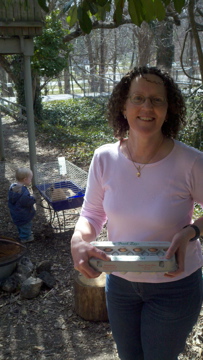
Anne raised these girls from chicks.  They are so healthy and happy, averaging an egg a day each: 

Here’s my younger boy feeding the hens some grapes.

Thanks for the eggs, Anne!!

I can tell Anne loves these hens, and also loves teaching kids about them (her grandkids love them too!)

Anne is currently re-doing her chicken “run” so they can get out and roam and scratch safely. Even with that, a small flock like hers doesn’t require a whole lot of yard room, and they do just fine living among us in the city limits.  There’s a fair amount of Asheville city chickens around– check out Asheville City Chickens on Facebook: or http://www.urbanchickens.net/

Oh, and the chicken manure is now in my compost tumbler….thanks Anne!


DIY raised beds

  • DIY = Do It Yourself
  • DIWH = Do It With Help

The latter better described what I started yesterday.  Actually, it should be:

  • DIWLOHFB = Do It With Lots of Help From Brother

(OK, I better stop, I am an “initial-talk”, or “I.T.” addict and can easily get carried away.)

This time last year, I was in such a sleep-deprived fog from a year of colicky-baby nights (and no-napping days) that I didn’t even consider trying to build my raised beds.  So I ordered some cedar raised bed kits online from Natural Yards and was thrilled to be able to put all four beds together in less than a half hour— seriously.

Now that my almost-two year old has recently liked sleeping (hallelujah), my brain is working better,  and the stretches of time when I can get things accomplished are starting to, well, stretch out.  So I’ve decided to expand the garden with a few more raised beds.  And instead of ordering kits again,  I attempted a DIY/DIWLOHFB project to build the beds on my own.

After enlisting my brother’s help, we got all the supplies, started building, and I by default was the helper/gofer.  I didn’t mind a bit — as a mom to toddlers, it’s nice to have somebody else be in charge sometimes!  Using the exact design of my existing from-kit beds, we got one bed done (measured, cut, assembled) before the first thunderstorm of the year came roaring along mid-afternoon.

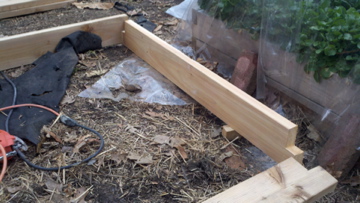
The ends of the pieces of lumber fit together after they've been cut. We cut and stacked another layer on top of these (making the beds 12" deep), then drilled holes all the way through the overlapping ends and secured them with metal dowels.

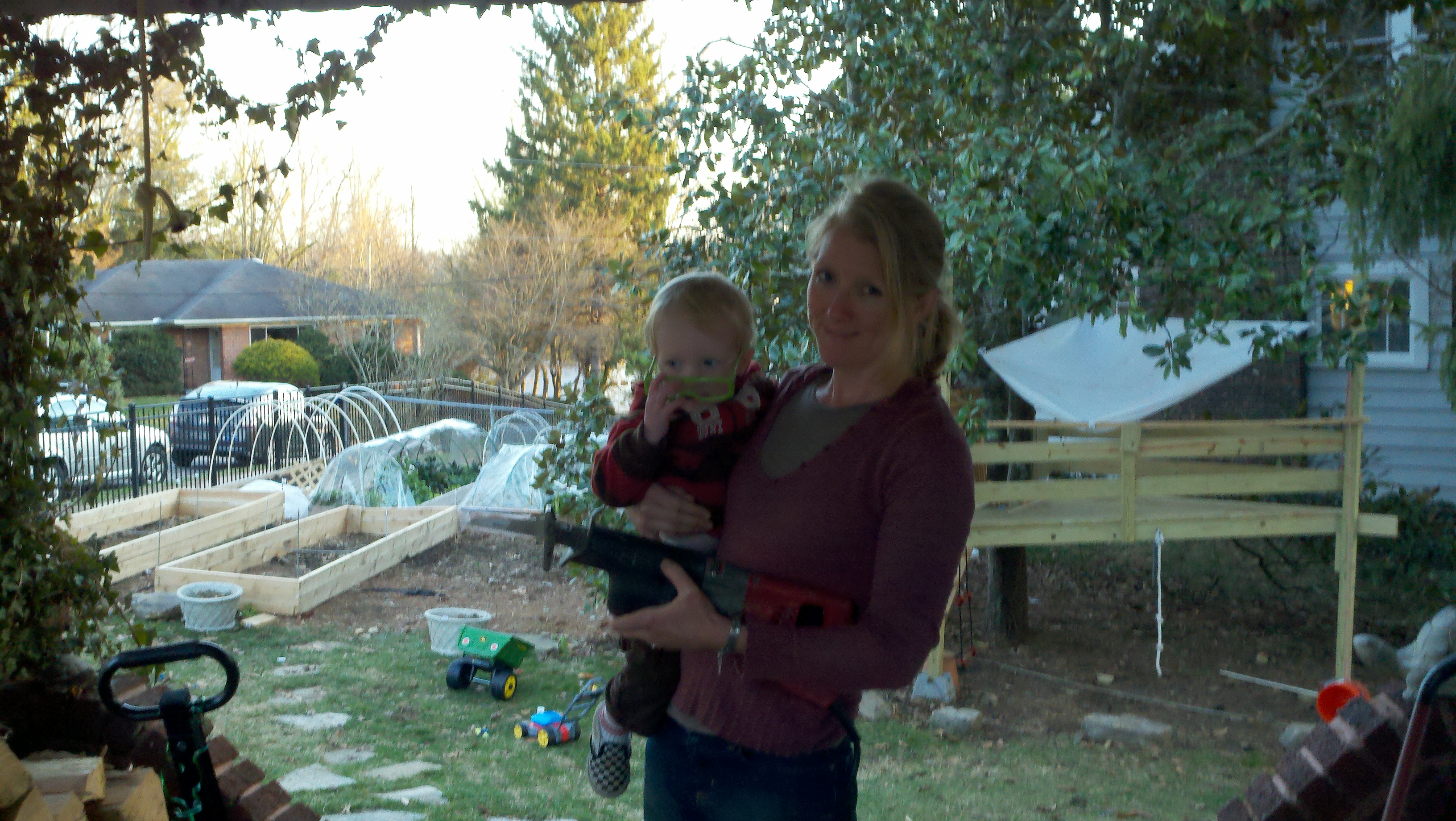
My brother was in meetings this afternoon.  I was dang determined to get the other bed done, so I plugged in the Sawzall, got the speedsquare and went to work, measuring and cutting the cedar boards.  (I’m talking like I know what I’m doing, when actually I’m talking like somebody who knows *just* enough, but not quite enough.  Just wait.)

Well, I was really DIY this afternoon, all the while entertaining my older boy and the neighbor girl with fun games —  like pretending the scrap blocks from the lumber I was cutting were “rocket fuel” and “magic invisibility bars” to use in their treehouse adventures.  I was feeling pretty cool and quite capable (hubris; pride before the fall).  Should have known it was just toooo easy.

Curses.

Just as I was on the final cut, by brother drove up.  Oh, was I proud that I’d done all that by myself — in under 3 hours!  We went to put the pieces together, and — oh **$&%#.   Cavewoman Carpentry, at its finest.

Mama tried, Mama tried.

Fortunately, my brother was able to fix it all (he basically cut off the end notches I’d cut and started all over again).

Uncle Craig saves the day

Lesson:  Raised beds with cedar lumber are awesome. They look good, the cedar is safe for you and your plants, and it’s durable.  However, if you’re going to DIY and you’re like me (limited carpentry skills), get some help from someone who knows, or plan very well.  (I’m not a planner when it comes to gardening, hence my blog sub-title, “…by-the-seat-of-my-pants.”  Smarty-pants brother reminded me “Measure twice, cut once.).

Price-wise, it was about half the cost of the kit beds I’d ordered online.  So definitely an advantage there if you’re competent enough to do the carpentry part.

Note:  You can make raised beds from just about anything and there are all kinds of ideas on how to do it on this about.com page on organic gardening.


So true, Sow True!

When it comes to locally-grown food, Asheville has a wealth of resources.  There are tons of popular tailgate markets, bunches of restaurants that rely on local farms for fresh veggies and meats, a co-op and grocery stores that sell local produce, CSAs, the list goes on.  There are organizations that promote the locavore movement, support local farmers and sustainability.

So, if it’s important to know where our veggies come from, wouldn’t it also stand to reason that it’s important to know where our seeds are from?

Before I get beyond myself, as I’m familiar with – but not fluent in — the preceding organizations and concepts, I’ll stop while I’m ahead and tell you one fun thing I did last week (related to all of the above) after my youngest child overcame the flu (ugh).

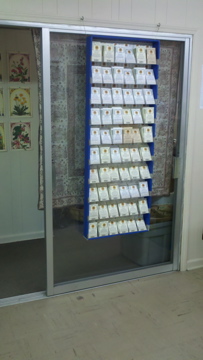
In the grocery store a couple years ago, I’d noticed a seed rack with packets from a local seed company. Huh?

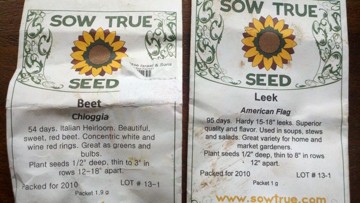
2010 packets

Local seed?  Intrigued with heirloom seeds (and the really awesome Sow True logo), I bought a few packets and thoroughly enjoyed the resulting veggies.  But I kept wondering, who are the Ashevillians behind all this? And where are they?

A couple weeks ago, curiosity got the best of me, so I emailed Cathryn Zommer, Sow True’s communications guru, and told her I’m a newbie blogger but long-time gardener, and interested in finding out what they’re all about.

Cathryn and Michael


Cathryn invited me for a tour and was kind enough to take time out of her work day to show me their warehouse and new retail space.  Here’s Cathryn with Michael, the Production Supervisor.  Such nice folks with such a great operation going on….


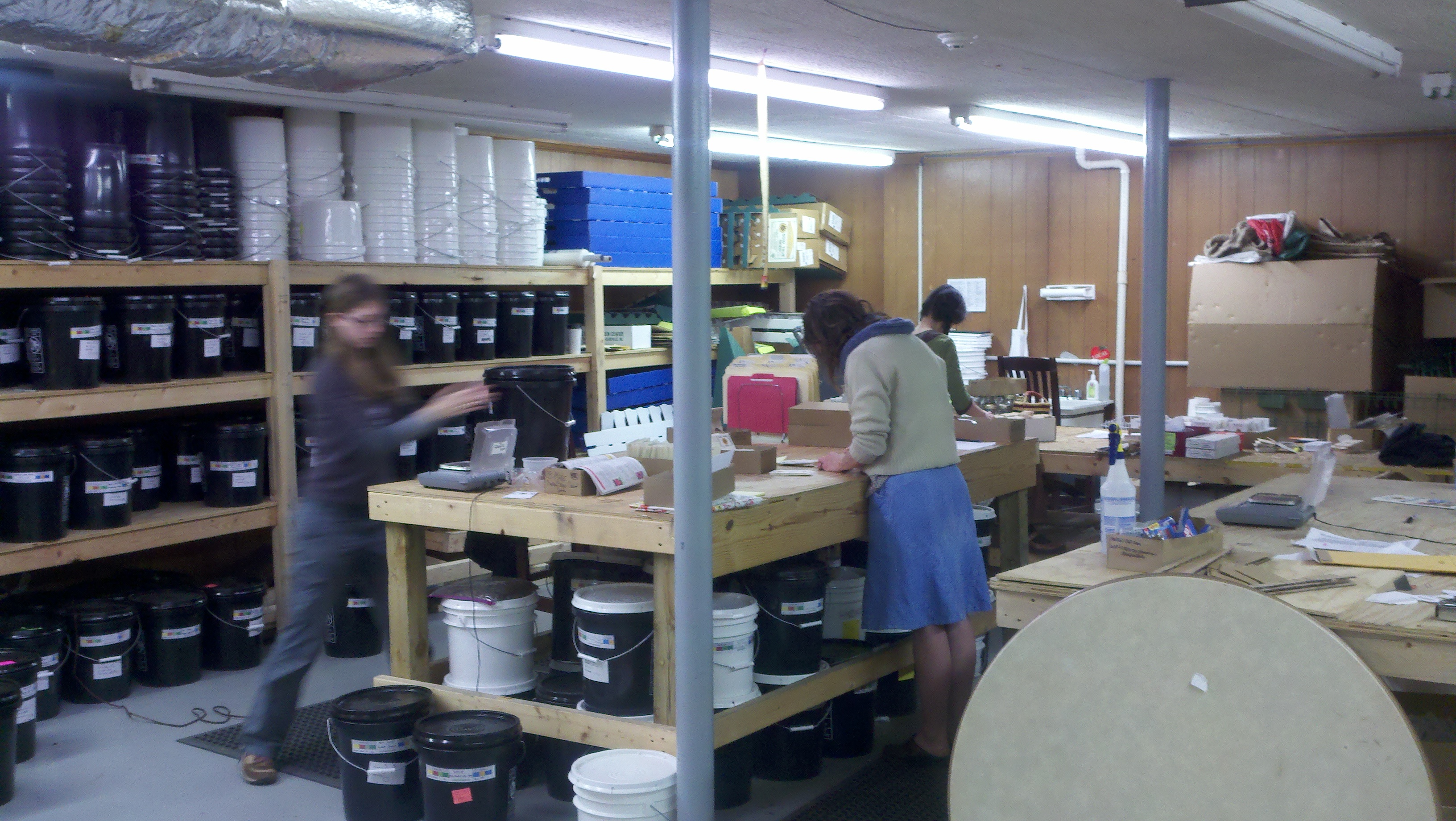
Here’s the refrigerated room where the seeds are stored before they’re packed:


My photos don’t give it justice, but there are probably millions of seeds in this cold storage room.  There are shelves from floor to ceiling stacked with big buckets full of wonderful seeds.


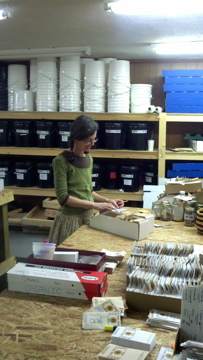
Then there’s the main room where a group of folks were working:  counting, weighing and packing seeds:

Seed scale

Another super-nice worker at Sow True (and she's their Facebook guru too!)


Here’s a box ready to go out to Earth Fare grocery store for their seed rack:

Peter Waskiewicz, the founder of Sow True, was just as nice and friendly as everybody else working there, and took time to talk with me too.  I pulled this from his bio on their website, as it explains so well what they’re all about: “…he founded Sow True Seed with business partner Carol Koury in an effort to provide a source for regionally grown and selected, open-pollinated seed for the sustainably minded growers of Southern Appalachia and beyond.”

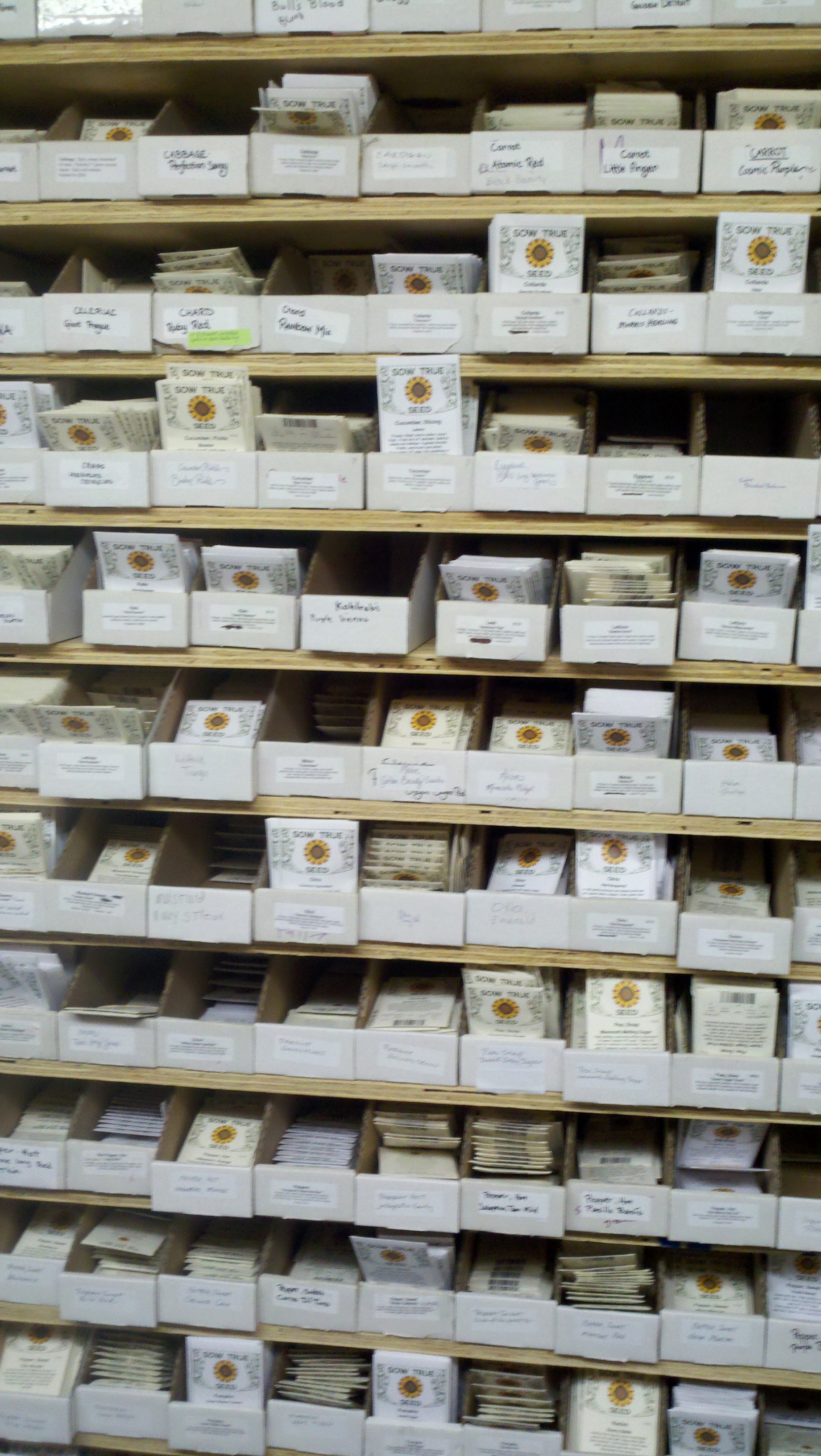
Here’s some shots from their retail area…at the end of my visit I did some serious retail therapy….which are now planted in my front bed (more to come on that….)

A great place to seed shop

Seed racks ready to go (flower seeds in this one)

Nice specialty collection for the young'uns


So, what did I learn from my field trip?   Sow True adds even more texture and a strong foundation to what we’ve got going on in these mountains when it comes to keeping it local, healthy, and sustainable.

Thanks for letting me visit yall!   See you in a couple days when I come to get my seed potatoes!

 
Leave a comment

Posted by on February 28, 2011 in Uncategorized


Bee burial

Don't worry, they're not alive!

My dad and brother started keeping bees in our backyard when I was about 14 years old.  Beehives and the associated tending were not high on my priority list at the time.   The bees were mainly a source of entertainment to me at that age — not of the “oh that’s so cool” kind, but of the “Oh Hey!  Check it out — I think the bees are chasing Dad!”   Oh teen humor.

Well, my dad and brother are still keeping bees in their respective back yards, 20 some-odd years later.  Today my brother suggested it’s high time for me to have my own hive.  He has a couple hives in his backyard, about a half-mile from downtown Asheville, said he could help me get set up and even offered to do the tending.  Wow!

Now, with two toddlers who are always in the yard, I’m a little hesitant, but I think we’re going to give it a try, make the hive far enough off the ground that the bees’ flight path is out of range of my little fellas. Maybe on a platform.  We’ll see…

Anyway, through the years I’ve always noticed that to my brother, father, and beekeeper friends, the bees are not just a mass of stinging insects that happen to produce one of the most divine substances ever, but they’re also something else to them, I can’t quite place it.  They love bees, their tenacity and amazing productivity despite being robbed occasionally by humans of their hard-earned honey. They are indeed amazing creatures.

Listen to a beekeeper talk about their bees and you’ll pick up on it.  It subtle, not exactly like a person talks affectionately about a pet, but it’s a little like that.  A friend of ours went to a beekeeper’s meeting years ago, and he asked the group a question about a hive of his that had died after some particularly wet weather.  One of the old-timers spoke up indignantly, almost accusingly, as if Jack had failed as a bee parent:  “You drowned them bees!!”
 

Dearly departed

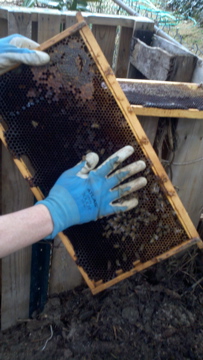
Today my brother brought the remnants of a failed hive to my house.   He wanted to put the dead bees in my compost pile.   He wasn’t sure what was their ultimate demise, but he was definitely somber and a little quiet about it.   It was almost funereal as he unloaded the white square box containing the hives from his truck, pulled out the racks and held handfuls of the dead creatures in his hands.  He looked at them as he held them in his hands and said “they were really good workers…..”.  I sensed that he was feeling some guilt, like he could have saved them.

My almost-4 year old and our almost-5 year old neighbor were intrigued.  My son picked up a few of the light, fuzzy little bees and checked them out.  The neighbor girl was wary, not sure if they were indeed incapable of stinging, so she observed.  Intently.


Shaking the bees off the honeycomb

Next we took the hive  to the compost pile and started shaking the bees off the racks.  I swear, I felt like it was a burial.  My brother kept saying that dead bees in compost were really good fertilizer, but I wonder if he was also thinking that they were going to continue working, feeding the dirt as they faded away.  A proper burial of sorts.  At least I was thinking that.  Busy bees, working on into their apiarian afterlives via the compost pile.

Then the party started.  I found a small area of honeycomb, still full of honey.  It was some of the best honey I’ve ever tasted.  My son dug right in, beeswax and all.  He’s got some Pooh Bear in him.  Never met a PB&Honey sandwich he didn’t devour.

Yeah!

Continuing with the celebration of the bees’ life, the neighbor girl said, “We should thank the dead bees for the honey.”  Not in a sentimental way, just using good manners, reminding us why were were all gathered in the garden right then….

I called Dad tonight and told him we put the bees in the compost pile.  His first comment was, “Did you notice how they’d all died facing the queen?”  I told him we didn’t see the queen….but I realized he was trying to impart some of that beekeeper sense to me that I’m still trying to understand. “Didn’t you see how they were in the exact same spot on each rack, the exact pattern?”

It’s beyond anthropomorphizing, what beekeepers do when they talk about their bees.  It’s big respect for these tiny creatures who, despite being — well, insects — behave as though they know an awful lot.


Rough winter. No worries, it’s all green!

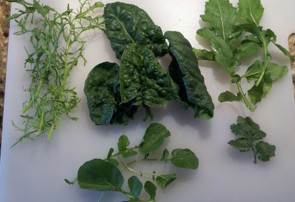
Winter blues don’t stand a chance on days I harvest hardy greens to go with dinner. Here are the starring ingredients in our winter salads, clockwise from top left:

Mizuna: textured like frissee, not too bitter, mustardy and a little spicy

Spinach (Bloomsdale):  thick leaves but tender and mellow

Arugula:  rich and spicy

Cilantro:  no wonder these guys always go to seed mid-May…they were happy as clams through the winter and are going strong in the covered beds right now.  I love to toss a few sprigs in with my salads, adds a nice contrast.

Cress:  whoo-wee, spicy  — but so good!  And one of the loveliest rows in my raised beds.

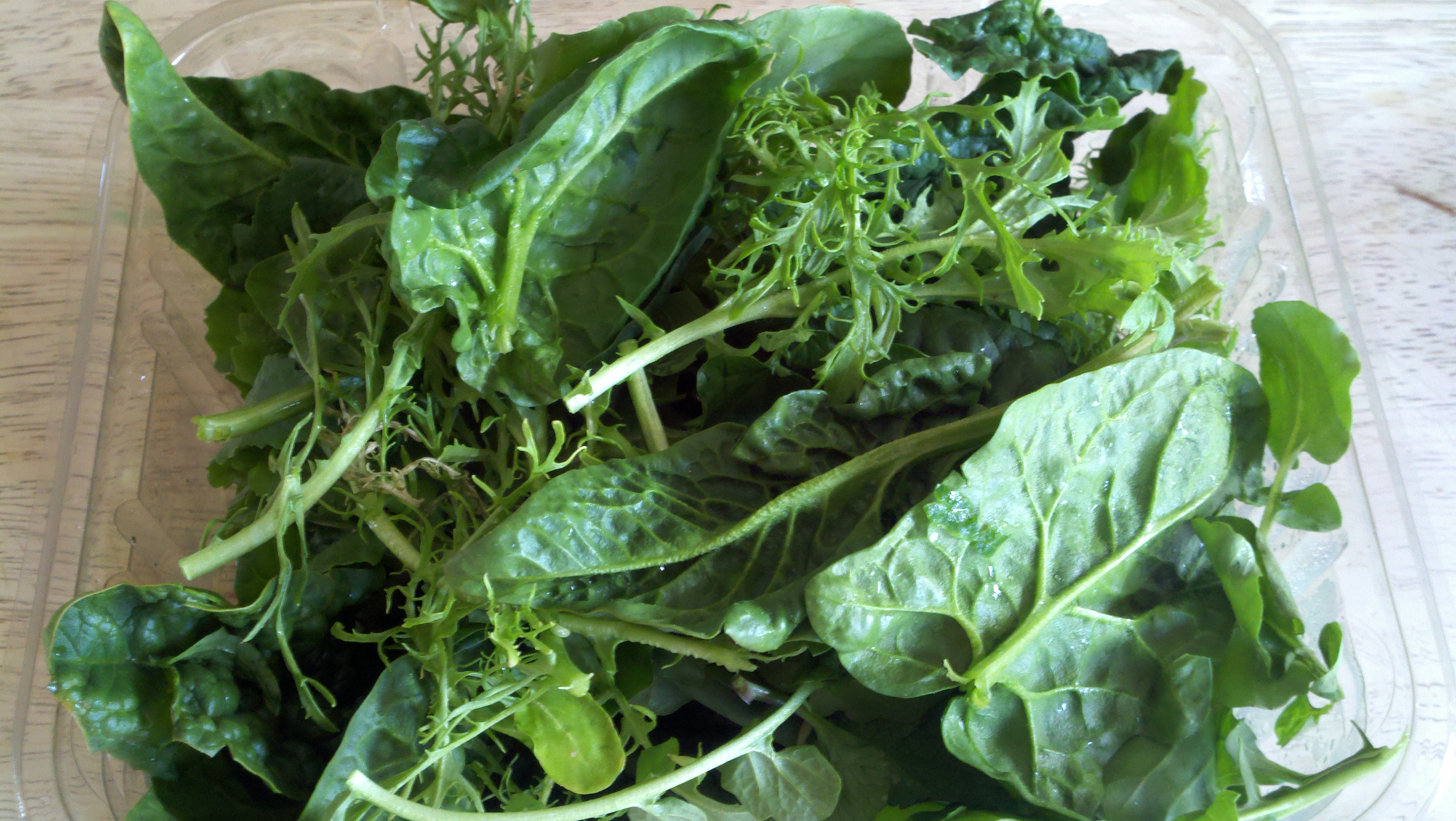
Toss them all together with just about any kind of salad dressing….YUM!   These salads can stand even the most outrageously bold dressing (a la roquefort or something really garlicky) and still hold their own flavor-wise.  But I personally like them with a balsamic vinaigrette.

While I’m crunching away, I can’t help but think of the super vitamins I’m getting from such dark leafy veggies, especially when the toddlers are toting in all kinds of icky viruses this time of year.

I’m sad thinking about these greens going to seed in a couple months, but I’m encouraged by the thought of late-spring salads coming in.  In that spirit, I planted about 20 romaine starts a few days ago.  This is the earliest I’ve ever tried putting them out, but it’s also the first time I’ve had covered raised beds, so we’ll see if they make it through the inevitable final hurrahs of winter:


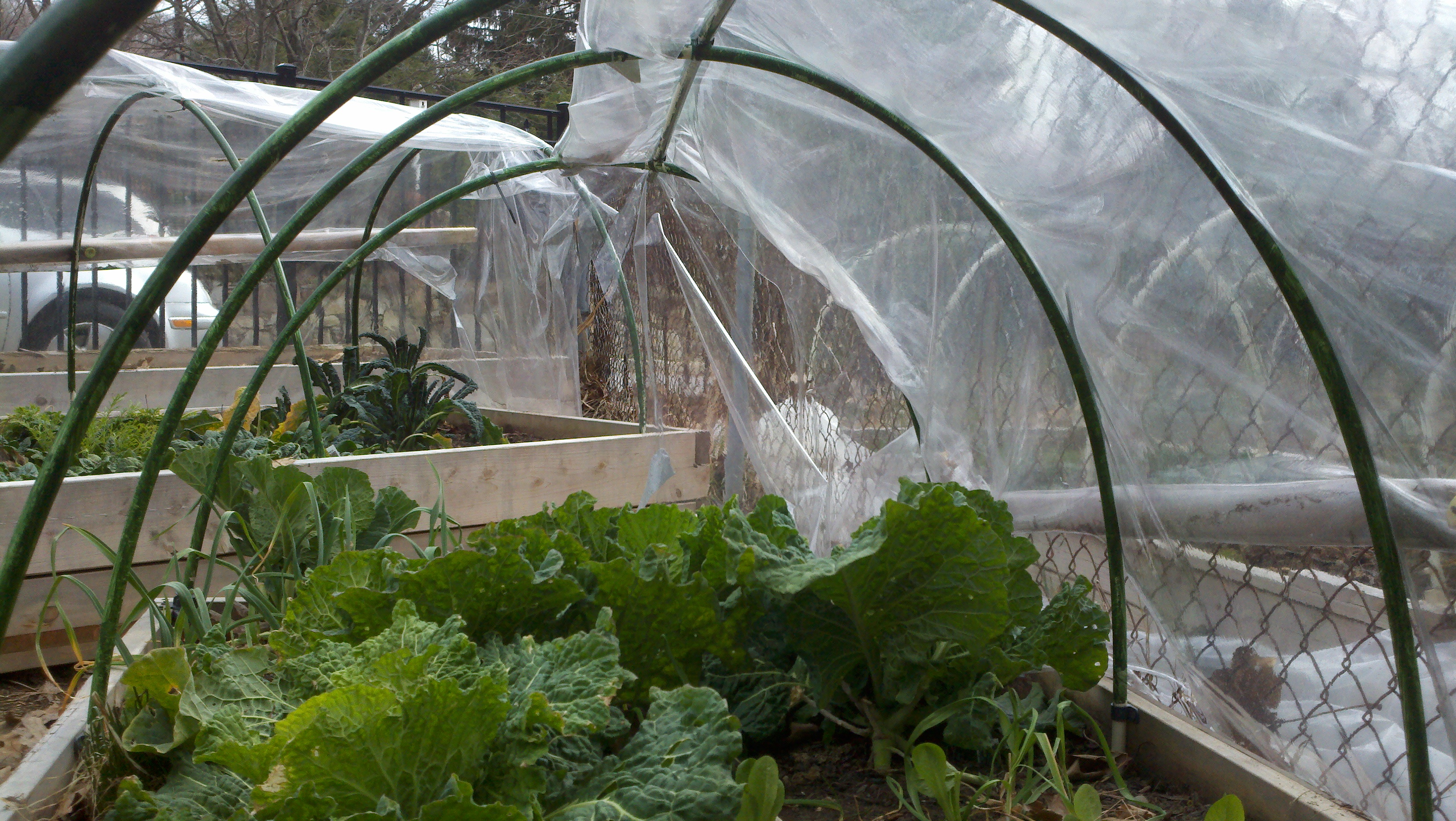
Raised bed covers=mini greenhouses

I googled “raised bed covers” and “hoop houses”  at the first hint of cold last fall.  There were lots of great ideas online, but my biggest help was my McGyver-esque neighbor (who’s also an engineer/carpenter).

“McGyver” took one look at my raised beds and replicated them perfectly – from scratch.  I, on the other hand, had ordered mine online…having two kids under 3 plus cavewoman-like carpentry skills and a dear husband who’s about as talented in that department as I am…well, you get the picture.  Then McG built a PVC frame and covered it with chicken wire to keep critters out of their plants.  (We have two Jack Russell terriers who are very effective at keeping those kinds of pests out, so I really just wanted a frame for a cold-weather cover.)


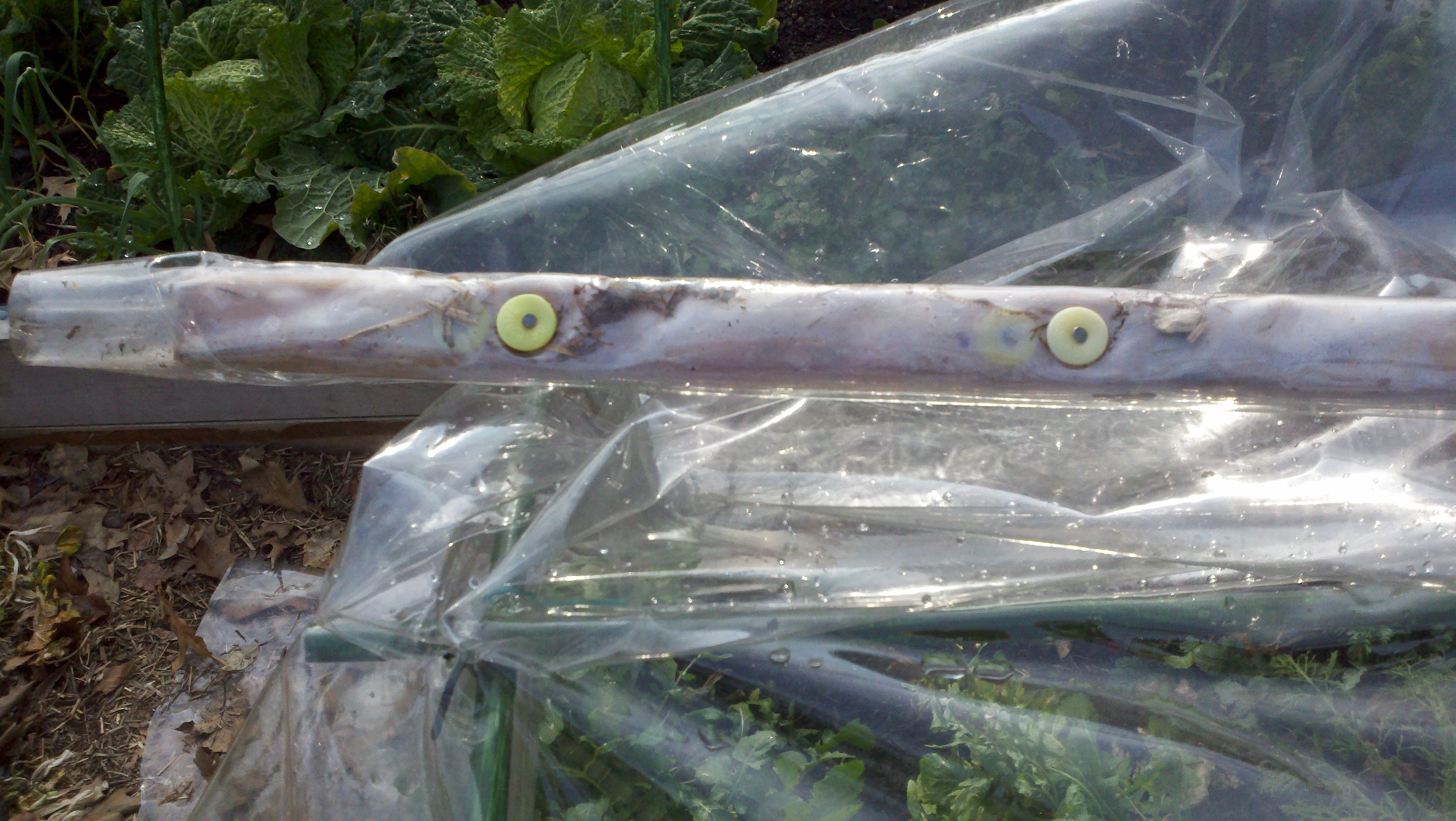
Clamp (next to some kind of plumbing thing that broke, wrong kind)

So, materials and technique as I learned from dear neighbor:  1/2 inch PVC pipe;  plumbing pipe clamps (both the plastic and the copper kinds…they didn’t have enough plastic in stock at Lowe’s so I got the copper too).  The clamps screwed right into the interior wall of the beds.  I used a random hand saw to cut the pipe down to 6 ft. (the beds are 4ft. wide).

I really didn’t measure the distance between each pvc-length (now “hoop”)….I just kind of eyeballed it and used the good-ol measuring-by-footstep technique (the one I use when I don’t want to go back inside the house and scrounge for the tape measure for fear of waking up sleeping tots).

It took me a few afternoons to cut, bend, and attach the PVC pipes, turning them into the skeleton of my mini-greenhouses.  After I’d finished, I stood back and looked at my work, and I was reminded of a big whale skeleton, or dinosaur bones.  All that white pipe, couldn’t stand it.  (OK OK I’m particular).

I remembered that can of green fence paint in the basement from a birdhouse-pole project of my husband’s (don’t ask).  Anyway, I spent the next afternoon or two painting all the pipes, all 15 of them.  Total pain, but now my garden doesn’t look like an outdoor paleontology exhibit.

With the structure in place, I was determined to find the clearest plastic I could find.  I really wanted something clear so I could see my plants (yes, I wanted it to look good too).  I went to all the big home improvement stores, hardware stores, garden centers and even a paint store to find this elusive clear plastic.  None to be found.  More googling and I found VINYL.  Sweet.  

You can’t buy vinyl at any of the above venues, but I found some at our local Foam & Fabric store.  I bought a whole roll of the mid-weight (8 mil maybe?) and it was just enough to cover my 4ftx4ft bed, and two of the 12ftx4ft beds.  I used zip ties to attach it to the frames, and they have held up surprisingly well throughout the winter and its temps and winds.

In order to make the beds accessible, I divided the lengths of vinyl in half and nailed the bottom part (with old roofing nails) to scrap pieces of wood:  that makes it easier to lift up the vinyl in one piece, especially when it’s really cold.


Vinyl is tough to deal with when it’s colder than 45f or so.  It becomes less pliable the colder the temp, and therefore it’s more of a pain to open and close the “windows” on the frames.  But hey, beauty has its price.


And vinyl sheeting met the criteria:  functional + not ugly, and most importantly, we’ve been loving all kinds of greens all winter!

My best helper covering the small bed for the night


Checking out the cabbages


Hooray for 60 degrees in February!

I know, I know, we’re still in for more freezes and snows between now and Mother’s Day (unofficial last frost date in this part of the southern Appalachians), but DANG, it feels great outside!

Great helper - digging for stray carrots

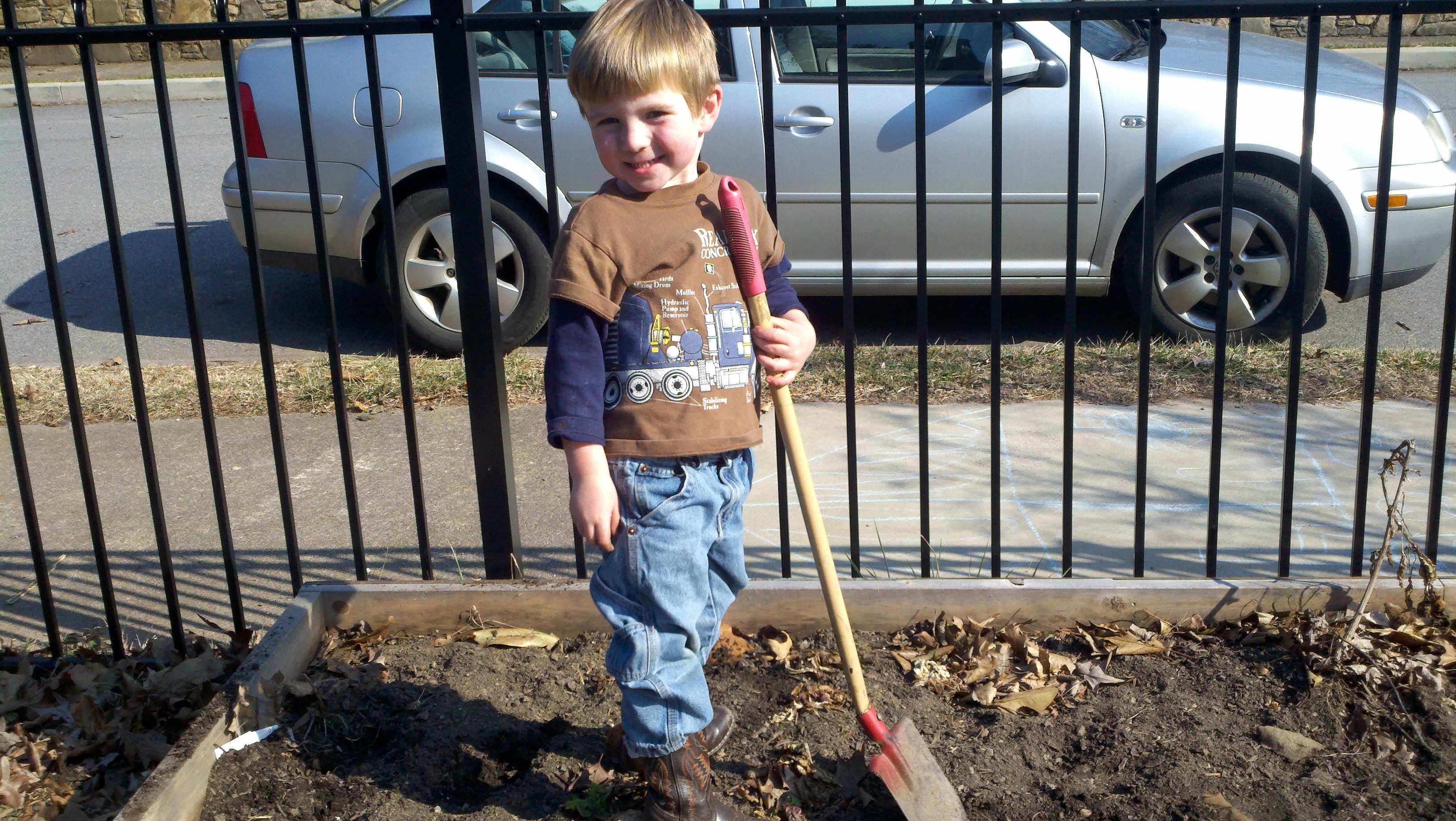
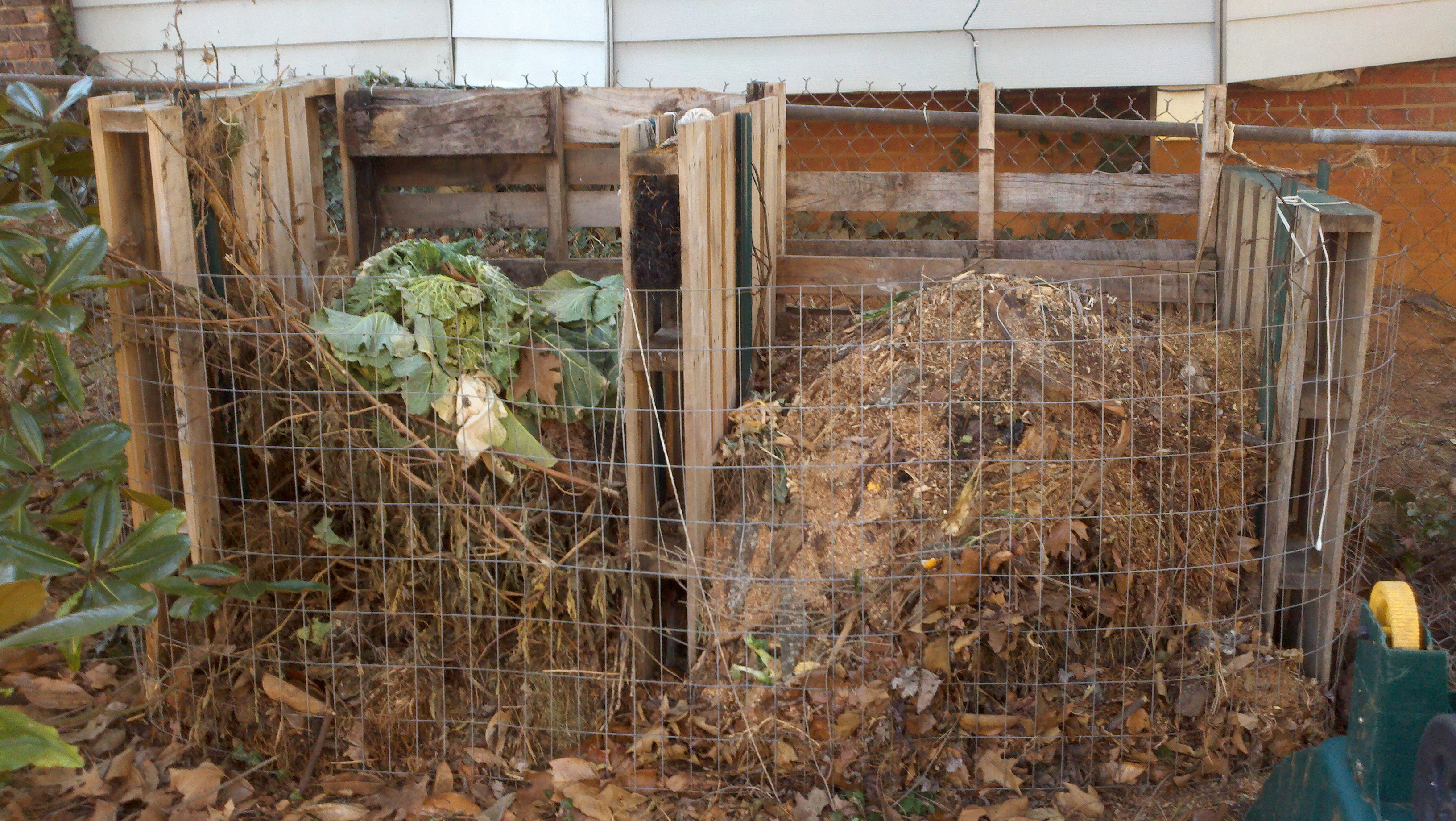
I finally tackled our barely-decomposing compost piles today.  It was an archeological dig of sorts.  I found a perfectly-preserved apple in there from last October, a few smushy but still vibrantly red peppers, and I also found a resurrected kale plant that I thought was killed by the cold….it had even grown a few new shoots.  I fished it out and planted it in one of the beds.   Hmm, my compost piles need some serious adjustment.

Before

We started these two piles last year, and they’re not breaking down as fast as I’d like.  I think the one thing I’m missing is some kind of animal manure to get it hot.

I also think stuff was too big…too many leaves and plant stalks (another one of my finds was an intact lavender branch that still smelled great and looked pretty cool too…but that’s not what I’m needing to amend my garden soil…)

So, my lawnmower became my mulcher.  I dug out both sides of the piles, and ran over the contents over and over and over and over ( = sore lower back in the morning).   This being a “yard farm” and all, the garden/compost piles are in close proximity to my neighbors, so I did go check with them and make sure they wouldn’t mind the mid-morning racket (they have a 3-month old and I surely didn’t want to disturb a nap with a lawnmower chewing up stalks and leaves).


After the lawnmower treatment

I was really proud of my idea to mulch with the lawnmower, but that was tempered by my husband pointing out that running over that many stalks will probably mean a trip to get the blade sharpened.  Oh well….it worked, right?


Compost tumbler

This is our other compost “system” in the yard.  I bought this tumbling composter a few years ago.  It looked so cool, simple and easy….it definitely heats up fast and turns all kinds of stuff into beautiful crumbly black compost, but it’s not easy to turn. And if you leave it turned lid-side-up, it fills up with rain and then you’ve got a big ol mess to deal with (like I had to fool with today).

But even compost slurry getting in my boots couldn’t put a damper on my delight at the hint of spring around the corner — yeeeehaaa!


A staking question….

While I’m obsessing about tomatoes, I’m also wondering if anybody could share their ideas about staking their tomato plants.  My plants always overwhelm the pre-fab tomato cages.  I end up constructing all kinds of elaborate retrofits with twine and wooden stakes, but they still end up all toppled over toward the end of the season….


2 Comments

Posted by on February 16, 2011 in Uncategorized


February, and I’m dreaming of tomatoes

Amish paste tomatoes make us all happy

This is my Amish paste tomato right here

My guys love to pick tomatoes.  They love to pick them so much that they will even pick them when they’re green, so we’ve had to do some re-training on *when* to pick.  Great lesson in learning colors.  Red=good to go, green=wait.

On the stove

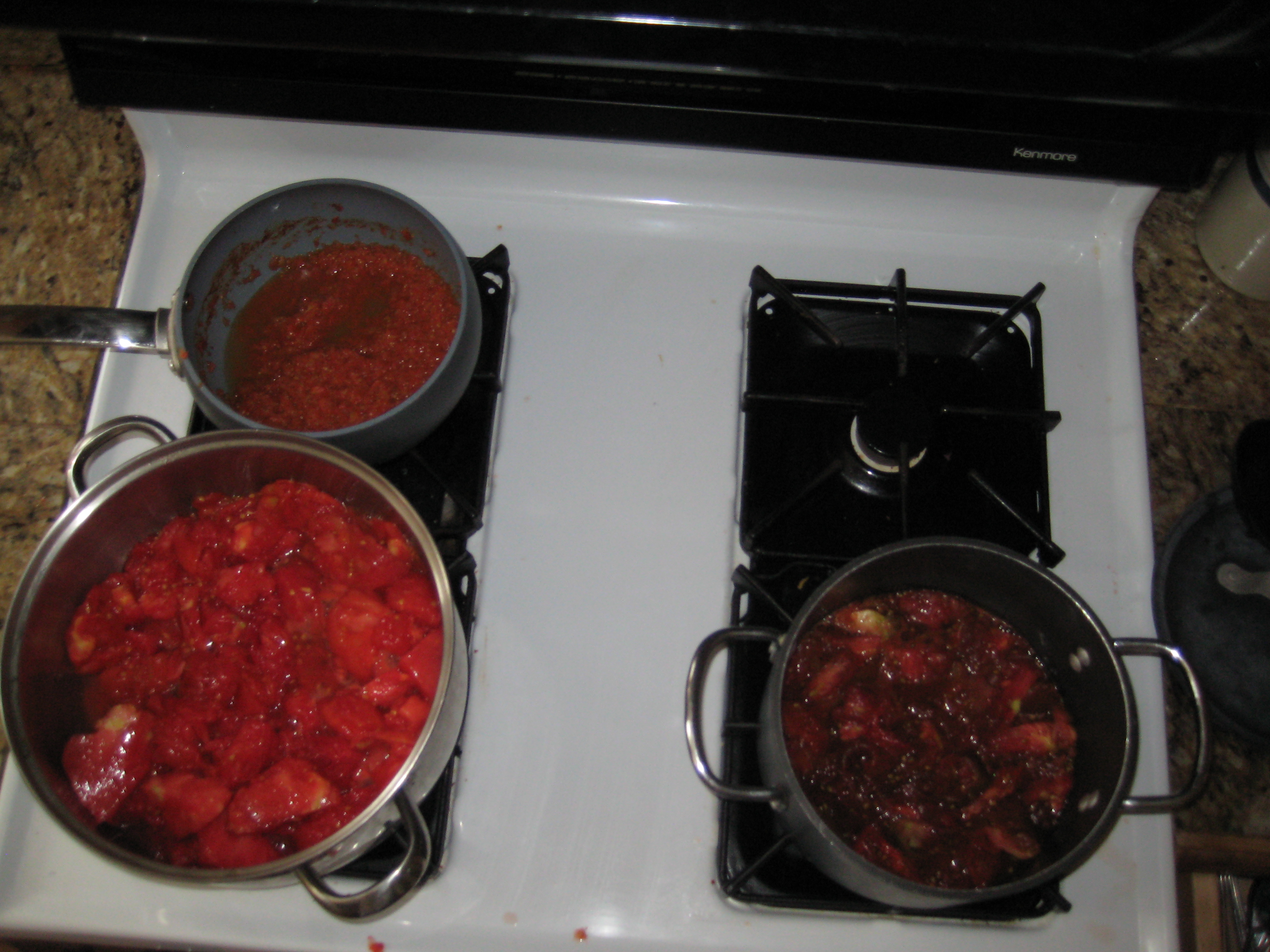
Here’s three different kinds of tomatoes from my garden last July.  I decided to freeze them by variety, so that’s cherry tomatoes on the back left burner, my *FAVORITE* Amish paste front left, and Japanese black on the front right.

Frozen stewed tomatoes


Disease-resistant tomatoes: do they really exist??

After a couple summers of watching my dear heirloom tomato varieties die slow deaths from blight after a month or so of big yields, I was becoming disheartened.   I started looking at the “disease-resistant” hybrids at the local garden center, and wondered if they’d indeed be able to ward off the various blights that got my plants every year.

Wilting.... (image: Wikimedia)
Among various other attempts to keep my heirloom plants healthy, I’d tried organic fungicides, watering only at the base of the plants (and only in the mornings), and one weird planting technique: putting a couple tablespoons powdered milk, epsom salts, and compost in the hole in the ground before putting the tomato plant in. However, nothing really seemed to work.
So, I started buying hybrids in addition to heirlooms to see if they fared better. Nope. They all started getting the yellowing leaves with brown spots starting at the bottom limbs, which eventually climbed up the plants, at which point they stopped flowering.

Then I got all into pruning off the diseased limbs.   Tomato bonsai!   I think that was the best tactic.  It seemed not only to prolong the life of the plants, but they also didn’t look so sick.