RSS

Author Archives: ashevilleyardfarmer

Nematode junkies


Squash vine borers in action

Just when you think you’ve got a great, strong set of vines going, you look out on your garden one July afternoon, and see this.  Your first thought is, “wait a minute, I thought I watered this morning…”   Then you remember that you actually DID.  But you go water them again anyway because you figure it is just so ridiculously hot, how could any veggie plant withstand it?

While you’re watering away, there’s a grub gnawing away at the inside of the squash vine (and I imagine he’s laughing too…can you tell I anthropomorphize garden pests?  Helps me cope…).    My dad anthropomorphizes too, but in this case he speaks of the squash plant “writing and twisting” as if it were in pain from the attack. It all starts with the squash vine borer moth.  Looks cool, but isn’t.

(photo:  wikimedia)

You’ll see this wasp-looking thing casually flying around your garden acting like it’s just checking it out, but it’s really laying eggs at the base of the vines.  They hatch, then bore away and leave frass (a mealy waste residue) on the outside of the vine, right near the base…ick…


Borer larva in action (photo: Wikimedia)

In the past, I’d tried cutting open vines and smushing the borers.  But by the time they make themselves known the plants are so far gone that they’ll only produce a few more squash.  However, I read about injecting beneficial nematodes into the vines…and this is what I ordered from a gardening catalog:

Inside each syringe was a little sponge, full of nematodes.  I have no idea what a

Nematode syringes

nematode looks like or how big it is, but I do know that after injecting the squash vines with the solution, the vines continued to grow and produce lots (and lots and lots) of pattypan squash. This coming season I’m stocking up on the nematodes.

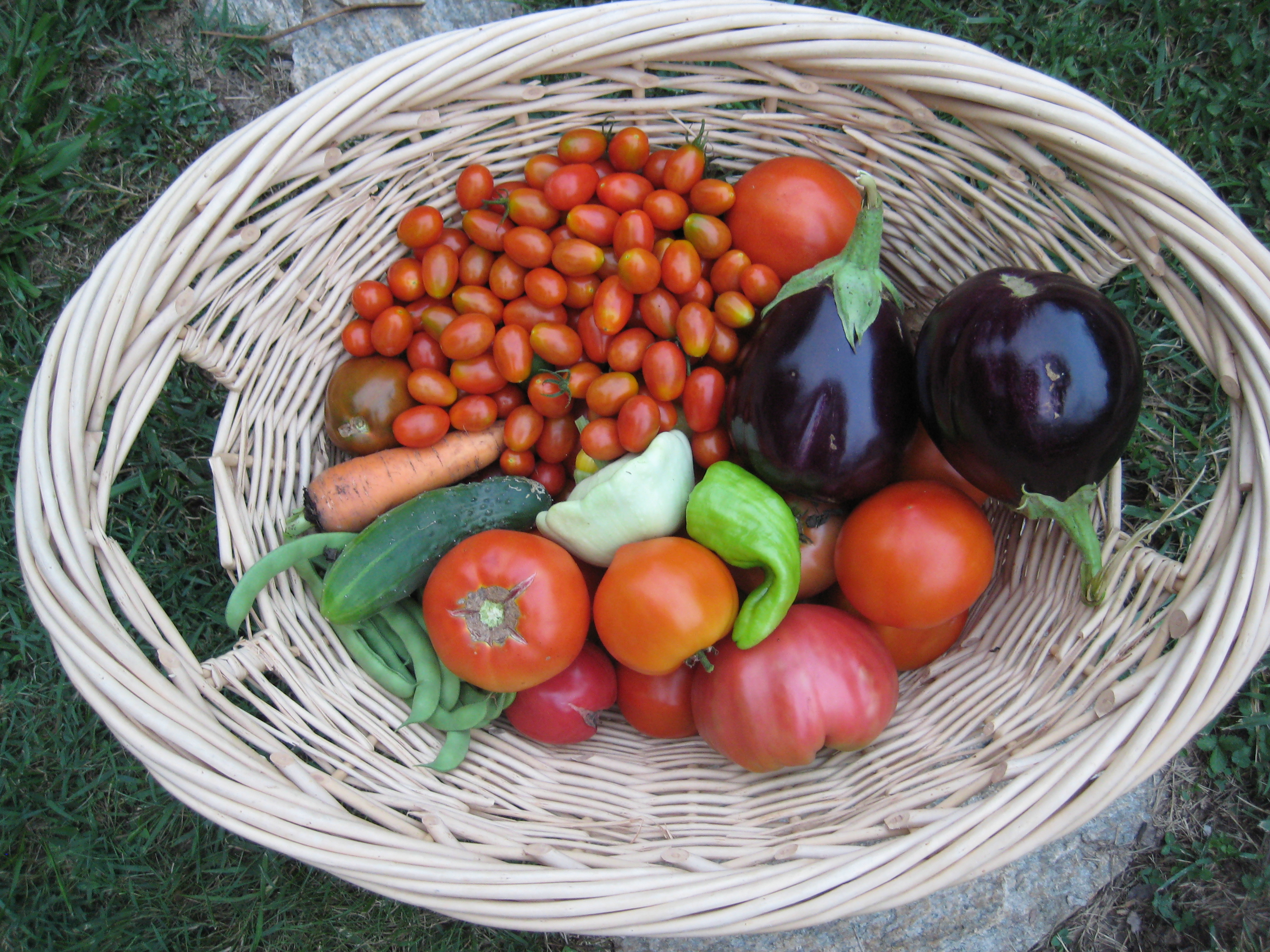
 

Ratatouille time!

Late July harvest

Things really got going in my garden late July.  This photo was one of the first big picks of the season.

I’d never had success with eggplant in previous years’ gardens.  Tiny, shiny black beetles would turn the leaves to lace in hours.

Ever tried to squoosh one of those critters?  They are so fast!   I didn’t see as many this year, but I had sprayed the plants with some sort of a neem-oil based pesticide.  I think it worked.

Also in the basket:  several varieties of tomatoes, peppers, the first generation of pattypan squash, lone carrot, stray cucumber, bush beans.

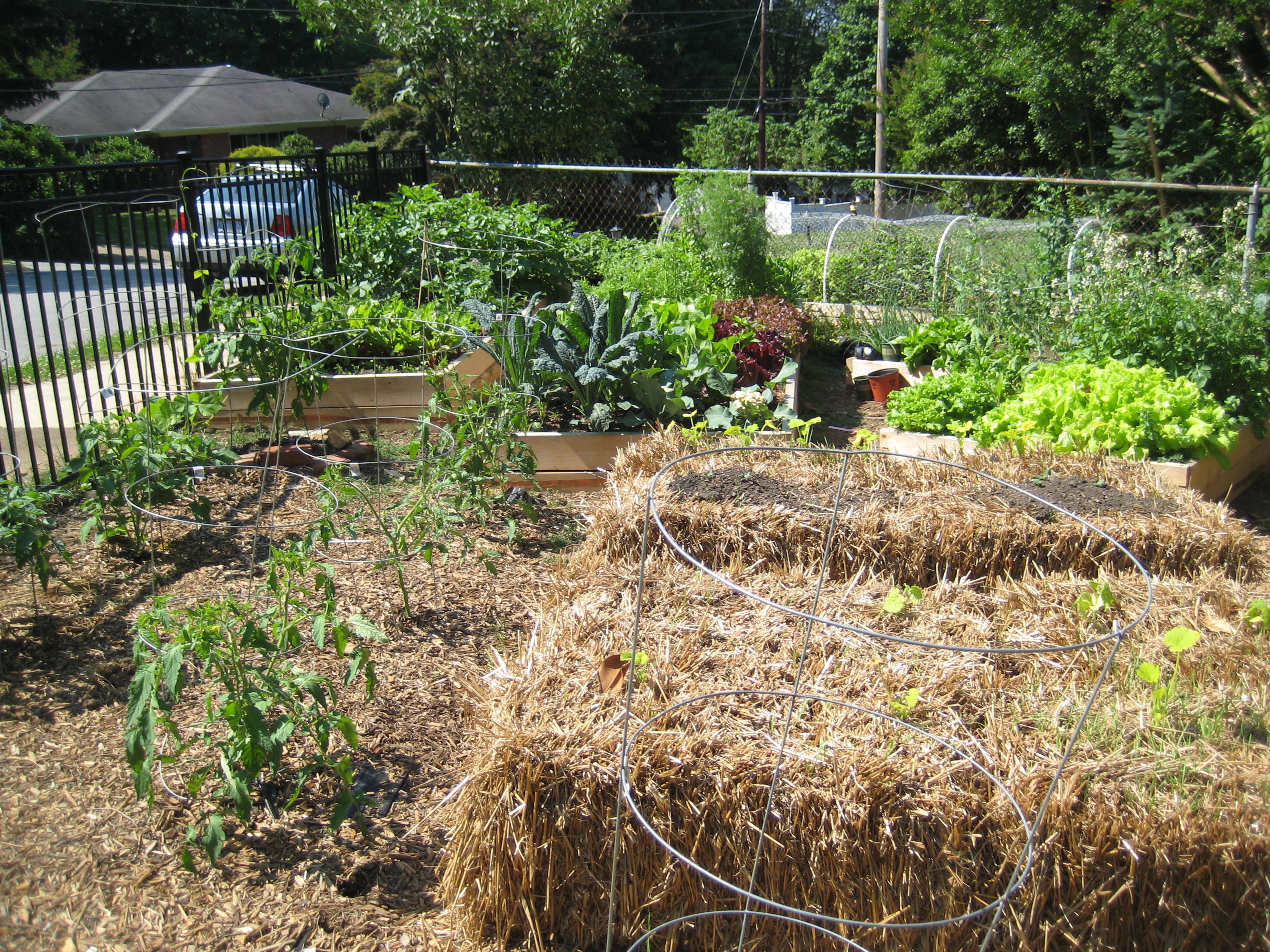
Note:  not all my plants were in the raised beds:  I planted the tomatoes and bush beans directly in the ground, and the squash in the hay bales.

What I wouldn't give for one of those fat tomatoes right now


Hay bale gardening. My grade: C minus.

Beginnings of hay bale experiment

Here you can see the two hay bales I decided to try along with my raised beds last June.

I’d heard they were a great space-saver in a garden and provided a great growing medium, so I bought two at the hardware store.  I followed directions I’d found googling:  place on side, water thoroughly, wait a couple weeks till they start rotting, then plant.

So I did.  Waited about 10 days till the hay looked like it was composting down, then I planted 6 squash starts in one (crookneck and zucchini)  In the other I planted pattypan seeds (I put some compost on top from our compost pile so the seeds weren’t sowed directly into the bale).

Three days later, the starts were yellowing, then dead after a week or so.  I think maybe 10 days wasn’t enough.  I also didn’t like how quickly the bales dried out (read:  constant watering, ugh.)  I started over again with more starts but that bale never really did so well.  The pattypan seeds, on the other hand, went crazy.  We had so many pattypan squash out of that bale and they lasted, and lasted and lasted….(even continued to grow despite the yearly attack of the squash vine borers, but that’s a whole ‘nother blog entry!)


Early summer and loving it

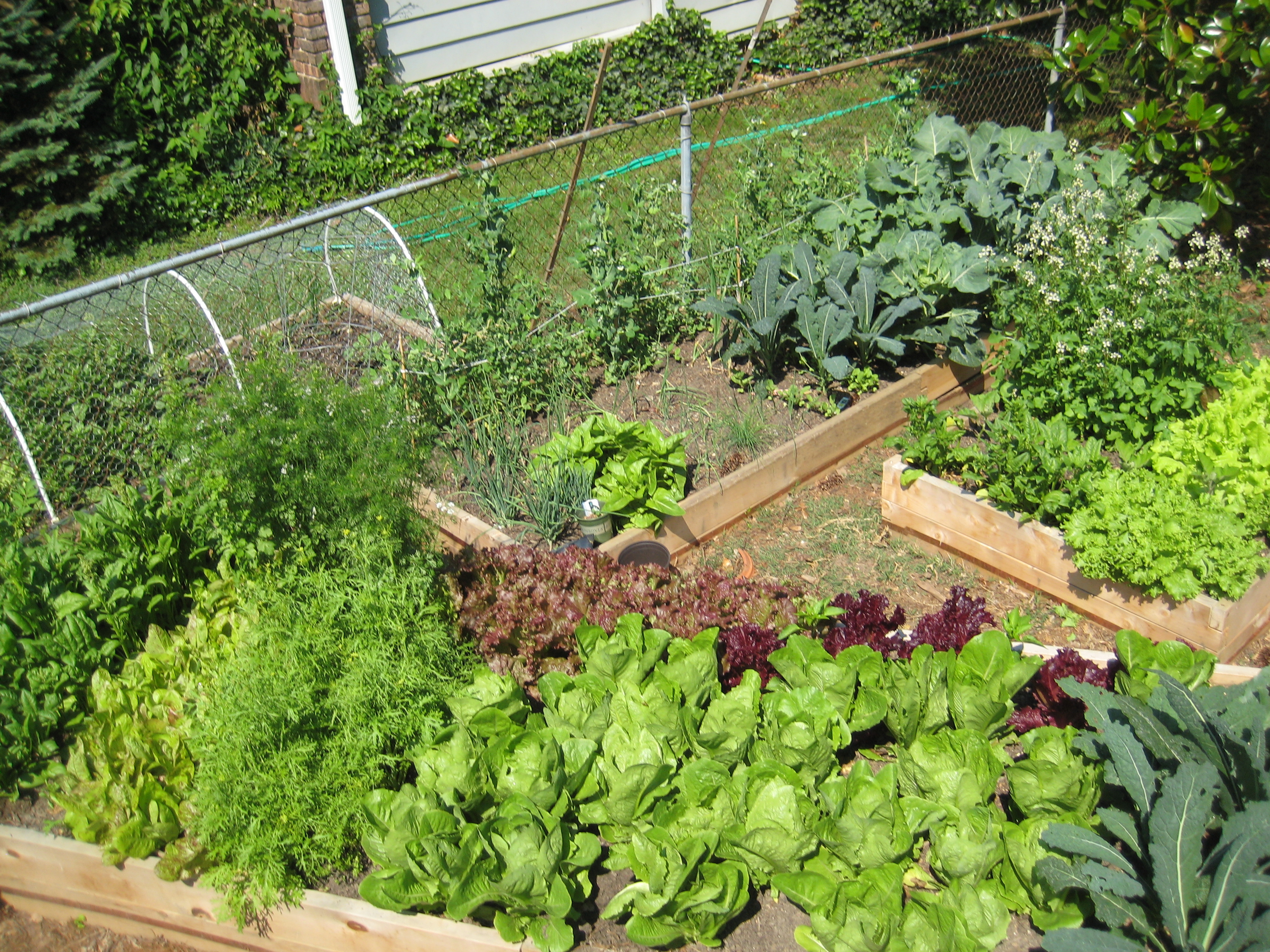
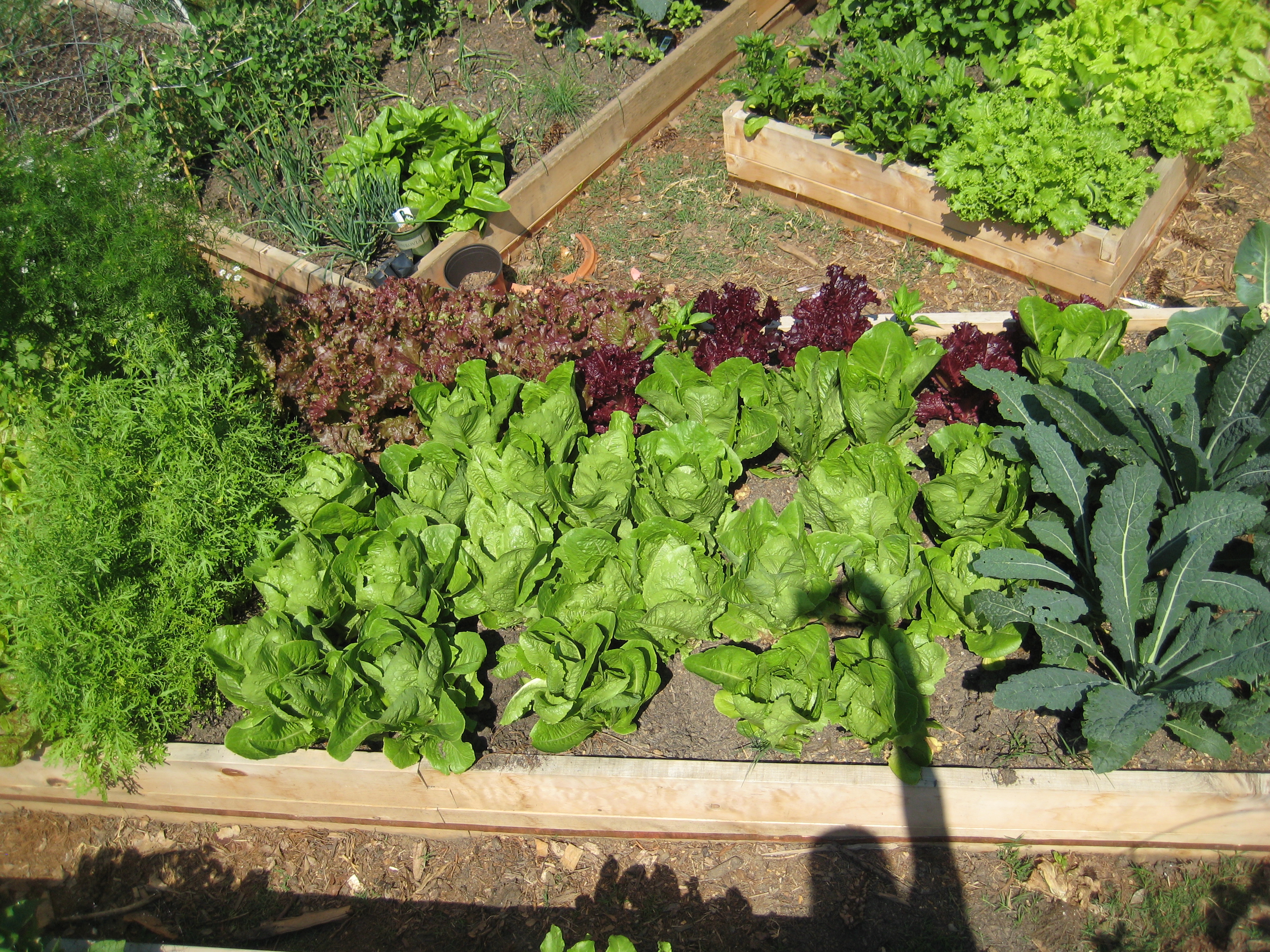
I could not believe how well the lettuce did — suddenly we were faced with lots and lots of beautiful romaine and we were eating big ol’ green salads just about every meal….it was the first time I’d had enough that I was calling neighbors and friends (lots of them) to come pick salads.  Other gardens of mine cranked out the trite overabundance of baseball-bat-sized zucchini that I’d shared with (pawned off on) others.  So I was pretty proud of a glut of something that people actually *liked* to receive from my garden.  I even gave giant ziplocs of mixed greens salads as part of my end-of-year gifts for my boys’ preschool teachers.


Sow. Water. Wait….Wait, no weeding?

Oh what a joy to spend time looking at the plants growing in the beds instead of fretting over the wiregrass that used to inhabit this spot in the yard!  Raised bed gardening is so much easier than any kind of gardening I’ve done before.  It’s an especially good match for parents of toddlers as time for most things is pretty limited.

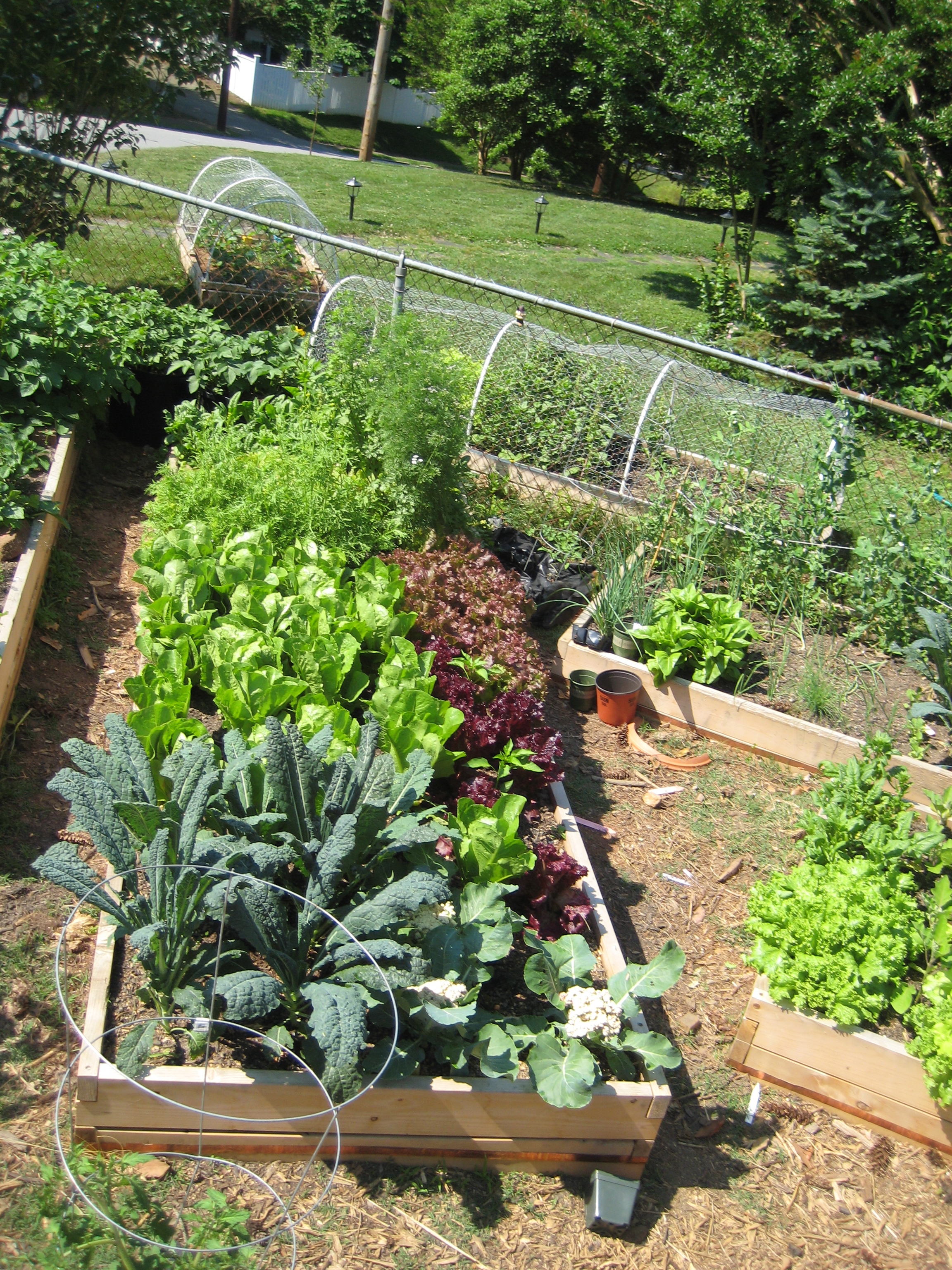
Dinosaur kale, arugula, lettuce (romaine, black-seeded simpson, red leaf)


I fought the slugs…and *I* won!

Every other garden I’ve had has been trashed by slugs in early spring.  Baby lettuce? Nuked.  Fragile tomato and pepper seedlings?  No match for the slimy destroyers.  They are so gross and frustrating.  HOWEVER, in Spring 2010 the slugs had no chance.  I think the combination of raised beds and this magic copper tape (well, it’s magic to me) kept them at bay.

Copper tape

I put the copper tape all the way around the bottom of my raised beds, about an inch or so up from the ground.   Slugs won’t crawl across it because it supposedly gives them a mild electrical shock when they touch it (mwah-haa-haa, take that!).   You can see it in the background of this picture:

Copper tape on beds in background

It was not an easy installation as the copper was kind of thin (and sharp — think paper cut but with metal.  Ow.)  But it was definitely worth it, and it survived last summer’s rain and heat, and is still intact after our record-setting cold days this winter!


Raised bed gardens…in the front yard?


3 of the 4 raised beds

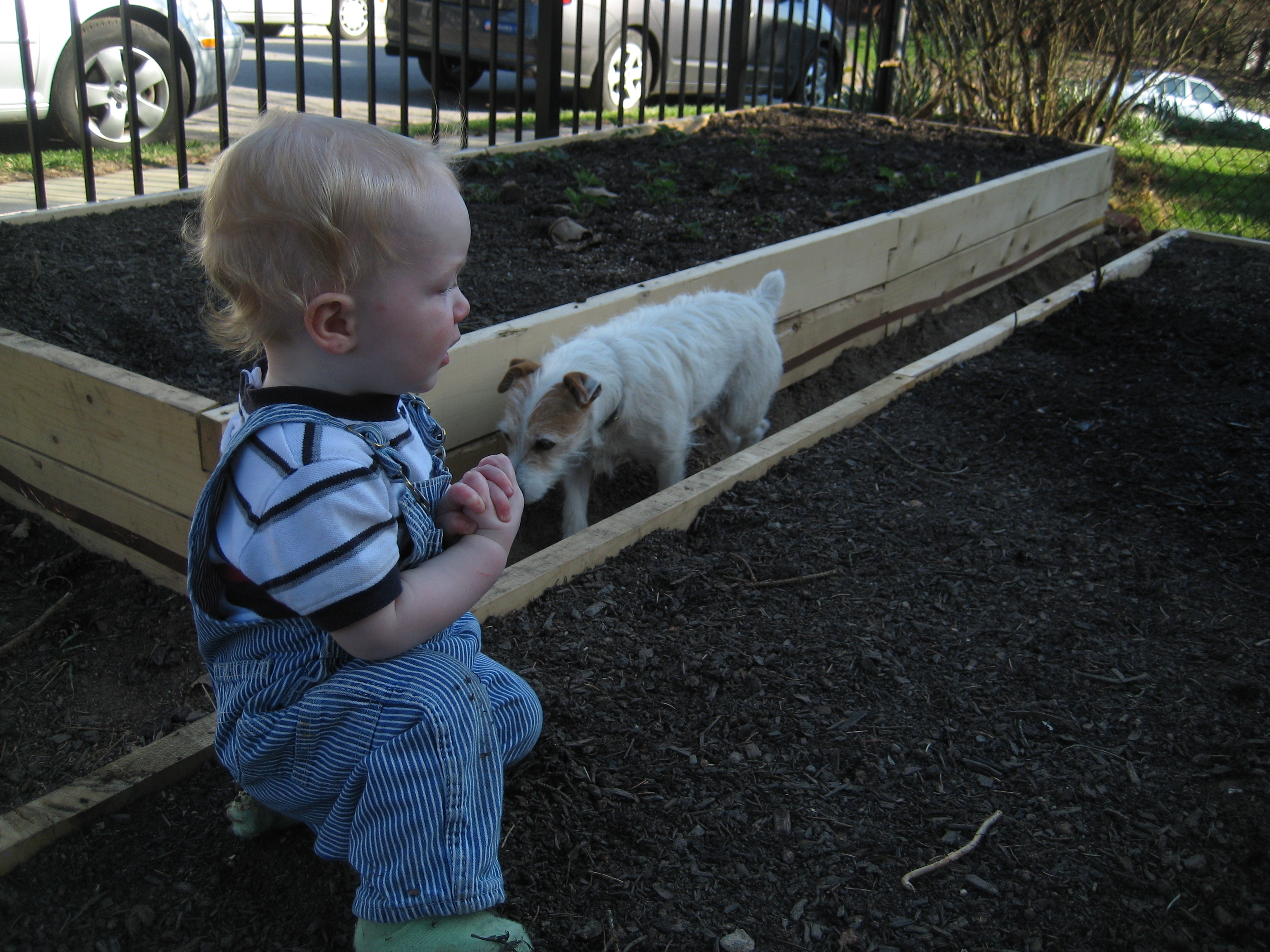
Strawberries in the front bed, toddler in the middle

We’re on a quarter-acre lot here.  When we bought the house 5 years ago, there was a great old raised bed in the back yard.   It worked the first few years for a few tomato plants, bush beans, and basil…but the 3 giant spruce trees on the south side of our property were – obviously – throwing a fair amount of shade on the spot.  I think when I found mossy patches under the bean plants I realized it was time to move (and my tomato harvest was dwindling quickly).

So….my dear husband suggested we cut down (aaagh!)  the huge blue spruce in the front corner of our yard to make a new garden space.  Oh, my inner tree hugger was gnashing her teeth, but I soon realized I could justify it by pointing out to everyone that the tree had “needle cast” and would soon need to come down anyway (right? right?).  It was the perfect spot — my raspberry, blackberry and blueberry bushes already loved that sunny southern facing situation.

Even though our house is practically in the shadow of the Grove Park Inn, and we’re surrounded by some mighty fine old homes, we ARE in Asheville, after all, so I didn’t think it would be too disturbing to plop our vegetable garden in our front yard.  Plus, our awesome next-door neighbors were also planning some raised beds in their front yard too, so we’d be partners in crime if anyone were to object.

Next…..February 2010, the blue spruce came down, stump was ground, and I ordered some pre-cut raised beds online from Natural Yards.   I had a local mulch yard deliver a compost mix to fill the beds, and shortly after, we were planting seeds and starts.

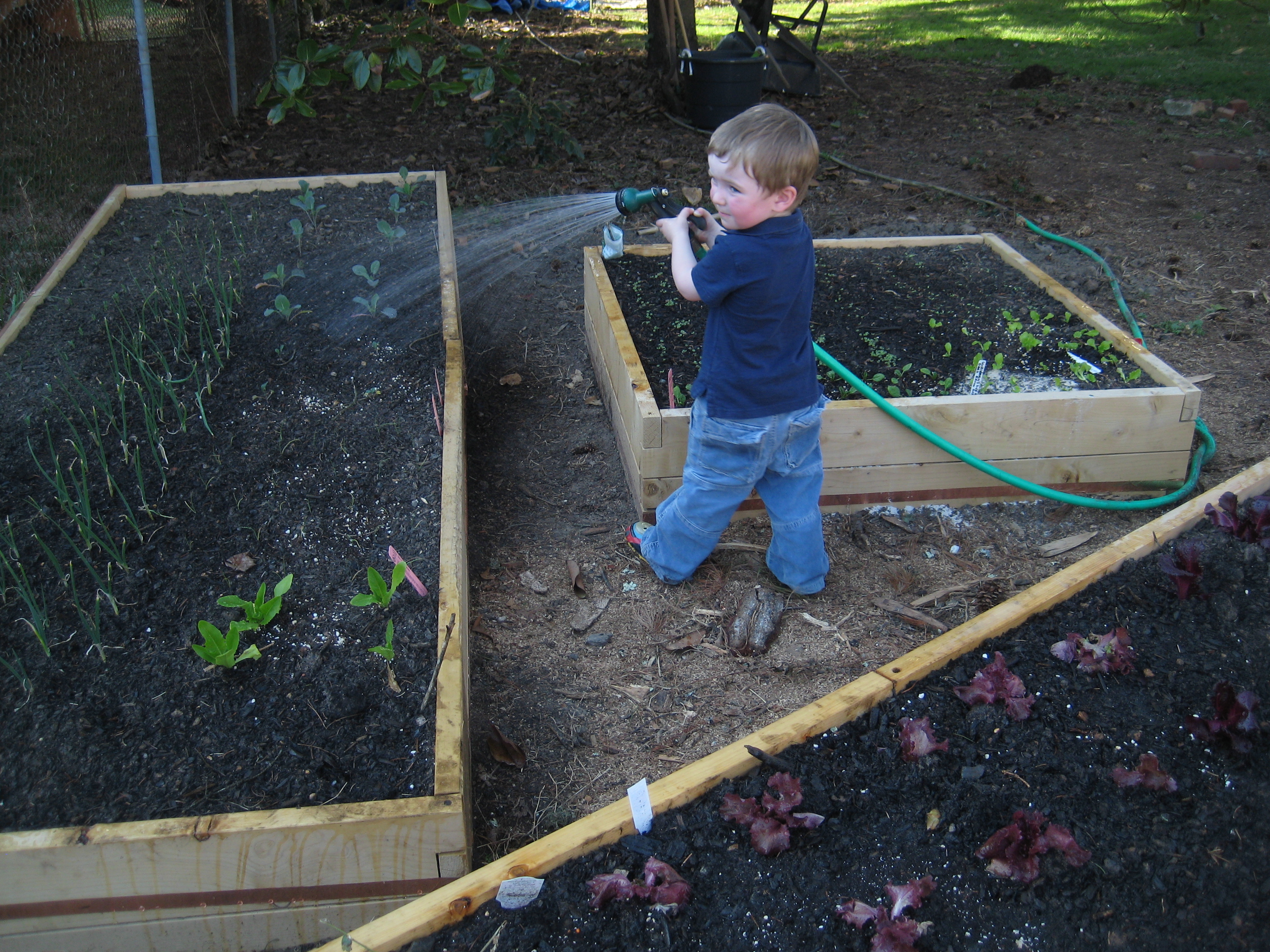
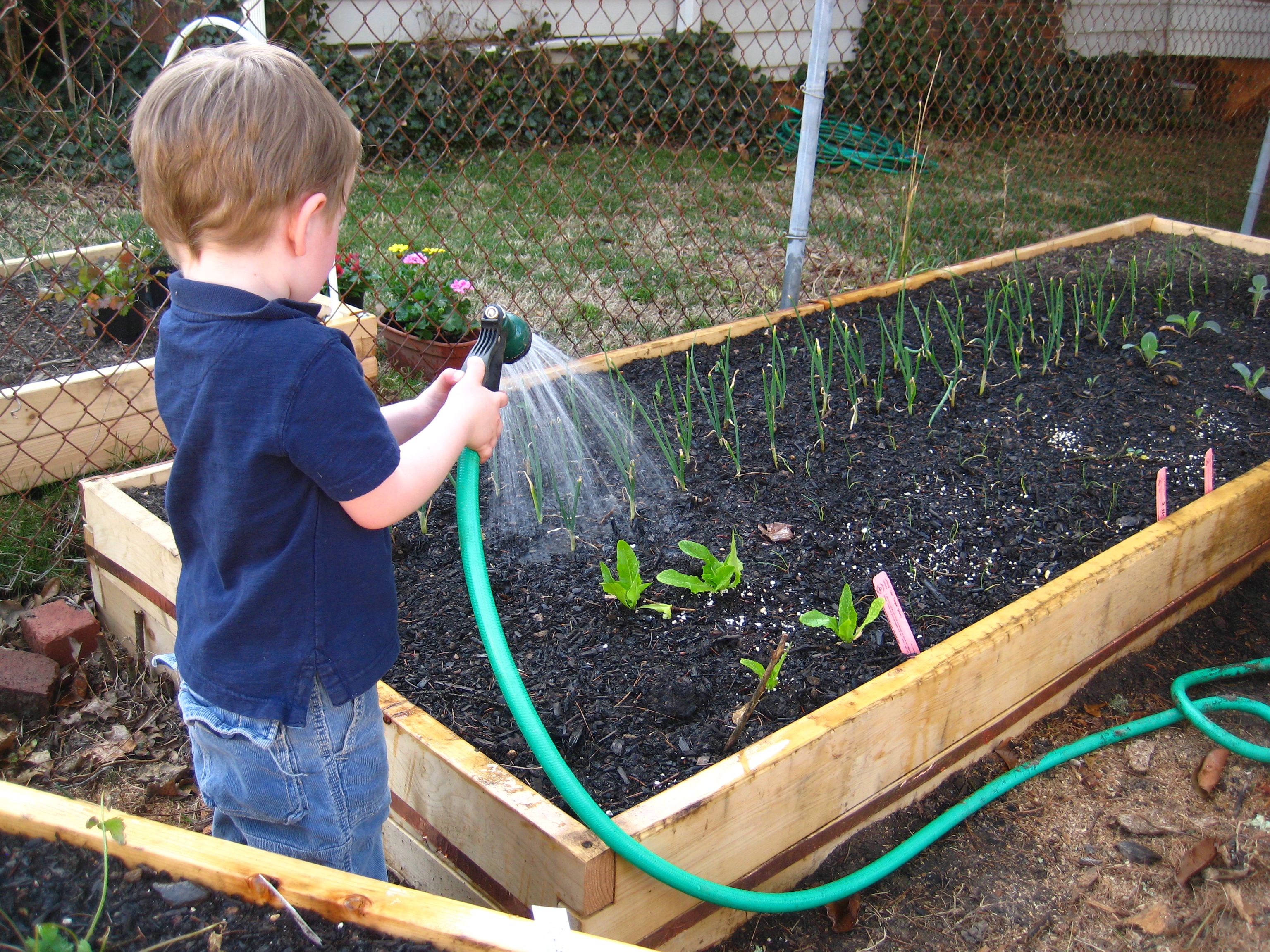
Onion sets and romaine starts

 
1 Comment

Posted by on February 2, 2011 in Uncategorized