RSS

Category Archives: front yard farm

Hooray for 60 degrees in February!

I know, I know, we’re still in for more freezes and snows between now and Mother’s Day (unofficial last frost date in this part of the southern Appalachians), but DANG, it feels great outside!
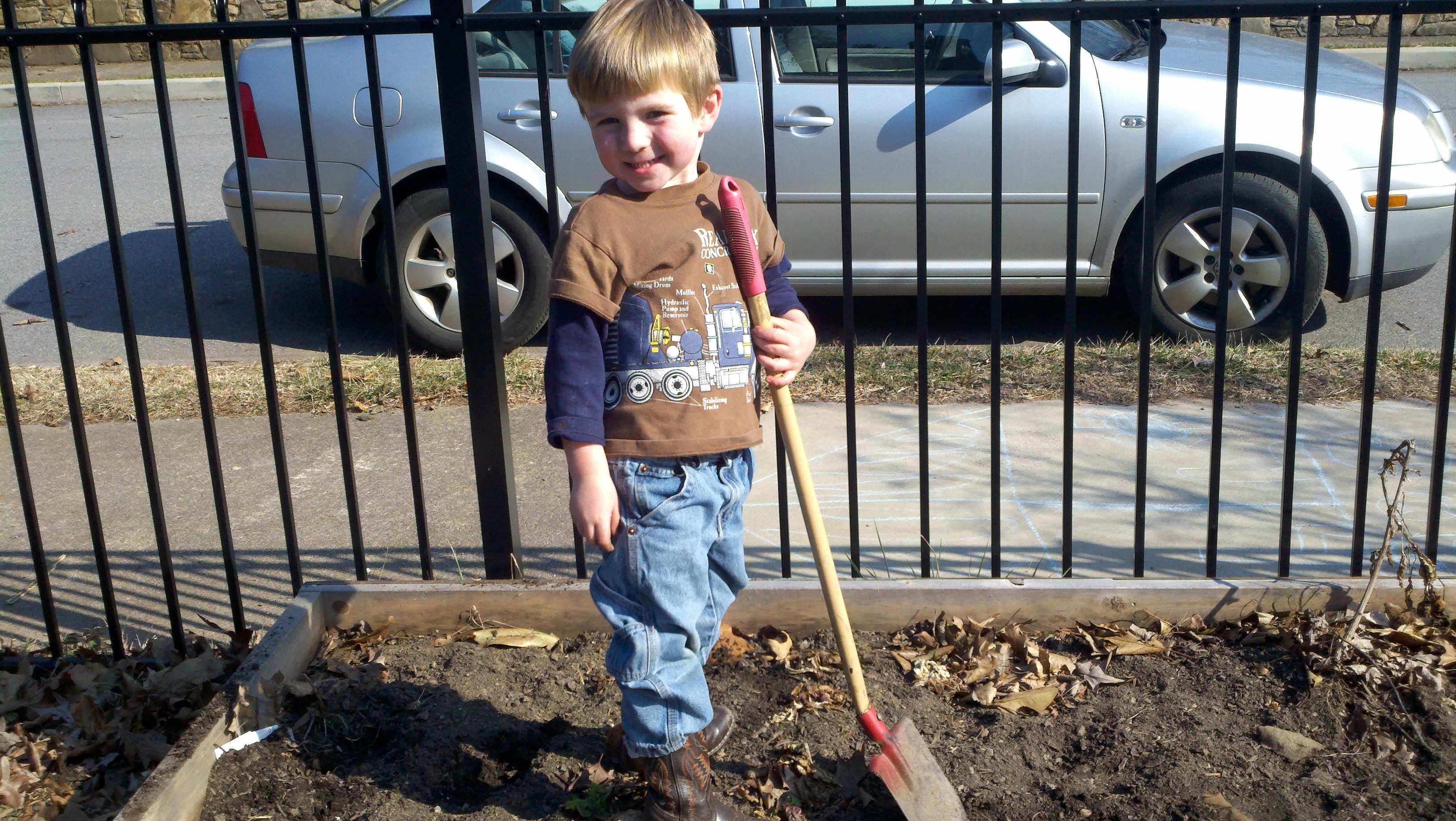
Great helper - digging for stray carrots

I finally tackled our barely-decomposing compost piles today.  It was an archeological dig of sorts.  I found a perfectly-preserved apple in there from last October, a few smushy but still vibrantly red peppers, and I also found a resurrected kale plant that I thought was killed by the cold….it had even grown a few new shoots.  I fished it out and planted it in one of the beds.   Hmm, my compost piles need some serious adjustment.
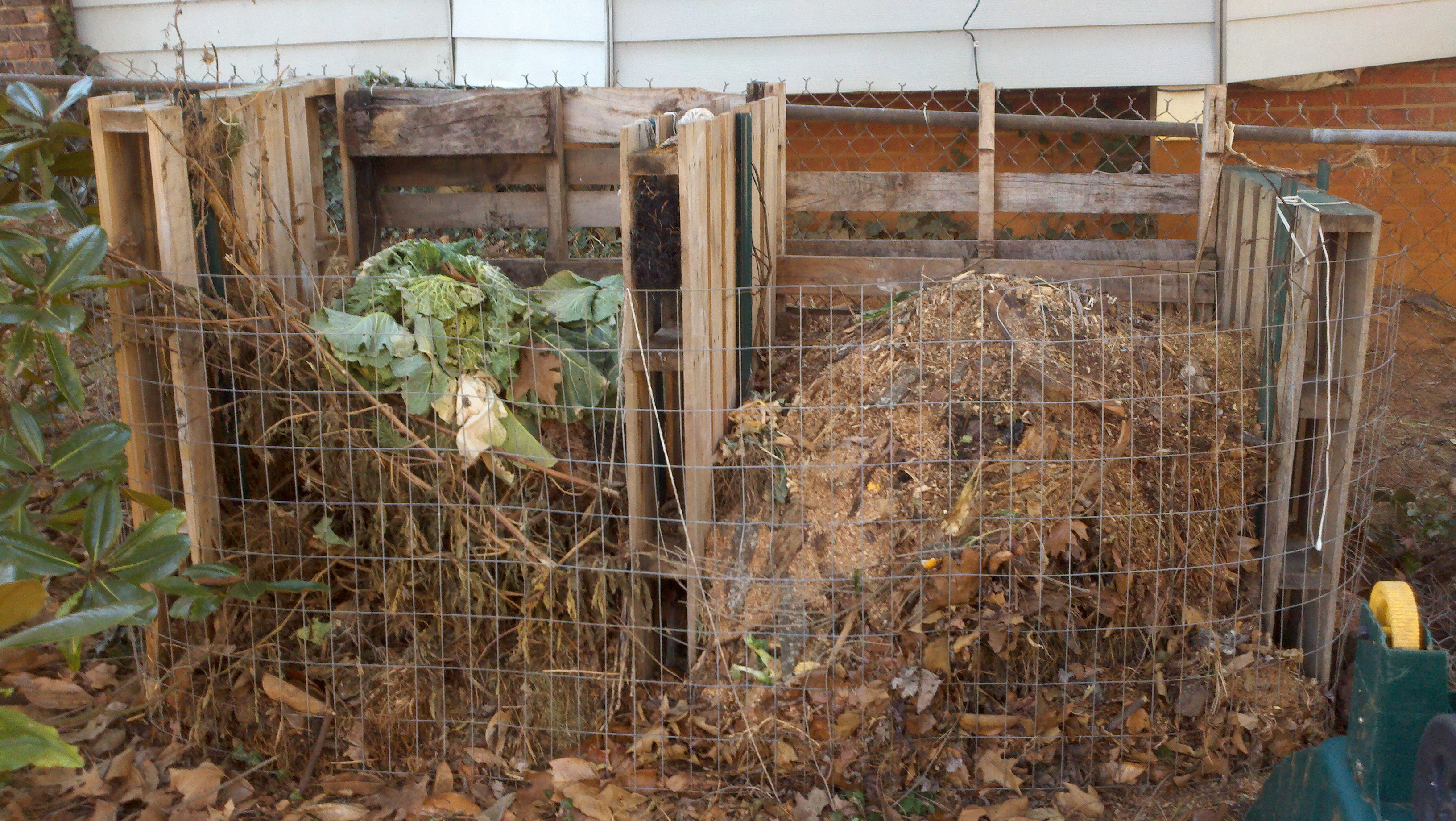
Before

We started these two piles last year, and they’re not breaking down as fast as I’d like.  I think the one thing I’m missing is some kind of animal manure to get it hot.

I also think stuff was too big…too many leaves and plant stalks (another one of my finds was an intact lavender branch that still smelled great and looked pretty cool too…but that’s not what I’m needing to amend my garden soil…)

So, my lawnmower became my mulcher.  I dug out both sides of the piles, and ran over the contents over and over and over and over ( = sore lower back in the morning).   This being a “yard farm” and all, the garden/compost piles are in close proximity to my neighbors, so I did go check with them and make sure they wouldn’t mind the mid-morning racket (they have a 3-month old and I surely didn’t want to disturb a nap with a lawnmower chewing up stalks and leaves).


After the lawnmower treatment

I was really proud of my idea to mulch with the lawnmower, but that was tempered by my husband pointing out that running over that many stalks will probably mean a trip to get the blade sharpened.  Oh well….it worked, right?


Compost tumbler

This is our other compost “system” in the yard.  I bought this tumbling composter a few years ago.  It looked so cool, simple and easy….it definitely heats up fast and turns all kinds of stuff into beautiful crumbly black compost, but it’s not easy to turn. And if you leave it turned lid-side-up, it fills up with rain and then you’ve got a big ol mess to deal with (like I had to fool with today).

But even compost slurry getting in my boots couldn’t put a damper on my delight at the hint of spring around the corner — yeeeehaaa!


February, and I’m dreaming of tomatoes

Amish paste tomatoes make us all happy

This is my Amish paste tomato right here

My guys love to pick tomatoes.  They love to pick them so much that they will even pick them when they’re green, so we’ve had to do some re-training on *when* to pick.  Great lesson in learning colors.  Red=good to go, green=wait.

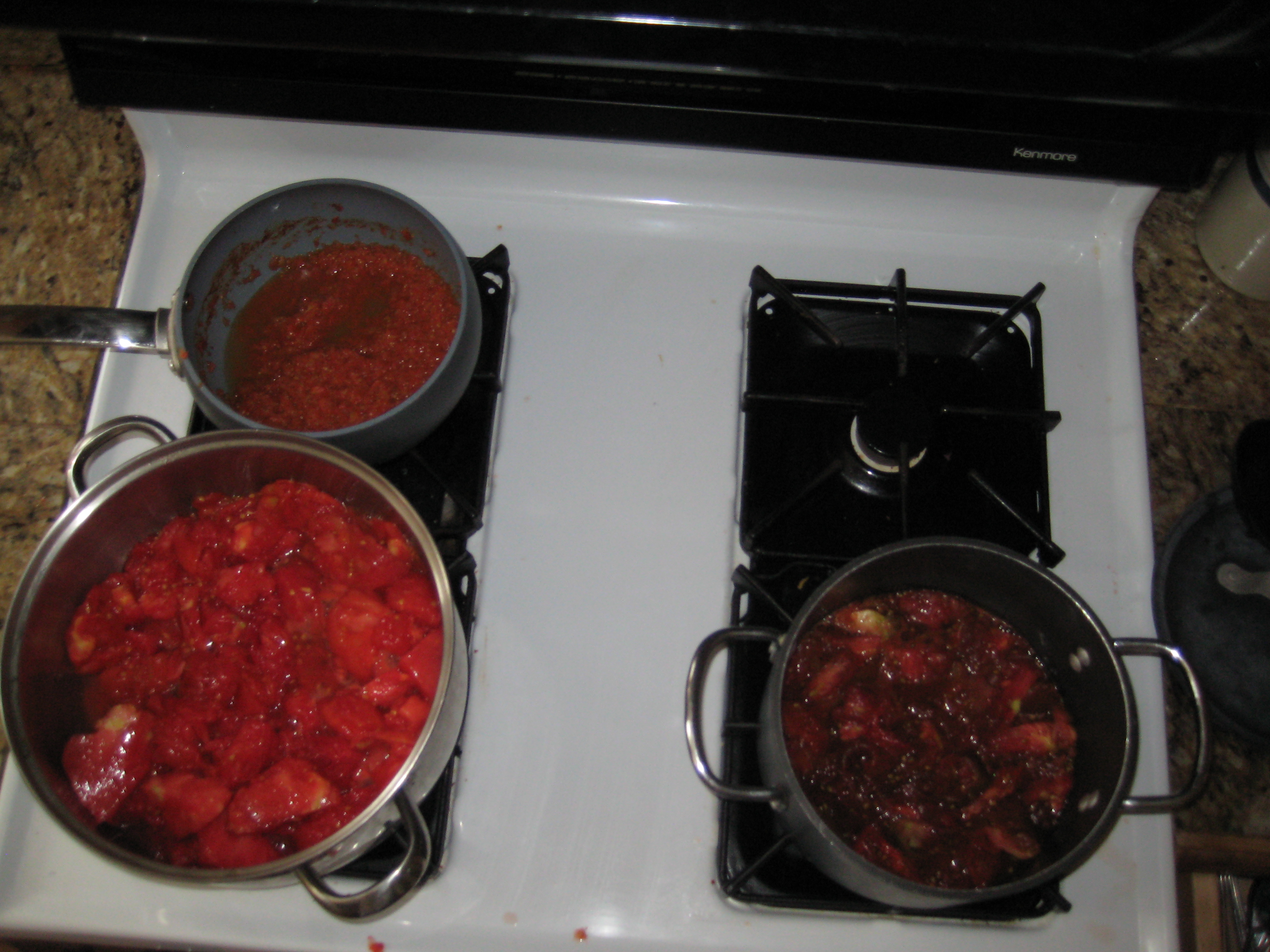
On the stove

Here’s three different kinds of tomatoes from my garden last July.  I decided to freeze them by variety, so that’s cherry tomatoes on the back left burner, my *FAVORITE* Amish paste front left, and Japanese black on the front right.

Frozen stewed tomatoes


Disease-resistant tomatoes: do they really exist??

After a couple summers of watching my dear heirloom tomato varieties die slow deaths from blight after a month or so of big yields, I was becoming disheartened.   I started looking at the “disease-resistant” hybrids at the local garden center, and wondered if they’d indeed be able to ward off the various blights that got my plants every year.

Wilting.... (image: Wikimedia)

Among various other attempts to keep my heirloom plants healthy, I’d tried organic fungicides, watering only at the base of the plants (and only in the mornings), and one weird planting technique: putting a couple tablespoons powdered milk, epsom salts, and compost in the hole in the ground before putting the tomato plant in. However, nothing really seemed to work.

So, I started buying hybrids in addition to heirlooms to see if they fared better. Nope. They all started getting the yellowing leaves with brown spots starting at the bottom limbs, which eventually climbed up the plants, at which point they stopped flowering.

Then I got all into pruning off the diseased limbs.   Tomato bonsai!   I think that was the best tactic.  It seemed not only to prolong the life of the plants, but they also didn’t look so sick.


Nematode junkies


Squash vine borers in action

Just when you think you’ve got a great, strong set of vines going, you look out on your garden one July afternoon, and see this.  Your first thought is, “wait a minute, I thought I watered this morning…”   Then you remember that you actually DID.  But you go water them again anyway because you figure it is just so ridiculously hot, how could any veggie plant withstand it?

While you’re watering away, there’s a grub gnawing away at the inside of the squash vine (and I imagine he’s laughing too…can you tell I anthropomorphize garden pests?  Helps me cope…).    My dad anthropomorphizes too, but in this case he speaks of the squash plant “writing and twisting” as if it were in pain from the attack. It all starts with the squash vine borer moth.  Looks cool, but isn’t.

(photo:  wikimedia)

You’ll see this wasp-looking thing casually flying around your garden acting like it’s just checking it out, but it’s really laying eggs at the base of the vines.  They hatch, then bore away and leave frass (a mealy waste residue) on the outside of the vine, right near the base…ick…


Borer larva in action (photo: Wikimedia)

In the past, I’d tried cutting open vines and smushing the borers.  But by the time they make themselves known the plants are so far gone that they’ll only produce a few more squash.  However, I read about injecting beneficial nematodes into the vines…and this is what I ordered from a gardening catalog:

Inside each syringe was a little sponge, full of nematodes.  I have no idea what a

Nematode syringes

nematode looks like or how big it is, but I do know that after injecting the squash vines with the solution, the vines continued to grow and produce lots (and lots and lots) of pattypan squash. This coming season I’m stocking up on the nematodes.


Ratatouille time!

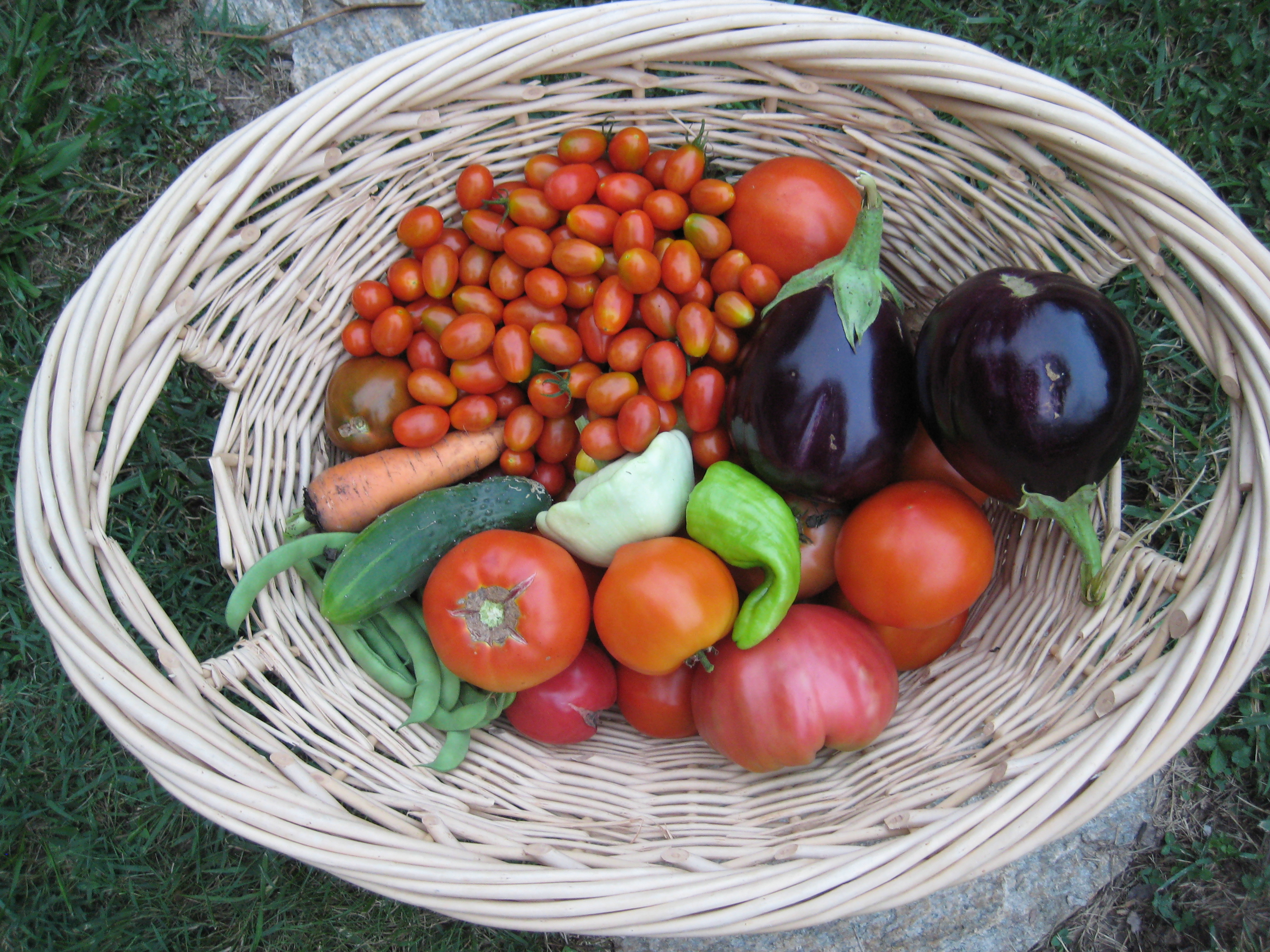
Late July harvest

Things really got going in my garden late July.  This photo was one of the first big picks of the season.

I’d never had success with eggplant in previous years’ gardens.  Tiny, shiny black beetles would turn the leaves to lace in hours.

Ever tried to squoosh one of those critters?  They are so fast!   I didn’t see as many this year, but I had sprayed the plants with some sort of a neem-oil based pesticide.  I think it worked.

Also in the basket:  several varieties of tomatoes, peppers, the first generation of pattypan squash, lone carrot, stray cucumber, bush beans.

Note:  not all my plants were in the raised beds:  I planted the tomatoes and bush beans directly in the ground, and the squash in the hay bales.

What I wouldn't give for one of those fat tomatoes right now


Hay bale gardening. My grade: C minus.

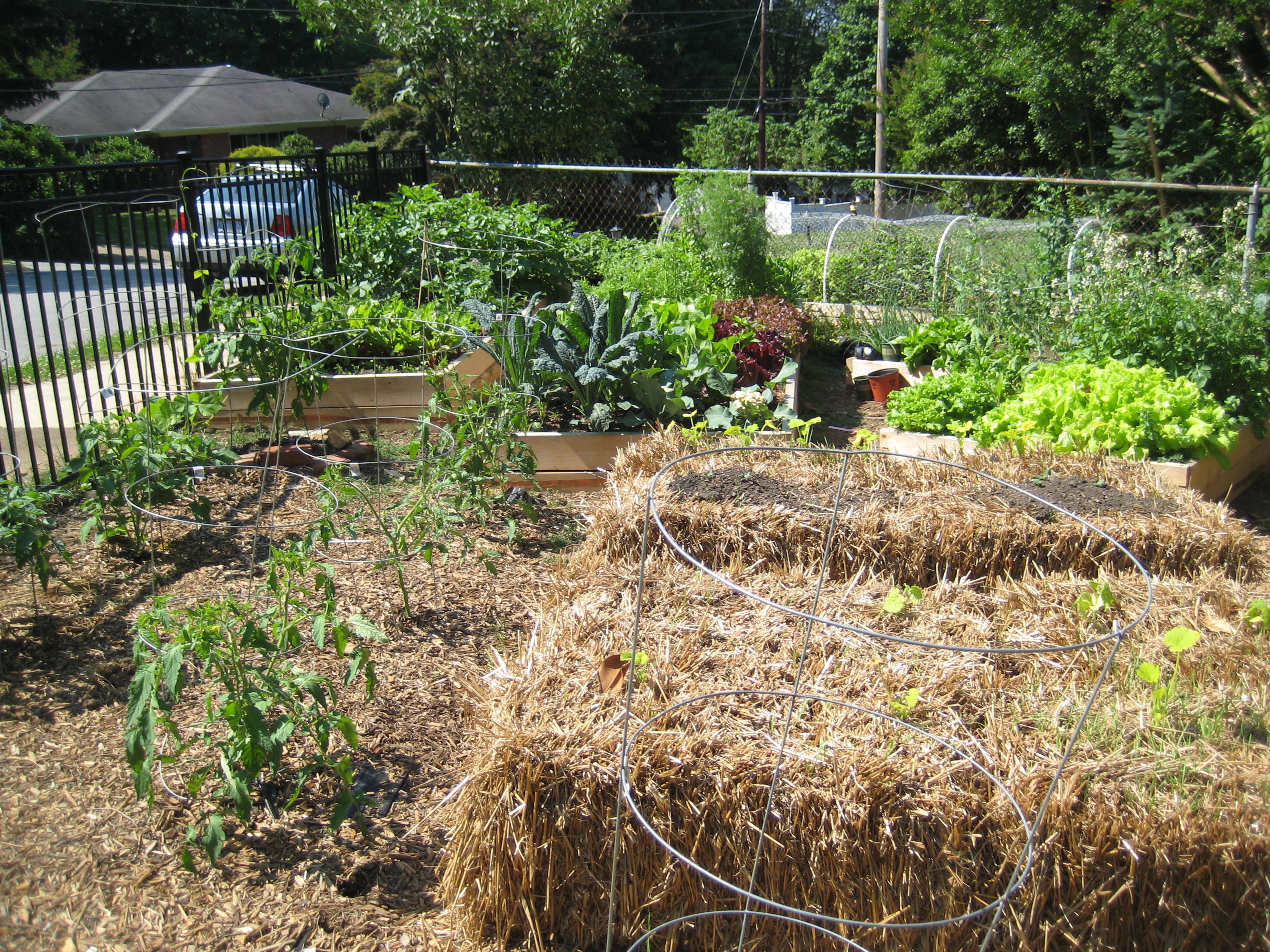
Beginnings of hay bale experiment

Here you can see the two hay bales I decided to try along with my raised beds last June.

I’d heard they were a great space-saver in a garden and provided a great growing medium, so I bought two at the hardware store.  I followed directions I’d found googling:  place on side, water thoroughly, wait a couple weeks till they start rotting, then plant.

So I did.  Waited about 10 days till the hay looked like it was composting down, then I planted 6 squash starts in one (crookneck and zucchini)  In the other I planted pattypan seeds (I put some compost on top from our compost pile so the seeds weren’t sowed directly into the bale).

Three days later, the starts were yellowing, then dead after a week or so.  I think maybe 10 days wasn’t enough.  I also didn’t like how quickly the bales dried out (read:  constant watering, ugh.)  I started over again with more starts but that bale never really did so well.  The pattypan seeds, on the other hand, went crazy.  We had so many pattypan squash out of that bale and they lasted, and lasted and lasted….(even continued to grow despite the yearly attack of the squash vine borers, but that’s a whole ‘nother blog entry!)


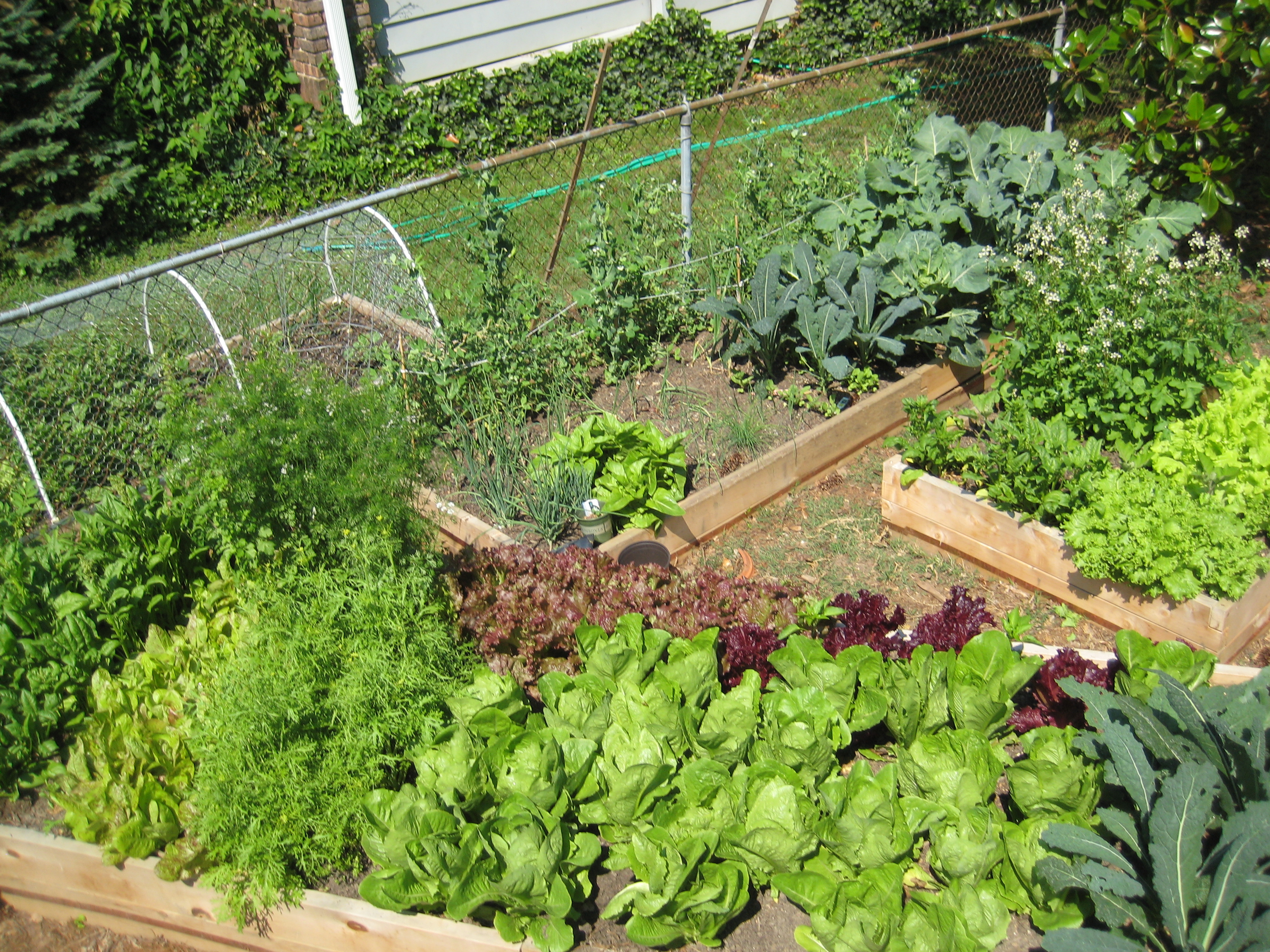
Early summer and loving it

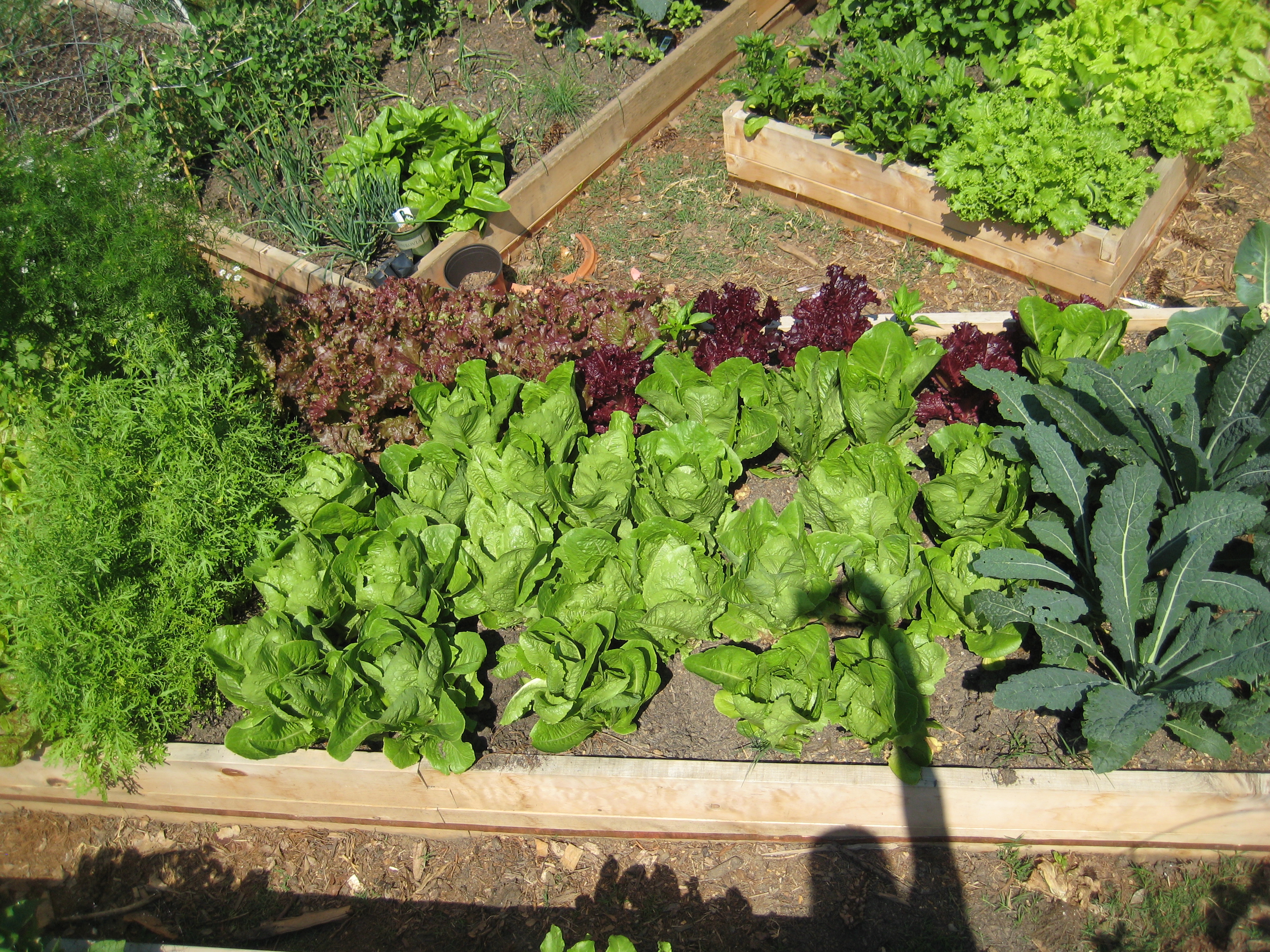
I could not believe how well the lettuce did — suddenly we were faced with lots and lots of beautiful romaine and we were eating big ol’ green salads just about every meal….it was the first time I’d had enough that I was calling neighbors and friends (lots of them) to come pick salads.  Other gardens of mine cranked out the trite overabundance of baseball-bat-sized zucchini that I’d shared with (pawned off on) others.  So I was pretty proud of a glut of something that people actually *liked* to receive from my garden.  I even gave giant ziplocs of mixed greens salads as part of my end-of-year gifts for my boys’ preschool teachers.


Sow. Water. Wait….Wait, no weeding?

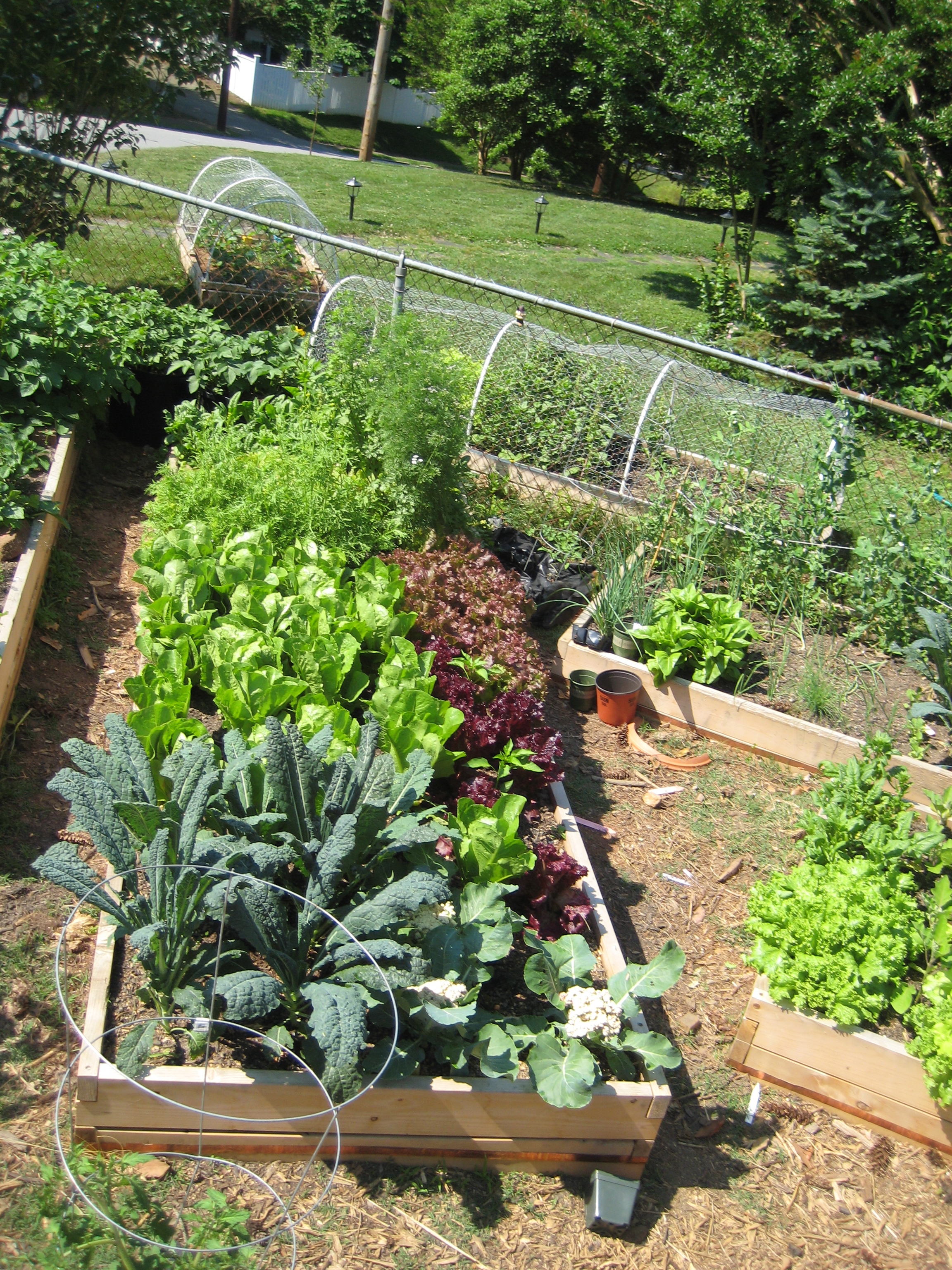
Oh what a joy to spend time looking at the plants growing in the beds instead of fretting over the wiregrass that used to inhabit this spot in the yard!  Raised bed gardening is so much easier than any kind of gardening I’ve done before.  It’s an especially good match for parents of toddlers as time for most things is pretty limited.

Dinosaur kale, arugula, lettuce (romaine, black-seeded simpson, red leaf)